Gulf Arab states, backed by the United States, moved at the United Nations on Thursday to pressure Iran over the Strait of Hormuz, presenting a draft Security Council resolution that threatens sanctions and other Chapter VII measures unless Tehran halts attacks on shipping, ends what they call unlawful transit fees, and reveals mine locations threatening maritime traffic.
What Happened
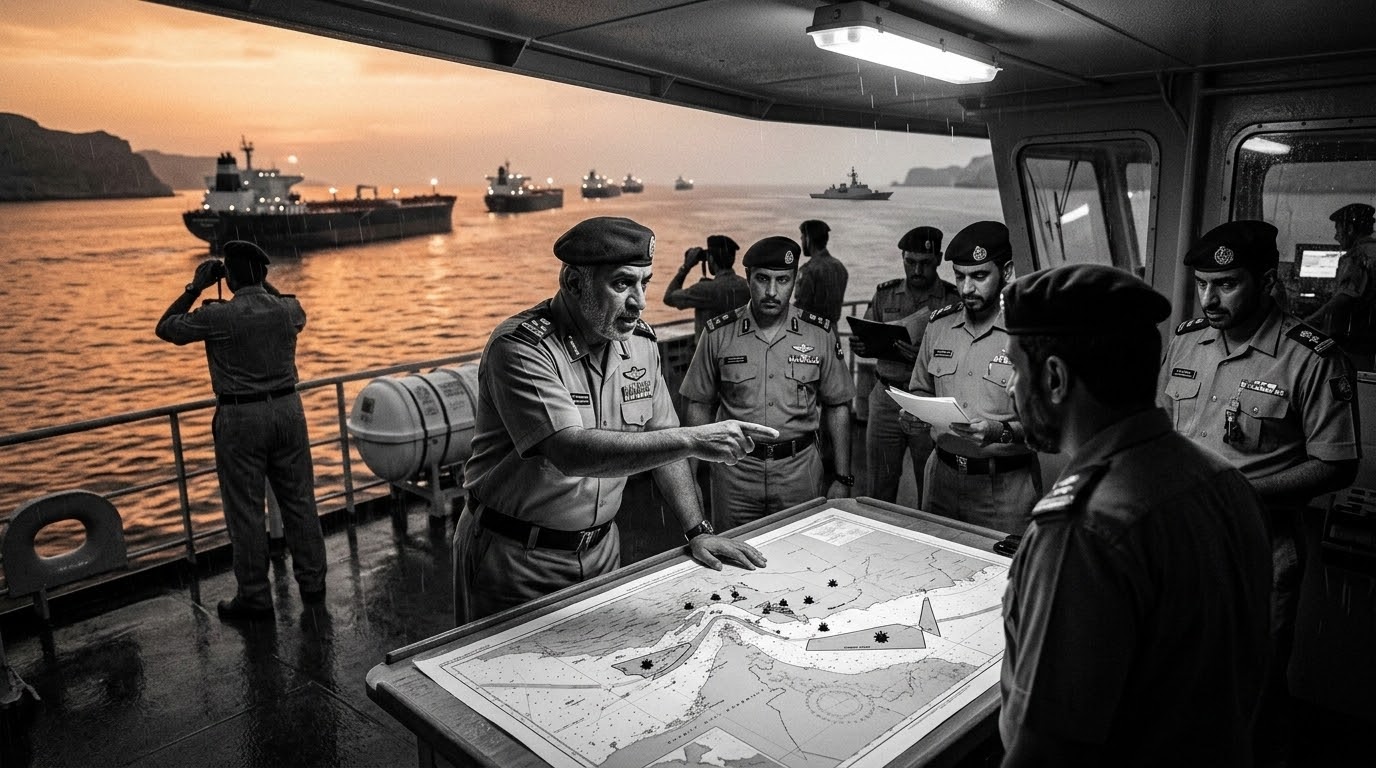
At UN headquarters, senior diplomats from Qatar, Bahrain and the United Arab Emirates publicly urged urgent action to restore normal movement through the narrow but strategic waterway linking the Gulf to global markets. In peacetime, around 20% of world energy exports move through the strait, making the disruption a major international concern. Qatar’s UN ambassador, Alya Ahmed Saif al-Thani, told the council that keeping the passage open is required by international conventions and constitutes a shared global obligation.
The draft text, co-sponsored by Qatar, Bahrain, the UAE, Saudi Arabia, Kuwait and Washington, demands that Iran stop attacks against vessels, cease interference with lawful transit, and cooperate with UN-led efforts to establish a humanitarian corridor for aid shipments, fertilizer and other essential goods. UAE envoy Mohammed Issa Abushahab said the proposal also calls for disclosure and clearance of sea mines in and around Hormuz and rejects coercive pressure on civilian and commercial shipping.
Bahrain’s representative, Jamal Alrowaiei, framed the initiative as a call for collective action to keep the strait open and secure under international law. US envoy Mike Waltz added that proposals to create an Iranian-controlled authority to collect passage tolls were unacceptable, describing efforts to leverage global shipping disruption as illegal and immoral. He said the council had to confront violations directly and test whether members truly sought de-escalation.
Impact & Consequences
The immediate stakes are economic, humanitarian and strategic. With tanker routes increasingly unsafe, traffic through Hormuz has fallen sharply, contributing to higher oil and gas prices and renewed anxiety across import-dependent economies. Gulf producers with bypass pipelines, including Saudi Arabia and the UAE, can reroute some exports, but other states such as Qatar have faced severe constraints, including halted energy shipments, according to diplomats involved in the talks.
Beyond markets, the standoff is hardening regional security lines. Gulf governments now find themselves exposed to retaliation linked to the US-Iran war dynamic after US and Israeli strikes on Iran in late February. Tehran’s reported strikes on neighboring energy and civilian infrastructure have raised fears that a prolonged maritime confrontation could widen into broader regional conflict. At the UN, the use of Chapter VII language heightens pressure because it keeps open a spectrum of options, from sanctions to potentially stronger enforcement steps if diplomacy fails.
Background & Context
The current push follows weeks of escalating confrontation in and around the Gulf. After attacks by the US and Israel on Iranian targets, Iran has linked restoration of normal shipping to an end to hostilities and relief from sanctions and blockade measures. Iranian Foreign Minister Abbas Araghchi said navigation in Hormuz would return to pre-war conditions if the war ended and restrictions on Iran were lifted, while arguing the new draft does not address what Tehran sees as the underlying trigger: US military action.
The resolution effort also reflects lessons from a failed attempt last month. A previous Bahrain-sponsored text, backed by Washington, was vetoed by Russia and China in the 15-member council after criticism that it could be interpreted as opening a legal path to military force against Iran. Diplomats now say the revised draft avoids explicit authorization-of-force wording while still remaining under Chapter VII, preserving legal leverage without directly endorsing military action.
International Response
UN diplomacy is now split between rival approaches. The US and Gulf sponsors are pushing for a rapid negotiating schedule, with discussions aimed at circulating a final draft by Friday and holding a vote early next week. Russia and China, however, are reportedly advancing an alternative text, signaling another likely contest over whether the council should prioritize coercive pressure, de-escalation language, or both.
Public statements from Gulf delegations have emphasized freedom of navigation and humanitarian access as the core principles. Washington has echoed that framing, portraying mine removal and open transit as baseline obligations in international waters. Iran, for its part, maintains that any sustainable maritime normalization must be tied to ending military pressure and sanctions. The competing positions suggest difficult negotiations before any binding resolution can pass.
What to Expect Next
Security Council members are expected to negotiate intensively in the coming days, with a possible vote early next week if sponsors secure enough support. The central unknown is whether Russia or China will again use their veto power, especially if the final text is seen as overly punitive. In parallel, shipping and energy markets will watch for signals on mine clearance, transit security and whether Tehran offers concrete steps to reduce immediate risks in Hormuz.