A United States citizen evacuated from the MV Hondius has tested positive for hantavirus, and a French traveler has fallen ill as passengers were flown out from near Tenerife this weekend, marking a major shift in a fast-moving outbreak that has already left three people dead and triggered multinational health controls.
What Happened
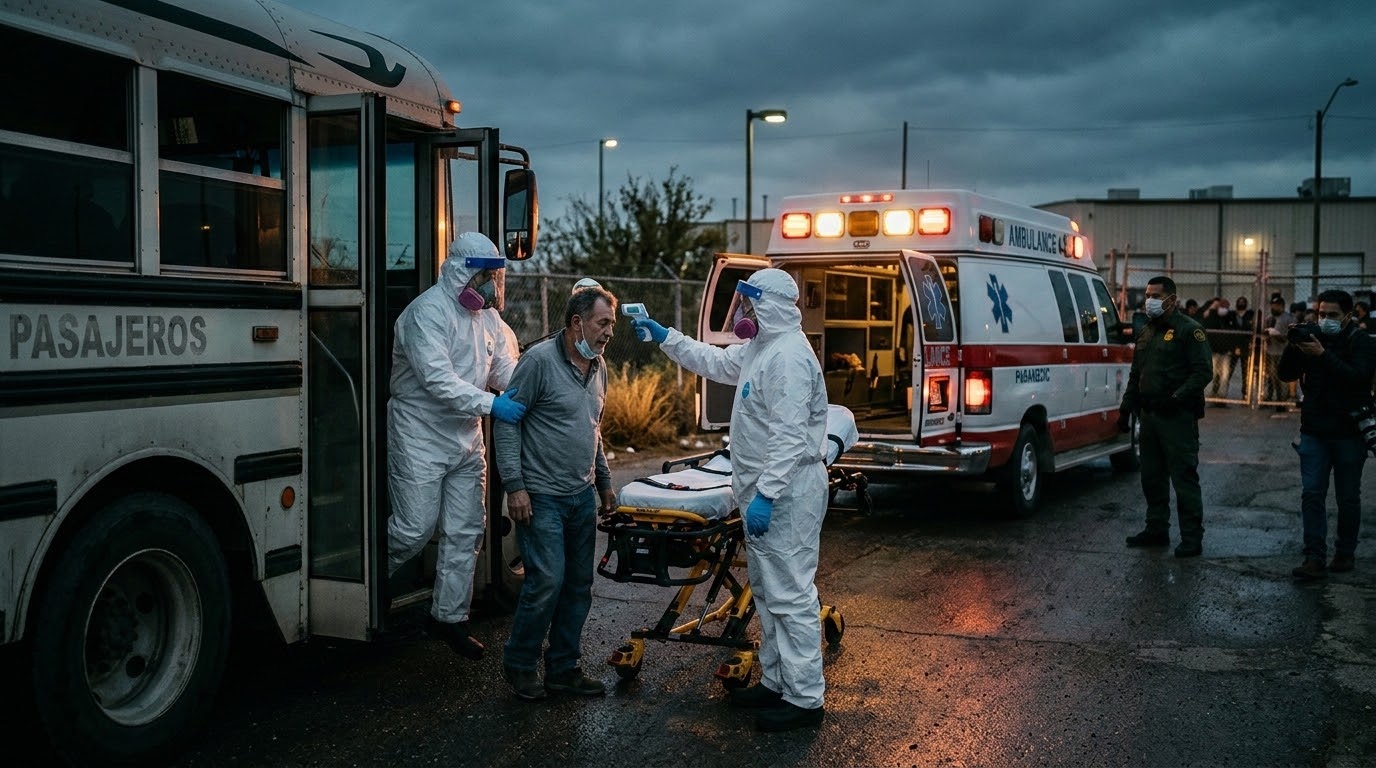
The Hondius, operated by Oceanwide Expeditions, anchored off Tenerife in Spain’s Canary Islands on Sunday, after weeks of concern over severe illness among people linked to the vessel. Evacuation operations began with passengers transferred by small boats to shore while officials wearing full protective equipment supervised the process. Flights organized by governments and military services then moved passengers to home countries across Europe, North America, and beyond.
Health authorities had earlier said no one remaining aboard was showing symptoms, but that assessment changed as repatriation advanced. US officials said at least one of 17 American passengers tested positive despite having no symptoms. The group was due to arrive Monday in Omaha, Nebraska, for quarantine. In France, Health Minister Stephanie Rist said one of five French passengers became symptomatic during a flight home on Sunday and later worsened rapidly in Paris. French Prime Minister Sebastien Lecornu said all five were placed in isolation indefinitely.
The World Health Organization confirmed extensive post-arrival monitoring. WHO epidemiologist Maria Van Kerkhove said governments were advised to test and follow exposed travelers for at least 42 days. WHO Director-General Tedros Adhanom Ghebreyesus was in Tenerife during evacuation efforts and said risk to the general public, including residents on the island, remained low.
Impact & Consequences
The outbreak is now a transnational public-health operation involving more than 20 countries, with inconsistent but overlapping quarantine regimes. The United Kingdom said incoming passengers would undergo 72 hours of hospital isolation followed by six weeks at home. Dutch authorities placed citizens from a repatriation flight into six-week home quarantine, while Germany transferred four nationals from the Netherlands to Frankfurt University Hospital before onward monitored travel. Norway dispatched a dedicated air ambulance, and Australia sent an evacuation flight for citizens from Australia, New Zealand, and parts of Asia.
The human toll continues to rise. Three deaths have been linked to the incident, and at least one person is in intensive care. Additional patients remain hospitalized in South Africa, the Netherlands, and Switzerland, including medical staff connected to the ship. For governments, the challenge is balancing reassurance with strict containment as people potentially exposed to the Andes strain disperse internationally. The episode is also testing cross-border outbreak coordination, because exposed travelers are returning under different legal, medical, and logistical frameworks.
Background & Context
Hantavirus infection typically occurs when people inhale aerosolized particles from rodent urine, saliva, or droppings. Investigators have linked this event to the Andes strain, found in parts of South America and notable as the only hantavirus variant known to spread from person to person. Officials have not identified the exact point of first exposure, but investigative attention has centered on Argentina, where the ship departed on April 1.
Early symptomatic cases involved an elderly Dutch couple who were among the fatalities. Media reports in Argentina said they visited a landfill near Ushuaia in search of a rare bird, raising speculation about rodent exposure, though local health officials said the area has not recorded a hantavirus case since 1996. Argentine teams were sent to collect rodent samples near the site. Alternative exposure timelines remain under review, including travel by the couple through Chile and Uruguay. Chilean authorities said the couple’s stay there did not fit the virus incubation window, and Uruguay said there was no transmission risk during their visit because symptoms began after departure.
International Response
International agencies and national governments have moved into coordinated response mode, though protocols vary by country. WHO leadership has focused on risk communication, emphasizing low threat to the wider public while supporting aggressive surveillance for passengers and close contacts. The recommendation for at least six weeks of follow-up reflects uncertainty around incubation and transmission chains tied to the Andes strain.
Governments have combined repatriation with medical containment. Spain initially moved its nationals to a military hospital in Madrid. Japan said one citizen traveled to the UK on a British-arranged flight and would be monitored for up to 45 days. Other affected nationals from countries including Greece, India, Portugal, Belgium, Ukraine, Guatemala, the Philippines, and Montenegro were either quarantined locally or prepared for onward transport. The scale of multinational case-tracing now extends to earlier disembarkations, including one suspected case on Tristan da Cunha, where British military medics were deployed with oxygen and support supplies.
What to Expect Next
Authorities are expected to report additional test results in the coming days as repatriated passengers enter formal monitoring windows and symptomatic cases are clinically assessed. The central unanswered question remains where the initial exposure occurred and how much transmission happened on board. Investigators in South America are likely to release findings from environmental and rodent sampling, while health ministries continue contact tracing that could determine whether this outbreak remains contained or broadens further.