Iran and the United States traded fresh accusations on Friday after new military incidents in and around the Strait of Hormuz, with Tehran denouncing Washington’s actions as a “reckless military adventure” even as both sides publicly maintained that a ceasefire framework remains in place to support potential negotiations.
What Happened
Iranian Foreign Minister Abbas Araghchi said on X that the United States turns to force whenever diplomacy appears possible, arguing that Iranians would not submit to pressure. His remarks came a day after both governments blamed each other for attacks near the Strait of Hormuz and after the US military reported additional action against Iranian-linked vessels. Araghchi also suggested either a coercive strategy or outside influence could be pushing President Donald Trump toward a wider conflict.
Despite the escalating rhetoric, Trump said the ceasefire remained intact and reiterated that military pressure would continue unless Iran accepts a deal quickly. On Truth Social, he claimed US forces had destroyed Iranian small boats, missiles and drones overnight and warned of harsher strikes if Tehran did not sign an agreement. His comments followed a week in which Washington first launched and then paused a naval operation intended to clear roughly 2,000 ships reportedly stranded in the area since February.
US Central Command said Friday that American forces disabled two Iranian-flagged empty oil tankers that were trying to enter an Iranian port in the Gulf of Oman, describing the move as enforcement of an ongoing US blockade. According to Centcom, precision strikes into the ships’ smokestacks prevented entry, and US forces are currently stopping more than 70 tankers from moving in or out of Iranian ports. Tehran’s military, however, said US forces had targeted an Iranian tanker and another vessel approaching the strait while also striking coastal areas.
Impact & Consequences
The renewed confrontation has immediate implications for energy security and shipping risk. The Strait of Hormuz carries about one-fifth of global oil and liquefied natural gas flows, and any disruption there quickly feeds into higher freight costs, insurance premiums and crude benchmarks. Iran’s efforts to control passage through the waterway, combined with US interdiction actions and blockade enforcement, have already intensified market anxiety.
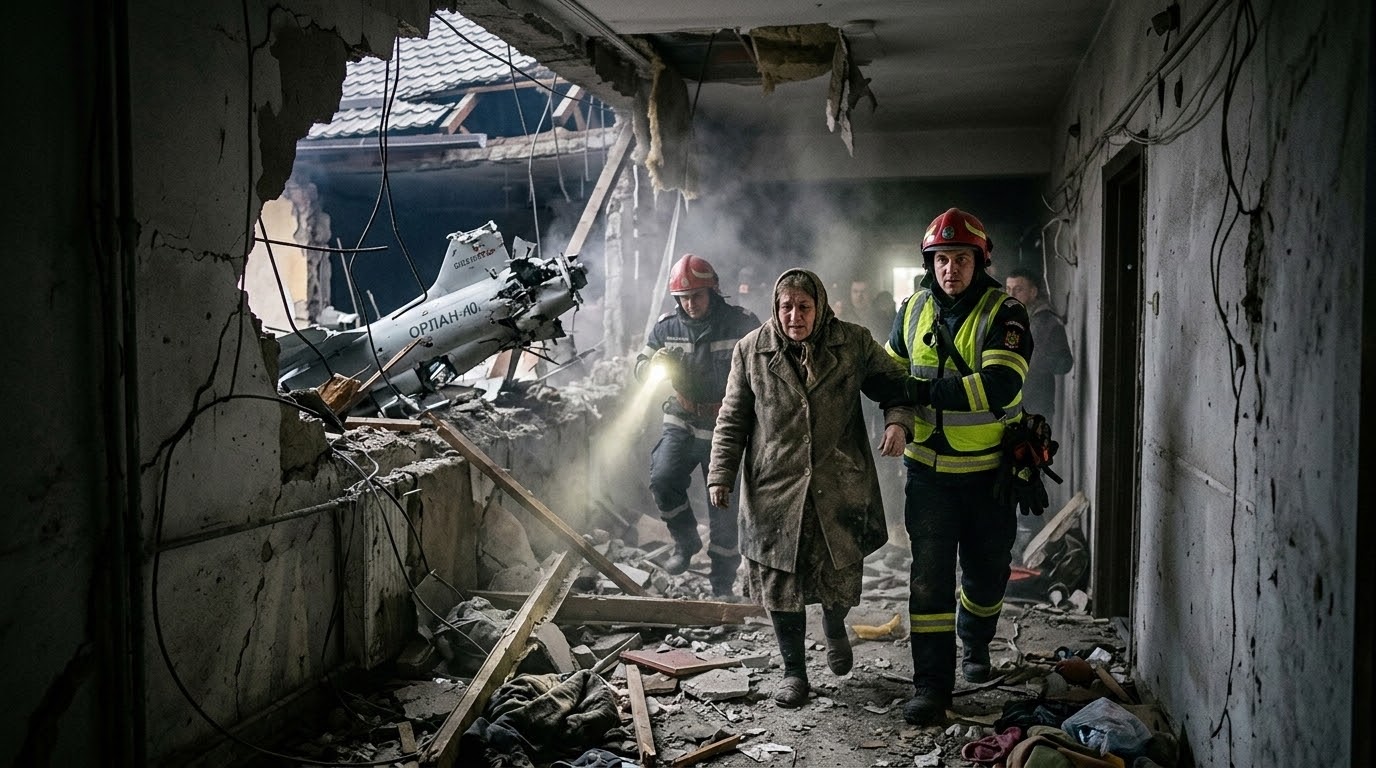
On the human level, the fighting has produced casualties at sea. Mohammad Radmehr, an official in Iran’s southern Hormozgan province, said one cargo vessel near Minab caught fire and that 10 injured sailors were transferred to hospital while search teams sought other crew members. Politically, each new maritime clash raises the chance of miscalculation between heavily armed forces operating in confined waters, potentially undermining any diplomatic channel before formal talks can begin.
Background & Context
The current crisis sits within a broader war that the US and Israel launched in February, according to the reported timeline in this dispute. Since then, Iran has retaliated by exerting pressure in the Gulf, including actions around the Strait of Hormuz and attacks on US regional partners. Washington, in turn, has paired military operations with a naval blockade of Iranian ports designed to force Tehran toward US-backed terms.
The Strait has long been one of the world’s most sensitive geopolitical chokepoints, but the present phase combines battlefield tactics, economic coercion and diplomatic signaling at unusual intensity. US officials frame recent operations as defensive enforcement and maritime protection. Iranian officials describe them as unlawful escalation and coercion meant to extract concessions under fire. That competing narrative is central to whether either side can credibly present negotiations to domestic audiences without appearing to retreat.
International Response
US Secretary of State Marco Rubio, speaking during a visit to Italy, said Tehran is expected to answer US proposals on Friday and added that he hoped the offer under discussion would be taken seriously. His remarks indicated Washington is still publicly committed to a negotiating track even as US military activity in Gulf waters continues.
No multilateral settlement mechanism has yet been announced, and there were no immediate reports in this update of new mediation statements from major international organizations. Still, the pattern of maritime incidents in a corridor vital to global energy supply is likely to keep pressure on outside governments to call for de-escalation, navigational safety guarantees and a verifiable framework that separates ceasefire implementation from coercive naval encounters.
What to Expect Next
Attention now centers on Iran’s anticipated response to US proposals and whether it can halt the slide from coercive signaling to sustained sea conflict. If maritime confrontations persist, enforcement actions and counter-moves could rapidly eclipse diplomacy. If talks proceed, negotiators will likely focus first on immediate shipping security in Hormuz, then on wider war terms tied to ceasefire durability and reciprocal military restraint.