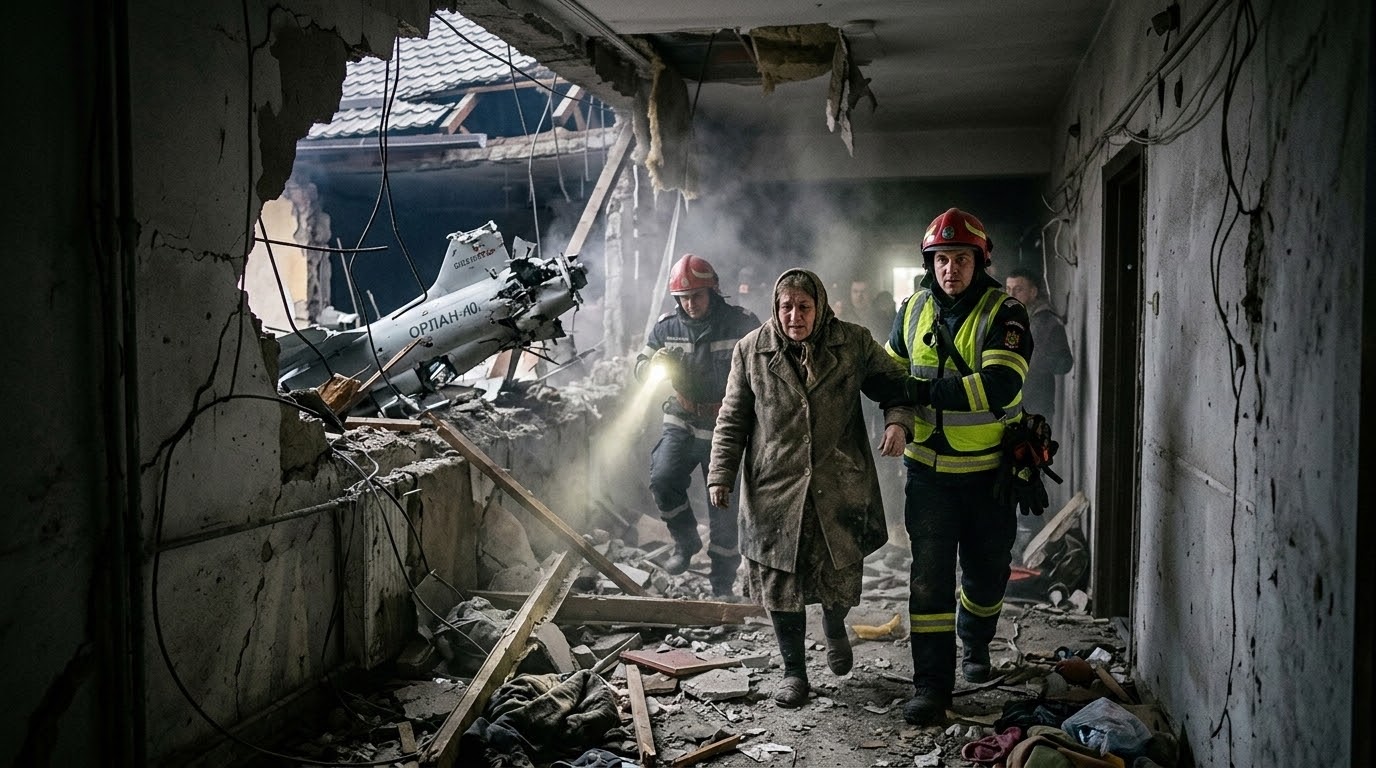
Iran has intensified its public threats toward the United Arab Emirates in recent days, with military and political officials warning of harsher retaliation if US and Israeli attacks resume. The shift, centered on Gulf security and maritime control around the Strait of Hormuz, marks a significant deterioration in ties between two neighbors whose rivalry now carries direct military and economic consequences.
What Happened
Tehran’s messaging hardened this week after months of escalating confrontation in and around the Gulf. Ali Khezrian, a member of Iran’s parliament national security commission, said on state television that the UAE should no longer be viewed as a neighboring partner but as a “hostile base.” His remarks were echoed by statements from Iran’s Khatam al-Anbiya Central Headquarters, led by senior Islamic Revolutionary Guard Corps commanders, which directly warned Emirati leadership against hosting what it called American and Israeli military infrastructure.
Iranian military channels have also focused on Fujairah, a critical Emirati port near the Strait of Hormuz. The IRGC has argued that shipping linked to Fujairah operates within waters where Iran claims maritime authority, and therefore could fall under Iranian jurisdiction. Fujairah was hit earlier this month, though Iran denied involvement. At the same time, the UAE has repeatedly denounced Iranian attacks and said it reserves the right to respond, including militarily.
The crisis widened after renewed clashes between Iranian and US forces over Hormuz despite an April ceasefire announcement. Iranian media and state-linked commentators increasingly suggested the UAE may have been involved in attacks on Iranian territory, including strikes on southern islands and energy facilities. Emirati officials have publicly denied direct strike claims and labeled some reports fabricated. But Tehran’s media ecosystem has continued circulating allegations, including disputed visuals of UAE-operated aircraft in southern Iranian airspace.
Impact & Consequences
The breakdown in relations is hitting security and commerce simultaneously. Iranian missile and drone launches during the current war have heavily targeted the UAE in addition to Israel, and Iran has warned of a “crushing” response to further attacks. The UAE, meanwhile, has tightened pressure on Iran through domestic policy measures, including visa terminations for long-term Iranian residents and restrictions affecting Iranian businesses, currency exchange networks, and trade routes.
These steps are especially costly for Iran because Emirati ports have long served as a major conduit for goods from third markets, including China. With US naval pressure on Iranian ports and maritime routes under strain, Tehran has tried to reroute imports overland through Pakistan, Iraq, and Turkiye. Iranian officials have linked the supply disruption to sharp food inflation at home, adding a domestic economic burden to an already volatile military confrontation.
Background & Context
The current flashpoint sits atop years of strategic realignment in the Gulf. The UAE hosts a substantial US military footprint, including al-Dhafra airbase near Abu Dhabi, where American forces maintain advanced intelligence and air-defense capabilities. Since the 2020 Abraham Accords, military and intelligence cooperation between the UAE and Israel has expanded rapidly, including reported deployment of Israeli Iron Dome systems and personnel to Emirati territory during the present conflict.
Territorial disputes and regional competition deepen the mistrust. The UAE and Iran have a long-standing sovereignty dispute over Greater Tunb, Lesser Tunb, and Abu Musa islands, controlled by Iran since 1971 and positioned near key Hormuz shipping lanes. Emirati officials have argued that their international defense partnerships are sovereign decisions, while Iran portrays those same ties as enabling hostile action. Competing narratives hardened further after April incidents in Lavan and Siri, when Washington and Tel Aviv denied involvement and Tehran-aligned outlets pointed toward Emirati aircraft.
International Response
Washington has publicly framed UAE-Israel defense coordination as an outgrowth of the Abraham Accords. At an event in Tel Aviv on Tuesday, US Ambassador Mike Huckabee described recent radar and missile-defense deployments as a product of what he called an extraordinary bilateral relationship. Former and current US political messaging has also highlighted the UAE’s strategic role, while encouraging broader Arab normalization with Israel despite the regional backlash tied to the Gaza war.
From Abu Dhabi, senior officials have maintained that Iran is attempting to justify attacks by alleging Arab territory is used against it. Anwar Gargash, adviser to the UAE president, said earlier in the conflict that Iranian strikes on Arab neighbors would likely reinforce, not weaken, ties between Israel and countries with formal relations. UAE officials have not formally confirmed involvement in alleged strikes on Iranian soil, but they continue to insist on their right to self-defense and independent security partnerships.
What to Expect Next
Absent a durable enforcement mechanism for the April ceasefire, the risk of renewed cross-border strikes remains high, especially around Hormuz and critical Gulf energy and shipping nodes. Analysts will watch whether Iran converts rhetorical escalation into wider maritime action and whether the UAE expands military coordination with US and Israeli systems. Trade disruptions, air-defense deployments, and disputed strike claims are likely to define the next phase of this standoff.