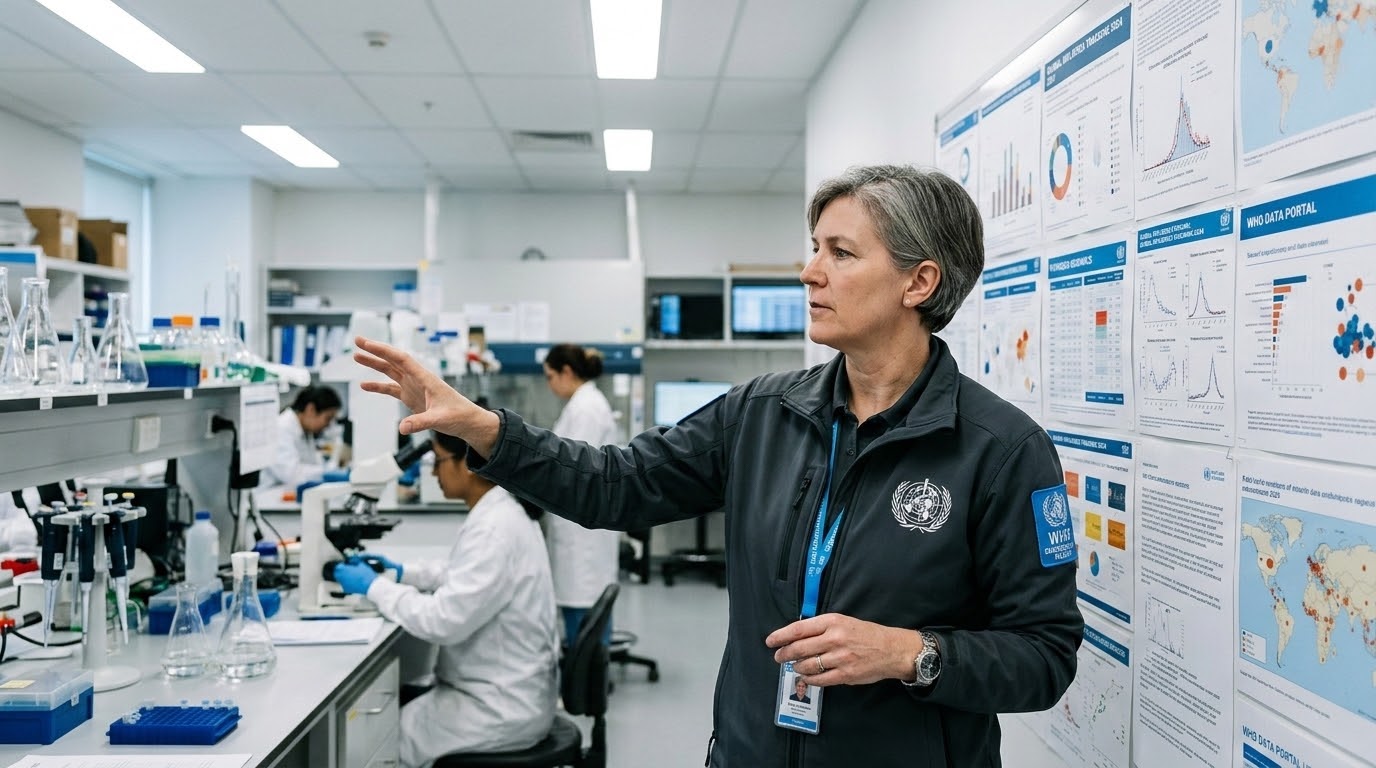
World Health Organization chief Tedros Adhanom Ghebreyesus said Tuesday in Madrid that there is currently no evidence of a broader hantavirus outbreak tied to the MV Hondius cruise ship, even as authorities continue tracing contacts and monitoring evacuees across several countries after multiple deaths and confirmed infections.
What Happened
Speaking at a press briefing in Spain’s capital, Tedros said the immediate data do not indicate the beginning of a large-scale spread. He cautioned, however, that this assessment could change, noting the virus’s long incubation window and the possibility of additional confirmed cases in the weeks ahead. He also said efforts to contain the ship-linked cluster remain ongoing.
The Dutch-flagged MV Hondius departed Tenerife on Monday and is en route to Rotterdam, where it is expected to arrive around 17 May after roughly six days at sea. The final group of 28 passengers was flown to Eindhoven on Tuesday, and by then 122 passengers and crew had been repatriated to the Netherlands and other home countries via government-chartered flights. Oceanwide Expeditions said the vessel will be sanitized on arrival, while final port procedures are still being discussed.
The outbreak has been linked to at least seven confirmed cases and three deaths among people who had traveled on the vessel. An American and a French national who returned home earlier tested positive, while Spanish authorities reported that one evacuee in Madrid had a provisional positive result. Two British nationals with confirmed infections are being treated in the Netherlands and South Africa. In the United States, officials said a second repatriated passenger had mild symptoms, and both Americans were transported in biocontainment units as a precaution.
Impact & Consequences
The health consequences are now extending beyond passengers, with hospitals and public health systems managing exposure risks. In Nijmegen, the Netherlands, 12 hospital staff members were placed in quarantine after handling blood and urine samples from an evacuated patient without fully following strict biosafety protocols. The hospital said the move was precautionary, but the episode underscored the strain unusual infectious events can place on routine clinical operations.
The incident has also triggered multi-country contact tracing and quarantine actions that require close coordination among health ministries, embassies, and transport authorities. French Health Minister Stéphanie Rist said a woman isolating in Paris was in worsening condition and that 22 contacts were being traced. With passengers and crew from more than 20 countries, the cluster has become a transnational test of preparedness for rare but high-concern pathogens, particularly when infections are detected after international travel.
Background & Context
Hantaviruses are commonly associated with rodent exposure, but the Andes strain is unusual because person-to-person transmission can occur. WHO officials believe some passengers may have contracted this strain in South America before boarding or during the voyage. Symptoms can include fever, severe fatigue, muscle pain, abdominal discomfort, vomiting, diarrhea, and breathing difficulty, complicating early detection because initial signs can resemble other illnesses.
The MV Hondius had 147 passengers and crew from 23 countries after leaving Ushuaia, Argentina, on 1 April. The first reported death was an elderly Dutch man on 11 April, believed to have been the earliest infected passenger, though he died before testing. His wife left the ship at St Helena on 24 April and died in Johannesburg two days later; she was confirmed infected. A German woman later died aboard on 2 May, also a confirmed case. These deaths, followed by scattered positives in multiple countries, elevated concern despite WHO’s earlier assessment that the risk of a major outbreak remains very low.
International Response
National authorities have taken varied but coordinated steps as repatriation winds down. Spain, France, the Netherlands, the United States, and other governments have publicly updated case investigations, while health officials continue monitoring those who traveled on evacuation flights. The Philippine Embassy said 17 Filipino crew members reached the Netherlands on Tuesday morning, and Ukraine’s foreign ministry said four Ukrainian crew members remained involved in transferring the ship and would quarantine at a medical facility upon arrival.
WHO has balanced reassurance with caution, emphasizing that current evidence does not support fears of widespread transmission but that surveillance must remain active. The agency’s position aligns with earlier technical assessments that large outbreaks are unlikely, while still urging states to keep testing, isolation, and contact tracing measures in place until incubation periods have passed and potential chains of transmission are clarified.
What to Expect Next
Attention now shifts to Rotterdam, where the MV Hondius is expected in mid-May for sanitation and final handling decisions by Dutch authorities and the operator. Public health agencies will focus on monitoring quarantined contacts, confirming provisional cases, and tracking any delayed symptom onset among repatriated passengers and crew. The key unanswered question is whether current cases remain a contained cluster or reveal additional cross-border transmission.