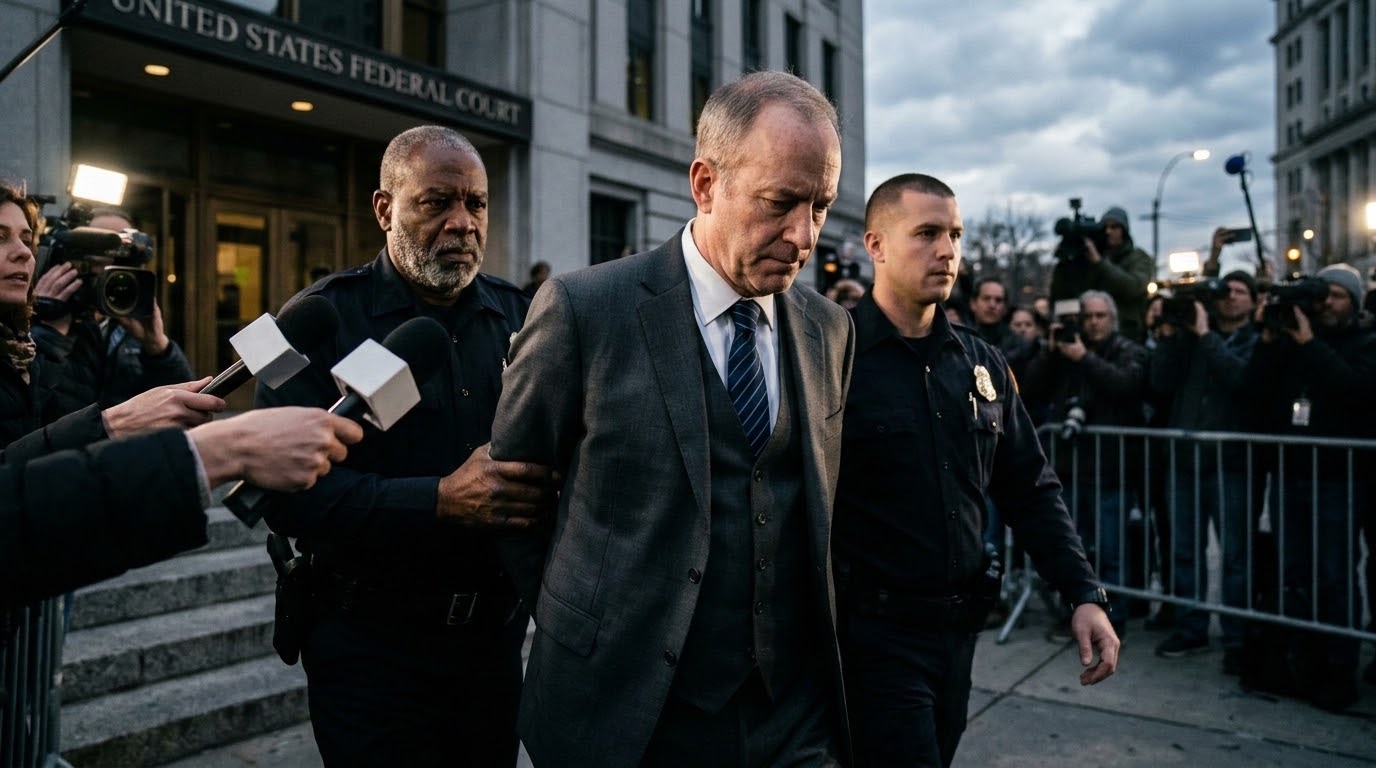
Eileen Wang, the former mayor of Arcadia near Los Angeles, has agreed to plead guilty to serving as an undisclosed agent for the Chinese government, US authorities said Monday. Prosecutors say her conduct from late 2020 to 2022 involved promoting Beijing-linked messaging without legally notifying Washington, a disclosure requirement meant to protect public transparency and national security.
What Happened
The US Department of Justice said Wang, 58, will plead guilty to one count of acting as an illegal agent of a foreign government. According to federal authorities, she carried out activities on behalf of the People’s Republic of China while failing to register that relationship with the US government. Officials said the admitted conduct took place between late 2020 and 2022.
Prosecutors described Wang as co-operator of an online outlet called US News Center, which presented itself as a source of news for Chinese American readers while publishing content supportive of Beijing. The Justice Department said one example included republishing an essay written by a Chinese official that rejected allegations of abuses against Uyghurs in Xinjiang. US authorities have repeatedly framed such messaging campaigns as part of broader influence operations intended to shape narratives inside the United States.
The case is linked to Yaoning Sun, a California resident who worked with Wang on the same platform. Federal prosecutors said Sun previously pleaded guilty to acting as an illegal foreign agent and was sentenced in October 2025 to four years in prison. Wang resigned from the Arcadia mayor’s office on Monday, according to a statement posted by the city. She now faces a maximum penalty of 10 years behind bars.
Impact & Consequences
The prosecution underscores intensifying scrutiny of foreign influence efforts in local and state-level politics, not only at federal institutions. While the charge centers on Wang’s media and political messaging activities rather than municipal policy decisions, the case is likely to deepen concerns about vulnerabilities in community-facing offices where ethnic media, diaspora outreach, and civic representation can intersect with international politics.
Wang’s attorneys, Brian A. Sun and Jason Liang, said she intends to apologize for what they called personal mistakes. They argued the conduct tied to the plea agreement was related to her private life and operation of the media platform with a man she believed to be her fiancé, not to her official duties as an elected leader. Even so, legal experts note that an admission of undisclosed foreign agency by a former mayor can affect public trust broadly, prompting calls for stricter compliance training and disclosure checks for elected officials.
Background & Context
The case arrives amid long-running US concern over alleged transnational influence campaigns linked to Beijing, including efforts prosecutors say involve media amplification, lobbying, and covert messaging channels. American law does not prohibit advocacy favorable to a foreign state, but it does require certain individuals acting at a foreign government’s direction to report that role to US authorities. Failure to do so can trigger criminal penalties.
Wang’s prosecution also comes at a diplomatically sensitive moment. US President Donald Trump and Chinese President Xi Jinping are scheduled to meet in Beijing on Wednesday for talks expected to cover the US-Israel war on Iran, trade tensions, and Taiwan. The summit follows an agreement reached in South Korea last October, when both leaders accepted a one-year pause in their trade conflict. Against that backdrop, cases involving alleged covert Chinese influence inside the United States risk adding pressure to an already complex bilateral agenda.
International Response
US Assistant Attorney General for National Security John A. Eisenberg said in a statement that elected officials should act only for US constituents and warned that undisclosed ties to a foreign government are especially troubling when held by someone in public office. His remarks signaled that federal investigators view local political figures as part of the broader national security landscape, not separate from it.
China’s embassy in Washington did not immediately respond to a request for comment, according to the source material. Beijing has regularly denied accusations that it directs covert influence operations abroad, and Chinese officials frequently characterize such US cases as politically motivated. With no immediate embassy statement in this instance, public response remains largely one-sided, driven by US law enforcement disclosures and court filings.
What to Expect Next
Attention now turns to court proceedings and sentencing, where a federal judge will determine Wang’s punishment, up to 10 years in prison. Additional details may emerge through plea documents, including the scope of contacts and directives cited by prosecutors. Locally, Arcadia officials are expected to manage political transition after Wang’s resignation, while nationally, the case is likely to be watched as another test of how aggressively Washington pursues foreign-influence enforcement.