The last passengers have now left the MV Hondius in Tenerife, but the cruise-linked hantavirus emergency is still growing, with three more infections confirmed across the United States, Spain and France. The development matters because it expands a multinational health incident that has already been linked to three deaths and triggered coordinated repatriation and quarantine operations in several countries.
What Happened
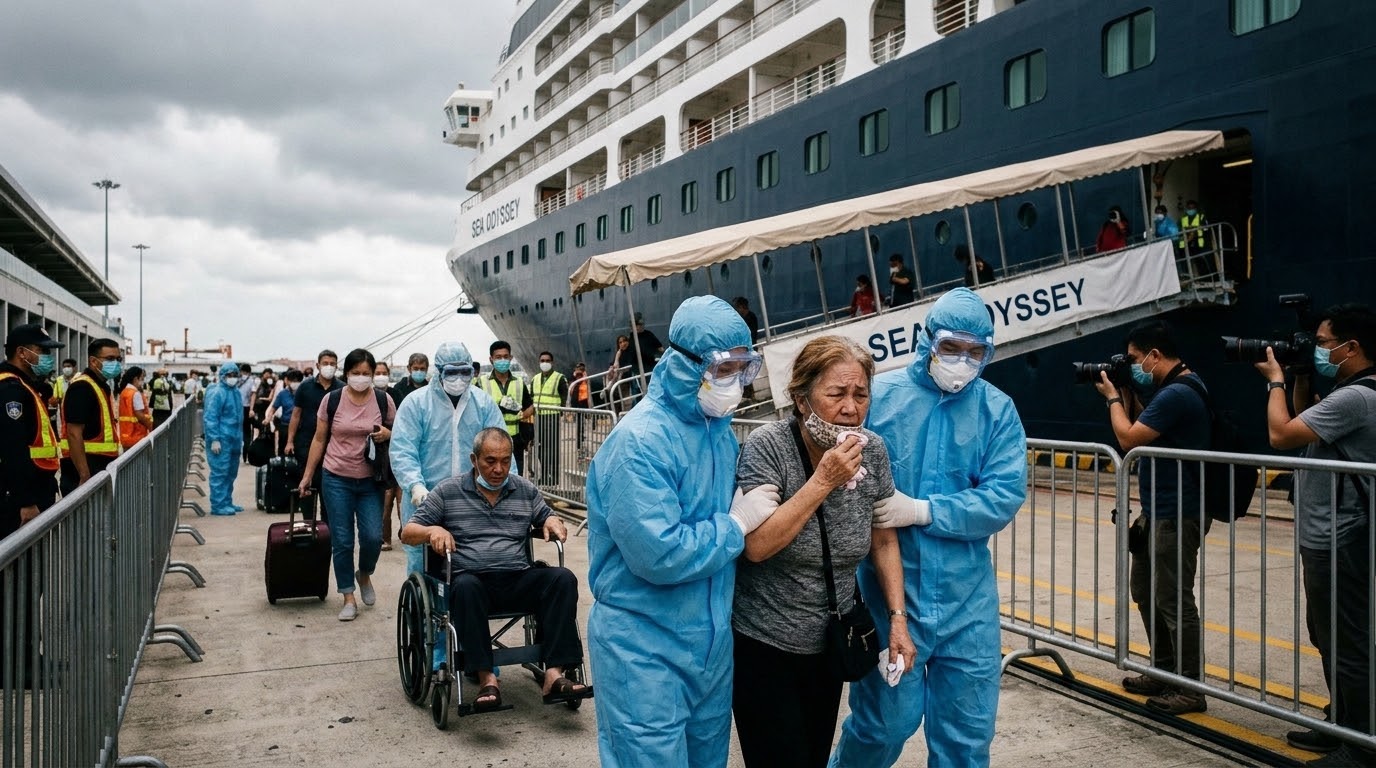
The Dutch-flagged expedition vessel departed Tenerife for the Netherlands on Monday after its final six passengers disembarked: four Australians, one British national and one New Zealander. Spanish and international authorities said new positive results were recorded in an American, a Spaniard and a French national who had already returned home, bringing confirmed cases linked to the ship to seven, with two additional suspected infections, according to the World Health Organization.
Spain’s health ministry also reported that another Spaniard, quarantining in Madrid after evacuation, had returned a provisional positive result. In the United States, health officials said a second American from Sunday’s repatriation flight developed mild symptoms; both U.S. passengers were transported in biocontainment units as a precaution. In France, Health Minister Stéphanie Rist said a woman isolating in Paris was worsening clinically, and 22 close contacts had been identified for follow-up.
Two British nationals with confirmed infections are being treated in the Netherlands and South Africa. By Monday evening, operator Oceanwide Expeditions said 27 people remained on board, including 25 crew members and two medical staff. Those still aboard include nationals from the Philippines, the Netherlands, Ukraine, Russia and Poland. Ukraine’s foreign ministry said its citizens would assist the ship’s transfer to the Netherlands and enter quarantine on arrival, adding they had no symptoms.
Impact & Consequences
The outbreak has forced a broad, resource-intensive public health response involving charter flights, hospital isolation, contact tracing and cross-border monitoring. More than 90 people from the vessel have already been repatriated. Four Canadians arrived in British Columbia after a charter route via Quebec and were instructed to self-isolate for at least three weeks. Seventeen U.S. citizens and one UK national resident in the United States were transferred to a medical facility in Nebraska for clinical assessment, while seven other Americans had already returned earlier and are being monitored in their states.
Authorities continue to stress that the chance of a major outbreak remains low, but the incident has exposed policy differences over containment timelines and risk communication. The WHO has advised 42 days of isolation for those leaving the ship, reflecting concern over delayed symptom onset and potential person-to-person spread in specific hantavirus strains. National agencies balancing public reassurance with caution now face pressure to keep messaging consistent while handling a dispersed passenger cohort across multiple jurisdictions.
Background & Context
Hantaviruses are typically carried by rodents, and most transmission to humans occurs through exposure to contaminated droppings or aerosols. However, health experts say the Andes strain, believed by the WHO to have infected some passengers in South America, can spread between people in rare circumstances. Reported symptoms include fever, severe fatigue, muscle pain, abdominal discomfort, vomiting, diarrhea and breathing difficulty, with progression potentially rapid in serious cases.
The MV Hondius sailed from Ushuaia, Argentina, on 1 April with 147 passengers and crew representing 23 countries. The first death was an elderly Dutch man on 11 April, before testing could confirm infection, though officials believe he may have been the earliest case in the cluster. His wife left the ship at St Helena on 24 April, traveled to South Africa and died in Johannesburg two days later; she was confirmed positive. A German woman died on board on 2 May and was also a confirmed case. Spain’s health minister further said a police officer involved in repatriation operations died of cardiac arrest.
International Response
Governments in Europe and North America have pursued varying but overlapping measures, including mandatory quarantine, monitored self-isolation and hospital observation. In the UK, 20 British nationals flown from Tenerife to Manchester were taken to Arrowe Park Hospital for a 72-hour isolation period, with no symptoms reported. Spain placed 14 repatriated citizens in mandatory quarantine at a military hospital in Madrid and scheduled additional evacuation flights. A separate flight carrying 26 passengers and crew, including eight Dutch nationals, arrived in the Netherlands on Sunday.
The WHO has called for strict adherence to its precautionary guidance. Director-General Tedros Adhanom Ghebreyesus warned that decisions not aligned with WHO recommendations could carry risks. In contrast, acting CDC head Dr Jay Bhattacharya said the situation should not be treated like the Covid-19 pandemic, emphasizing that human-to-human spread appears uncommon. Oceanwide Expeditions, in a video message from Captain Jan Dobrogowski, acknowledged the deaths and described the past weeks as deeply difficult for those on board.
What to Expect Next
Attention will now shift to monitoring repatriated passengers through their quarantine windows, confirming provisional test results and tracking traced contacts, especially in France and Spain. The ship’s transfer to the Netherlands and subsequent quarantine of remaining crew are expected to proceed under medical oversight. Key unanswered questions include whether additional secondary cases emerge and whether national health authorities move closer to a common isolation standard in line with WHO guidance.