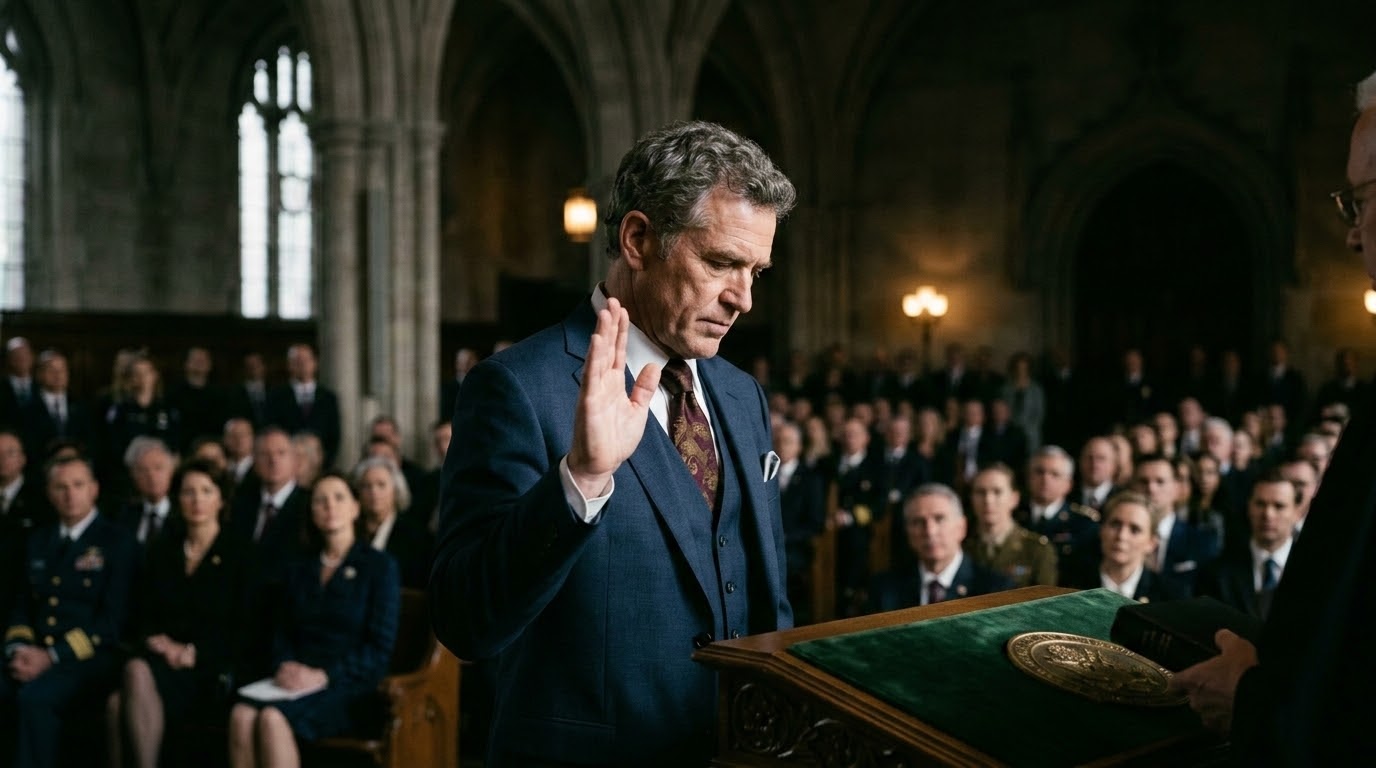
Ugandan President Yoweri Museveni was sworn in on Wednesday for a seventh straight term at Kampala’s Kololo Independence Grounds, extending his rule to 2031 after winning more than 70% in a disputed January vote. The inauguration matters far beyond protocol, underscoring how Uganda’s political future remains tightly bound to one leader after four decades in power.
What Happened
Museveni, 81, took the oath under intense security deployment across the capital, where police and military units, including armored vehicles, were positioned ahead of the event. Authorities said the measures were intended to preserve order. The government also declared the day a public holiday as regional leaders arrived for the ceremony, including Tanzania’s Samia Suluhu Hassan, DR Congo’s Félix Tshisekedi, South Sudan’s Salva Kiir, and Somalia’s Hassan Sheikh Mohamud.
In his inaugural speech, Museveni told citizens the new term should signal “no more sleep for all Ugandans,” framing the next five years as a push for jobs, higher household incomes, and expanded infrastructure. He said the country should build on what he described as decades of progress in peace and development since he came to office in 1986 as a rebel commander and later transitioned into electoral politics.
The election that renewed his mandate remains sharply contested. Opposition leader Bobi Wine, 44, whose legal name is Robert Kyagulanyi Ssentamu, rejected the outcome as fraudulent and accused authorities of ballot manipulation. Election officials denied those claims and insisted the vote was credible. Wine later left Uganda, saying he feared for his life, while Museveni accused opposition forces of trying to overturn results through violence and described them as terrorists.
Impact & Consequences
Museveni’s new term consolidates continuity at the top of the state, but it also amplifies pressure on Uganda’s already polarized political environment. With one of the world’s youngest populations, many citizens have never known another president. The gap between a long-ruling establishment and younger urban voters is likely to shape debate over governance, employment, and political freedoms throughout this term.
Security and rights concerns are expected to remain central. Rights organizations have criticized post-election crackdowns and alleged unlawful killings, while opposition figures report intimidation and arbitrary force. Political uncertainty could affect Uganda’s international image as a stable regional partner, even as Kampala seeks to project confidence on infrastructure growth and economic opportunity. The conduct of security agencies, treatment of opposition leaders, and scope of civic space will likely influence donor engagement and diplomatic messaging in the years ahead.
Background & Context
Museveni is among a small group of African leaders who have remained in office for more than four decades, alongside Congo-Brazzaville’s Denis Sassou Nguesso, Equatorial Guinea’s Teodoro Obiang, and Cameroon’s Paul Biya. Since taking power in 1986, he has won seven elections, gradually becoming one of the continent’s most entrenched political figures. Analysts widely suggest this could be his final term, though he has not publicly committed to a retirement timeline.
Succession speculation has increasingly focused on his son, Gen Muhoozi Kainerugaba, Uganda’s military chief. Kainerugaba has drawn criticism over inflammatory social media posts targeting opposition figures, including Wine. Tensions have also sharpened around other opposition leaders, notably Kizza Besigye, who has remained jailed since late 2024 after being taken from Kenya to Uganda and later charged in a military court with weapons-related offenses he denies. A recently passed Sovereignty Bill, criminalizing actions deemed to advance foreign interests and labeling foreign-funded actors as agents, has further raised concerns over shrinking political space.
International Response
Regional attendance at the swearing-in signaled formal diplomatic recognition of Museveni’s renewed mandate and Uganda’s continued role in East and Central African politics. Leaders from neighboring states publicly prioritized stability and state-to-state engagement, reflecting Kampala’s strategic significance in regional security and trade networks.
At the same time, international rights monitors have issued stark warnings. Amnesty International said at least 16 people were likely killed between 15 and 18 January by military and police units, and reported that those affected were unarmed and posed no immediate threat. Ugandan authorities have rejected allegations of systemic abuse, maintaining that security actions are lawful and necessary. This divide between official narratives and rights reporting is likely to shape international scrutiny of Uganda during Museveni’s new term.
What to Expect Next
Attention will now turn to whether Museveni’s government can deliver on promises of jobs and wealth creation while easing political tensions after a divisive vote. Observers will watch enforcement of the new Sovereignty Bill, legal proceedings involving opposition figures, and the behavior of security forces. Questions about succession, especially around Gen Kainerugaba, are expected to intensify as Uganda moves deeper into a term projected to end in 2031.