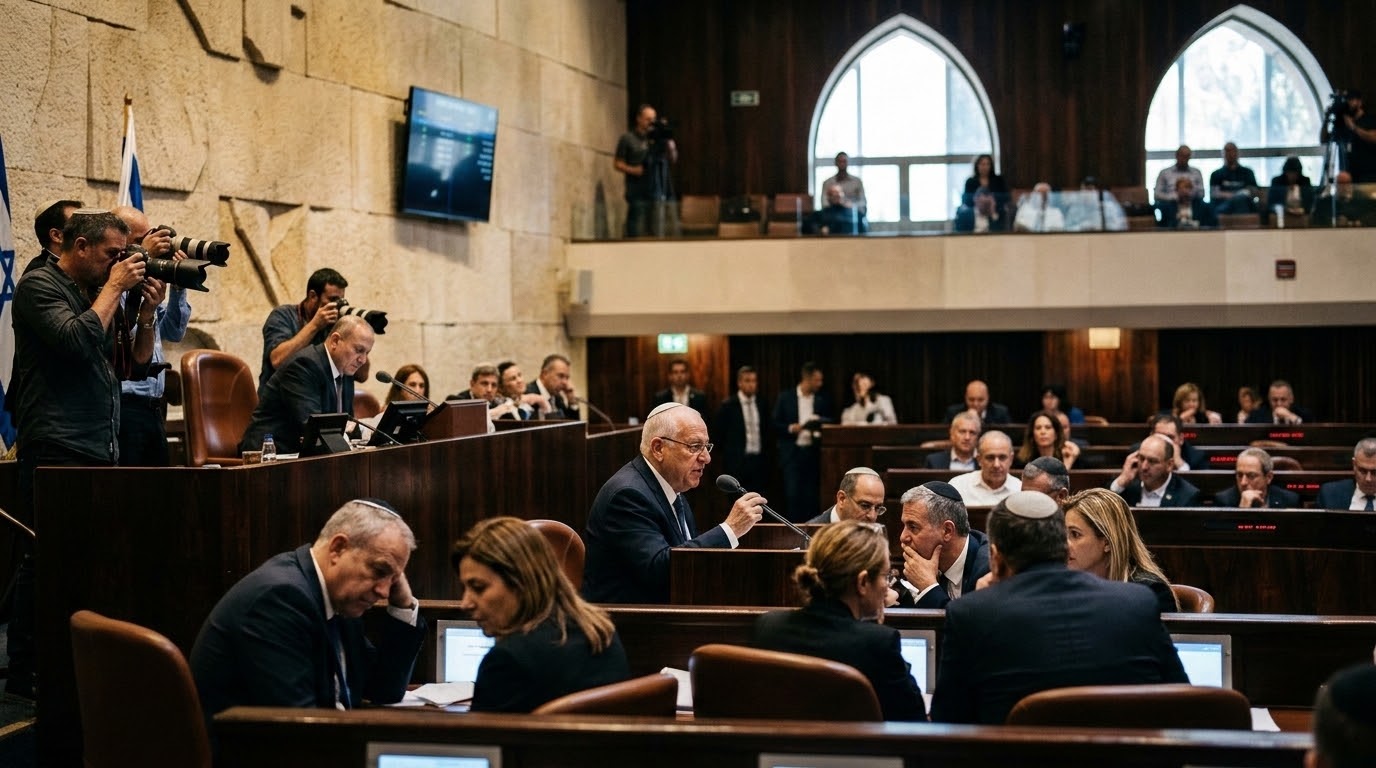
Israel’s parliament has passed a bill establishing a special tribunal to try Palestinians accused of involvement in the October 7, 2023 attacks, with authority to impose the death penalty. Approved late Monday by a 93-0 vote in the 120-seat Knesset, the measure is significant because legal groups say it reshapes core criminal safeguards in one of the conflict’s most politically charged cases.
What Happened
The legislation passed with no votes against it, while 27 lawmakers were absent or did not take part. The bill creates an exceptional legal track for suspects linked to the Hamas-led assault on communities near Gaza. According to critics, it departs from regular Israeli criminal procedure by broadening judicial discretion over contested evidence and by introducing public broadcast requirements for key courtroom stages.
Muna Haddad, a lawyer at Adalah, the legal center representing Arab minority rights in Israel, said the text is designed to lower protections that normally underpin due process. In comments reported by Al Jazeera, she said the measure permits mass proceedings that diverge from ordinary evidentiary standards and allows judges wide latitude to admit material allegedly obtained under coercive conditions, including treatment that could amount to torture or other abuse.
The same bill requires filming and publishing major trial moments on a dedicated website, including opening sessions, verdict announcements, and sentencing. In Israel’s court system, cameras are generally restricted, making this a notable procedural break. Haddad warned that mandatory public broadcasting could erode the presumption of innocence by framing defendants as effectively guilty once indicted, before a full judicial examination of the evidence is completed.
Impact & Consequences
The immediate effect is likely to be legal acceleration in cases involving an estimated 200 to 300 Palestinians reportedly detained in connection with October 7 events and still not formally charged. Human rights organizations say the new framework could make convictions easier and capital punishment more attainable in trials where evidentiary reliability and defendant rights are already intensely disputed.
Beyond individual cases, the move could deepen Israel’s diplomatic and legal pressure abroad. Domestic rights groups, including Hamoked, Adalah, and the Public Committee Against Torture in Israel, said justice for October 7 victims is urgent but must not abandon core legal principles. Their concern is that exceptional procedures, especially in death-eligible cases, may be viewed internationally as incompatible with fair-trial standards, potentially affecting Israel’s standing in ongoing international legal forums and relations with partner governments closely monitoring judicial conduct.
Background & Context
The bill emerges after the October 7, 2023 Hamas-led attack that killed at least 1,139 people in Israel, most of them civilians, according to an Al Jazeera compilation based on official Israeli figures. About 240 people were taken captive. Since then, Israel’s military campaign in Gaza has killed at least 72,628 Palestinians, including at least 846 deaths reported since a US-brokered ceasefire took effect last October, according to figures cited in the source material.
The new measure is distinct from a law passed in March authorizing the death penalty for Palestinians convicted of killing Israelis in future cases. Because that earlier law is not retroactive, it does not cover suspects linked to October 2023 events. The newly approved tribunal bill appears tailored to that gap. Rights advocates say this sequencing shows a broader shift toward capital punishment and exceptional mechanisms in conflict-linked prosecutions, while Israeli authorities and supporters frame it as necessary accountability for mass-casualty violence.
International Response
International legal scrutiny around the Gaza war forms the backdrop to reactions. The International Criminal Court is investigating conduct during the conflict and has issued arrest warrants for Prime Minister Benjamin Netanyahu and former Defense Minister Yoav Gallant, along with three Hamas leaders who were later killed by Israel. Israel is also contesting a genocide case at the International Court of Justice and rejects the allegations brought against it.
Hamas spokesperson Hazem Qassem condemned the tribunal bill, saying it was intended to shield Israel from accountability for actions in Gaza. Meanwhile, Israeli rights organizations have taken a different line from Hamas while still opposing the bill’s structure: they acknowledge the legitimacy of seeking justice for October 7 victims but argue that any process must preserve due process, evidentiary integrity, and equal legal protections rather than creating ad hoc trial rules.
What to Expect Next
The bill’s implementation phase will likely center on court procedures, evidentiary challenges, and possible petitions in Israel’s judicial system over constitutionality and rights protections. Attention will also focus on whether prosecutors move quickly against detainees still awaiting charges and how judges apply expanded powers in practice. International observers, including legal institutions already engaged with Gaza-related cases, are expected to closely track whether proceedings meet accepted fair-trial standards.