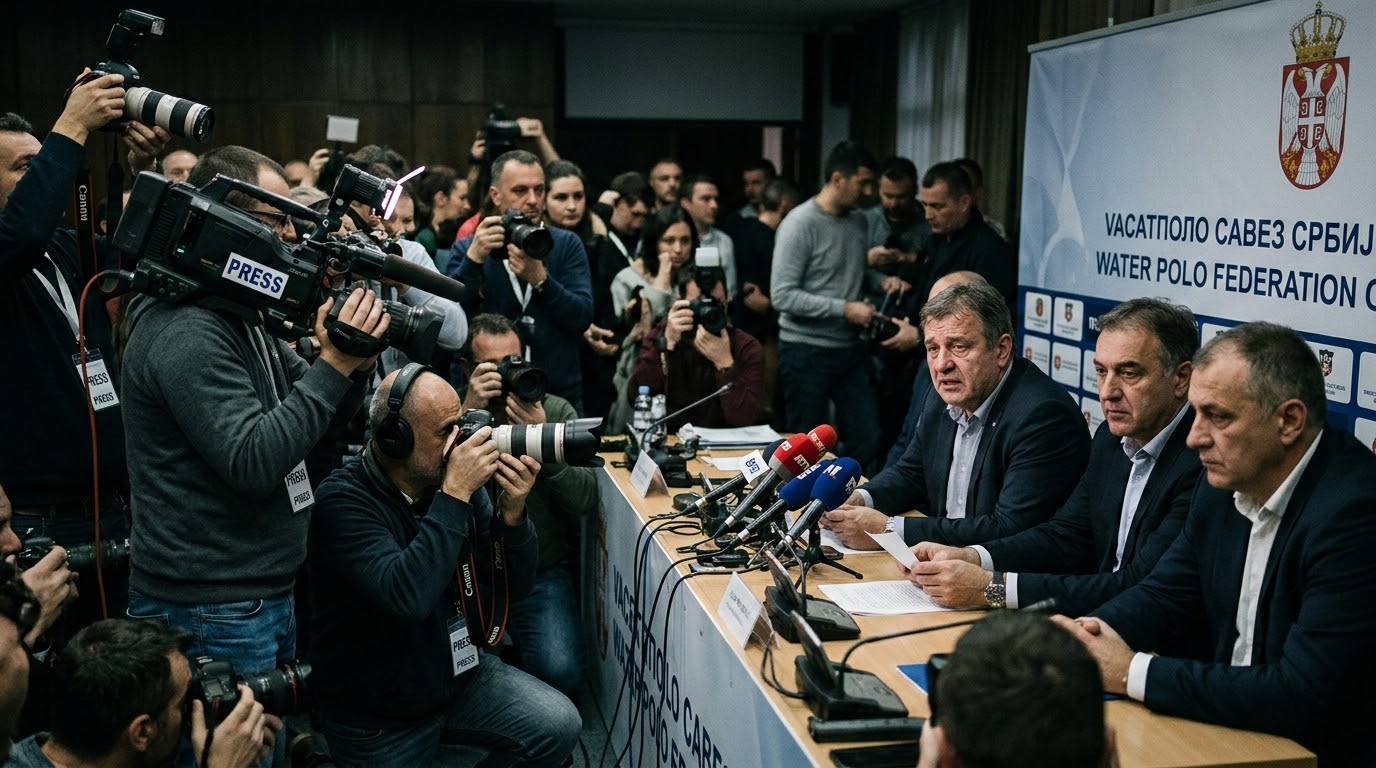
Serbia’s men’s water polo program has plunged into crisis after Olympic head coach Uros Stevanovic stepped down and 11 members of the country’s recent European champion squad suspended national-team participation, escalating a dispute with newly elected federation president Slobodan Soro and raising fresh uncertainty over one of the sport’s most decorated national sides.
What Happened
The conflict intensified on Friday when players released an open letter accusing Soro of repeatedly diminishing the team’s accomplishments. The federation later posted that letter on its official website, confirming the standoff while noting that the signatories included seven former and four current national-team athletes. In the same communication, the federation said it did not want to be drawn into what it described as the transformation of a normal internal process into a broader public confrontation.
At the center of the dispute are comments made by Soro shortly after his election on April 29 as head of Serbia’s water polo federation. Soro, a former goalkeeper, said Serbia’s January European championship triumph was the result of “momentary inspiration” and argued the national side no longer operated at its earlier standard. Those statements drew a sharp response from players, who said in their letter that they would not represent Serbia while Soro and his leadership team remained in office.
The athletes directly rejected the characterization of their success as a short-lived surge, writing that their gold medals were earned through years of sacrifice. Their boycott comes only months after Serbia won European gold in Belgrade and after the country’s Olympic title campaign in Paris in 2024. The dispute also follows a poor competitive result: Serbia failed to qualify for the World Cup finals scheduled for July in Sydney, adding performance pressure to a widening governance rift.
Impact & Consequences
The immediate effect is a major blow to Serbia’s short-term competitiveness. Losing the Olympic coach and a core bloc of elite players at once undermines planning, squad continuity, and tactical preparation. Even if replacements are named quickly, Serbia would face a difficult transition period as staff and athletes adapt to altered roles under intense scrutiny. The crisis threatens to weaken a program long regarded as a benchmark in men’s water polo.
Beyond results in the pool, the rupture could shape governance in Serbian sport more broadly. Public conflict between federation leadership and medal-winning athletes risks eroding trust between institutions and national-team players, especially in sports where success depends on long-term coordination. Sponsors, youth systems, and domestic clubs may also feel secondary effects if uncertainty persists. For supporters, the dispute transforms a celebrated era into a period defined by administrative instability rather than sporting momentum.
Background & Context
Serbia has spent years among the world’s top water polo nations, with consistent major-tournament success helping establish the men’s team as one of the country’s most visible sporting symbols. That status was reinforced again this year when Serbia captured the European title in Belgrade in January, a result that followed Olympic gold in Paris in 2024. In that context, suggestions that recent success was merely incidental carried exceptional political and emotional weight inside the sport.
The timing of Soro’s remarks was especially sensitive. His election on April 29 marked a leadership transition at a moment when expectations were high but competitive warning signs had emerged, including Serbia’s failure to reach the July World Cup finals in Sydney. Instead of calming pressure after that setback, the federation’s leadership change appears to have opened a public legitimacy dispute: whether recent underperformance reflects a deeper decline or a temporary phase for a team that had just won continental gold.
International Response
No formal comment from global water polo authorities or international governing bodies was included in the federation communications released so far, and Soro had not publicly responded to the boycott at the time of reporting. The absence of immediate external intervention leaves the dispute largely in domestic hands, with Serbia’s federation and athletes now carrying responsibility for any de-escalation.
Still, the situation is being closely watched across the international water polo community because Serbia’s roster and coaching system have had outsized influence on recent elite competition. Rivals, tournament organizers, and national federations are likely monitoring whether the impasse affects squad selection and Serbia’s readiness for upcoming events. For now, outside stakeholders have mostly reacted through observation rather than direct public mediation, awaiting signs of internal negotiations.
What to Expect Next
The next phase will depend on whether federation leaders open talks with the boycotting players and whether a path is created for Stevanovic’s replacement without deepening the divide. Key questions include whether Soro clarifies or retracts his comments, whether the players soften their position, and how quickly Serbia can stabilize selection and coaching plans before future international windows. Until then, uncertainty will define one of water polo’s most successful national programs.