A record-setting heatwave has swept across South Asia in recent days, with India, Pakistan and Bangladesh reporting extreme temperatures and heat-linked deaths in late April and early May. The crisis matters far beyond weather forecasts, as officials and scientists warn that rising heat is colliding with weak public protections in a region home to hundreds of millions of people.
What Happened
Authorities across the region have reported temperatures far above seasonal norms, with several locations in India and Pakistan climbing into the 45C to 50C range. In northwestern and central India, some readings passed 46C. In Maharashtra, Akola reached 46.9C and Amravati 46.8C on April 26. India’s weather office, the India Meteorological Department (IMD), has warned that severe conditions are likely in western regions and along coastal areas through May, with some places expected to run 3C to 5C above normal.
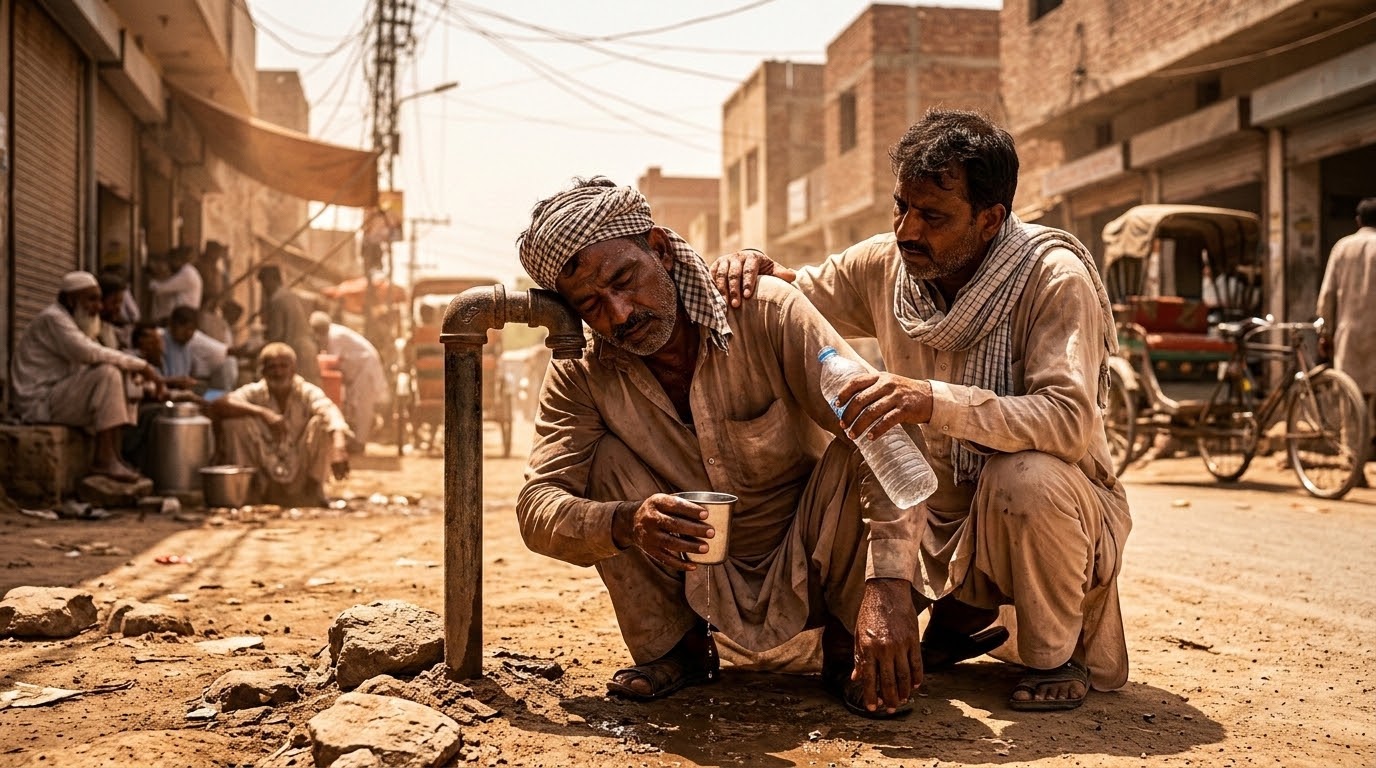
Pakistan has also entered a high-alert period. The Pakistan Meteorological Department warned that intense heat could persist in central and upper Sindh and urged residents to avoid direct sun exposure and stay hydrated. Karachi recorded 44C on Monday, its highest temperature since 2018, according to the department. Local emergency services said at least 10 people died in the city on Tuesday from heat-related complications. In Sindh, Jacobabad and Sukkur are forecast to approach 46C later in the week.
Bangladesh has faced repeated spikes as well. Dhaka and districts including Faridpur, Rajshahi and Pabna registered 37C to 38C in mid-to-late April. The country had already seen a major warning sign in 2024, when officials logged 24 heatwave days in April, the highest in 75 years, surpassing the previous record of 23 days in 2019.
Impact & Consequences
The immediate human toll is rising. In India, local media reported multiple recent deaths, including two school teachers who died from heatstroke and four other heat-related deaths in West Bengal during the last week of April. Health experts say the danger extends beyond acute heatstroke, with prolonged exposure linked to cardiovascular stress, kidney injury, poor sleep and worsening chronic illnesses. Older adults, pregnant women, children and people with existing medical conditions face the highest risk.
Economic fallout is also mounting, particularly among low-income workers. Kartikeya Bhatotia of Harvard University’s Mittal South Asia Institute said roughly 380 million Indians are engaged in heat-exposed labor, many in informal sectors where legal protections are weak. Lost work hours can reduce daily earnings, harming household access to food and medicine. The heat emergency is therefore not only a weather event but a social and governance test, exposing how access to cooling, housing quality and healthcare determine who survives and who suffers most.
Background & Context
South Asia is no stranger to harsh pre-monsoon summers, but researchers and meteorological agencies say recent events are becoming more intense, longer-lasting and geographically broader. Anjal Prakash, research director at India’s Bharti Institute of Public Policy, described an unusually early and severe pattern this year, driven in part by persistent high-pressure systems that trap hot air near the ground, suppress cloud formation and allow continued solar heating.
Climate variability is adding pressure. Prakash noted weak pre-monsoon rainfall and lingering El Nino-like effects as additional factors reducing natural cooling. The UN’s World Meteorological Organization (WMO) has said El Nino conditions could re-emerge between May and July after neutral conditions earlier in the year, with a high likelihood of strengthening. The WMO says climate change does not necessarily make El Nino more frequent or intense, but it can amplify impacts. Bhatotia added that temporary cooling influences in India, including aerosol pollution and irrigation, may weaken over time, potentially accelerating future warming.
International Response
Global and regional experts are urging governments to shift from emergency advisories to structural adaptation. India’s city-level Heat Action Plans, often cited as a model, include warnings, water distribution, cooling centers and rest guidance. But Bhatotia said these systems often protect people already connected to formal institutions, while informal workers and daily wage earners remain outside practical enforcement.
In Pakistan, climate scholar Fahad Saeed has called for more transparent reporting of heat-related losses, arguing that accurate mortality and damage data are essential for credible domestic planning and international climate finance. He warned that undercounting deaths and impacts can delay effective countermeasures and weaken claims for loss-and-damage support. Across institutions, the broad consensus is that adaptation must include stronger health surveillance, labor safeguards, better housing standards and coordinated disaster management.
What to Expect Next
Weather agencies expect dangerous heat to persist through May in parts of South Asia, with possible additional escalation if El Nino conditions take hold in coming months. Governments are likely to expand advisories and local emergency measures, but experts say the central question is whether authorities can quickly improve implementation for high-risk groups. Without stronger enforcement, reliable data and longer-term urban and labor reforms, heat exposure is expected to outpace current protections.