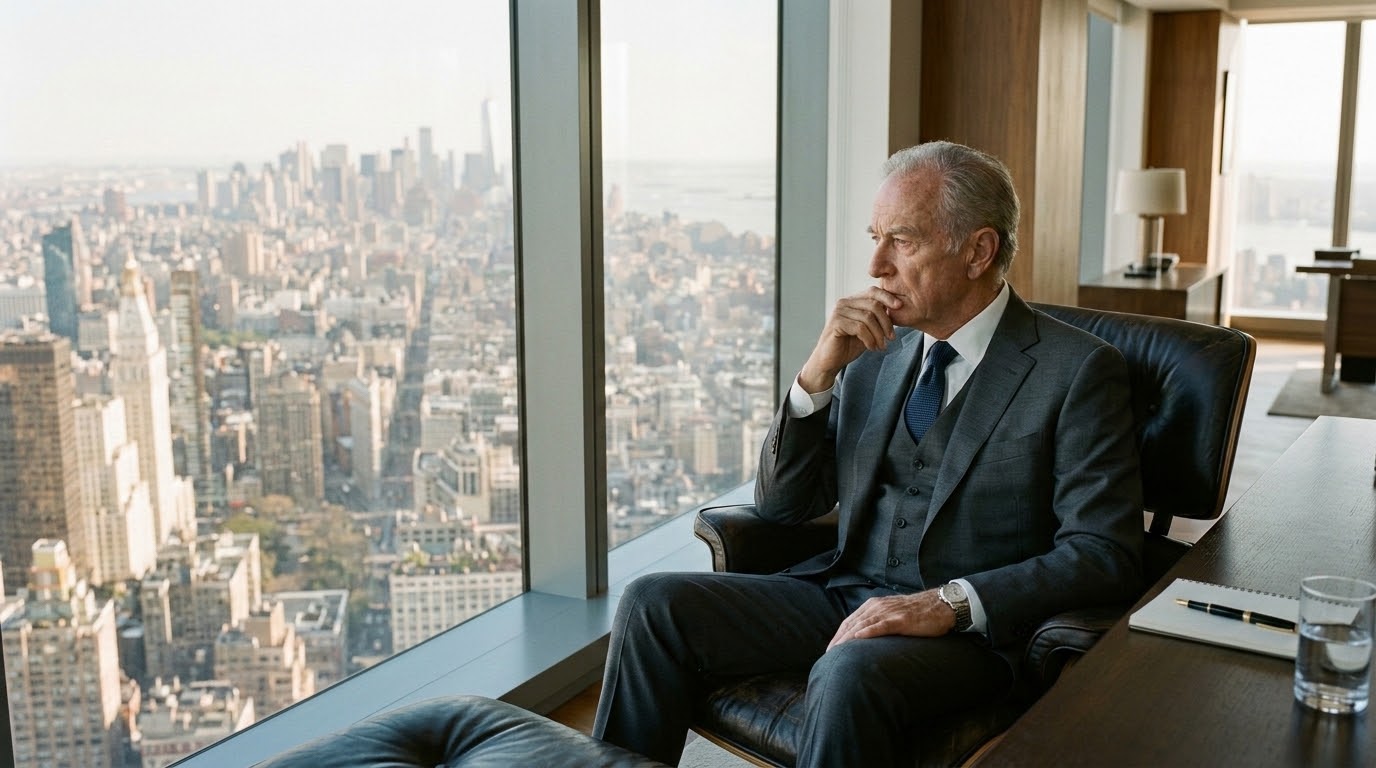
Ted Turner, the media entrepreneur who launched CNN and reshaped modern journalism through continuous live news coverage, has died at age 87, the network said. His death marks the passing of a broadcasting pioneer whose vision changed how audiences worldwide consume major events as they unfold.
What Happened
CNN announced Turner’s death, confirming the loss of the man who created Cable News Network in 1980 as the first channel dedicated to round-the-clock news. The model was initially viewed as risky, but it quickly began proving its value as viewers sought immediate updates during major national emergencies. CNN’s early credibility grew during fast-moving stories, including the 1981 assassination attempt on US President Ronald Reagan and the 1986 Challenger space shuttle disaster.
In a statement, CNN Chairman and CEO Mark Thompson described Turner as a bold and highly engaged founder who backed intuition and took major editorial and business risks. Thompson said Turner remained the defining force behind CNN’s identity and influence. The network’s breakthrough as a global news institution came during the 1990-1991 Gulf War, when its live reporting from Iraq brought conflict coverage directly into homes worldwide and established a new benchmark for television journalism.
Turner’s impact extended far beyond CNN. After taking over his family’s billboard business following his father’s death, he expanded into radio in Atlanta and then television, building Turner Broadcasting System into a media powerhouse. His portfolio eventually included TBS, TNT, Turner Classic Movies, and Cartoon Network, turning him into one of the most prominent figures in American media.
Impact & Consequences
Turner’s death is likely to prompt renewed scrutiny of his long-term impact on global news culture. His launch of nonstop television news altered newsroom structures, audience expectations, and competitive strategy across the industry. Networks increasingly shifted toward immediate, live, event-driven reporting, a format later replicated by channels around the world. The success of CNN also encouraged new entrants, including Fox News, launched in 1996 by Rupert Murdoch, a long-time rival of Turner.
For media companies, Turner’s legacy sits at the intersection of innovation and scale: editorial ambition paired with aggressive expansion. His business decisions helped accelerate consolidation in entertainment and news, culminating in the merger of his company with Time Warner. At a public level, his model changed how governments, markets, and citizens receive crisis information, narrowing the time between event and broadcast to near real-time and making televised news a central part of geopolitical perception.
Background & Context
Turner’s rise was unconventional and marked by high-risk bets. He built his career after assuming control of the family advertising business, then moved into broadcasting by acquiring a radio station in Atlanta. Within a decade, that step evolved into the foundation of Turner Broadcasting. He pursued expansion through acquisitions, including a short-lived and costly $1.5 billion purchase of MGM in 1985, later adding Castle Rock Entertainment and New Line Cinema in the 1990s.
His influence also crossed into sports and public life. Turner was a world-class sailor who won the America’s Cup in 1977. He also owned major Atlanta-based sports franchises, including the Braves in baseball, the Hawks in basketball, and the Thrashers in ice hockey. His personal profile remained high for years, including his marriage to actor Jane Fonda from 1991 to 2001. Taken together, his media holdings and public ventures reflected an unusually broad footprint across American culture.
International Response
Initial reaction has centered on tributes from within the global media community, with executives, journalists, and analysts crediting Turner with redefining international television news. CNN’s own leadership framed him as the founding force whose ideas still shape the network. Industry observers have highlighted how his commitment to live international reporting created a template for cross-border news delivery, particularly during wars and disasters.
Commentary has also pointed to the political relevance of his model. During the Gulf War era, CNN’s influence became so pronounced that then-President George H.W. Bush famously said he learned more from the network than from the CIA, underscoring its role in real-time policy awareness. Turner’s passing is therefore being marked not only as a corporate milestone, but as a significant moment in the history of global information flow.
What to Expect Next
In the coming days, CNN and other major broadcasters are expected to continue commemorating Turner’s life and assessing his influence on modern journalism. Retrospectives will likely revisit key moments from Reagan-era breaking coverage to Gulf War reporting and media consolidation. The broader debate over his legacy—balancing innovation, commercialization, and the demands of 24-hour news—will probably shape how news organizations frame the future of live global reporting.