Spain’s decision to receive passengers from the MV Hondius in Tenerife this weekend has sparked a tense stand-off on the island, where port workers and residents fear exposure after a hantavirus outbreak onboard. The move, coordinated with the World Health Organization, matters beyond public health, touching political trust, migration tensions, and memories of Covid-era disruption.
What Happened
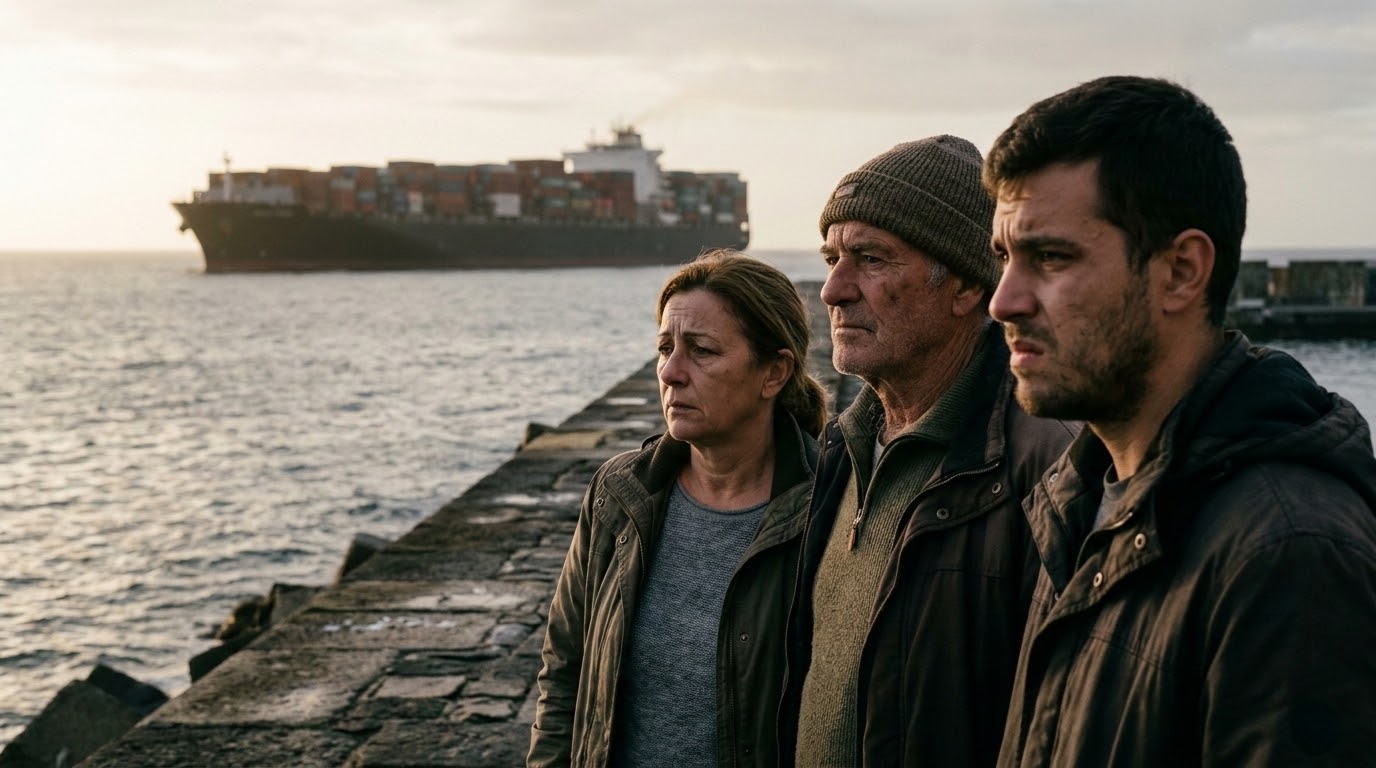
The Hondius, arriving from Cape Verde after three people were medically evacuated during the voyage, is expected to reach waters off Tenerife under a plan approved by Madrid and the WHO. Rather than docking in a city harbor, the vessel will remain offshore while passengers are transferred to the industrial port of Granadilla in the island’s southeast, away from residential neighborhoods. Spanish authorities say passengers will then be sent home; 14 Spanish nationals onboard are to be flown to Madrid for quarantine.
Before the arrival, dock workers staged a demonstration outside the Canary Islands parliament in Santa Cruz on Friday. Protesters used whistles and vuvuzelas and carried signs demanding concrete protections before any operation begins. Joana Batista, a representative of a local port workers’ union, said workers had not received sufficient information or dedicated safety protocols for handling an infected vessel. She warned that some workers were prepared to obstruct the ship’s arrival if safeguards were not implemented.
Regional anger has also spread beyond the docks. María de la Luz Sedeño, a nutritionist observing the protest, said residents felt ignored by central authorities, citing opposition from Canary Islands president Fernando Clavijo. In response to criticism over transparency, Spain’s Socialist-led government publicly detailed transfer logistics and emphasized there would be no direct contact between passengers and local communities.
Impact & Consequences
The immediate impact is a test of confidence in Spain’s emergency management at a sensitive frontline territory. For workers in transport and port operations, the issue is occupational safety and clarity of command. For residents, concern centers on whether health assurances can be trusted in practice once disembarkation starts. Virginia Barcones, head of Spain’s civil protection agency, said the public would be “absolutely and completely protected,” signaling that government credibility now hinges on flawless execution.
Politically, the episode has intensified existing friction between Madrid and the Canary Islands government over decision-making authority in high-pressure situations. It has also provided an opening for partisan campaigning: the far-right Vox party has linked the ship’s arrival to its anti-irregular-migration messaging. Even among citizens who accept the operation, support appears conditional on strict containment and rapid repatriation. Any misstep could have lasting consequences for institutional trust, intergovernmental cooperation, and tourism-sensitive public sentiment in the archipelago.
Background & Context
The Canary Islands have become a recurring gateway for international emergencies, particularly migration flows from North and West Africa. According to NGO Caminando Fronteras, more than 3,000 people died in 2025 trying to reach the islands, often on precarious boats. While many islanders see humanitarian reception as a civic obligation, others view the constant pressure as evidence that local communities are carrying disproportionate burdens for national and European crises.
The Hondius case also revives pandemic-era memories. During the first phase of Covid-19 in Spain, a German tourist in La Gomera was identified as the country’s first confirmed case, followed shortly by the confinement of roughly 1,000 hotel guests and staff in Tenerife. That experience shaped public risk perception, making infectious-disease incidents especially resonant in the islands. Residents now weigh fatigue and fear against a practical acceptance that geography often places the Canaries at the center of transnational events.
International Response
The WHO’s coordination with Spain has been central to the operation’s legitimacy, with both seeking to avoid alarmist comparisons to Covid-19 while maintaining strict controls. International health messaging has focused on managed transfer, minimal exposure pathways, and targeted quarantine rather than broad restrictions. The goal has been to frame the response as a contained public-health intervention, not a generalized outbreak scenario.
Beyond health institutions, the islands remain under international attention for migration and humanitarian policy. Pope Leo is scheduled to visit in June to meet migrants and organizations supporting them, underscoring the archipelago’s global profile as a site where border management, human security, and public services intersect. The convergence of the ship incident and ongoing migration debate has reinforced scrutiny from political actors across Spain and abroad.
What to Expect Next
Authorities are expected to proceed with offshore anchoring, controlled ferry transfers to Granadilla, and rapid onward movement of passengers in the coming days. The key question is whether promised protections for workers and residents hold under real-time operational pressure. If the process concludes without infections or disruption, tensions may ease; if not, labor unrest and political confrontation between regional and central institutions are likely to intensify.