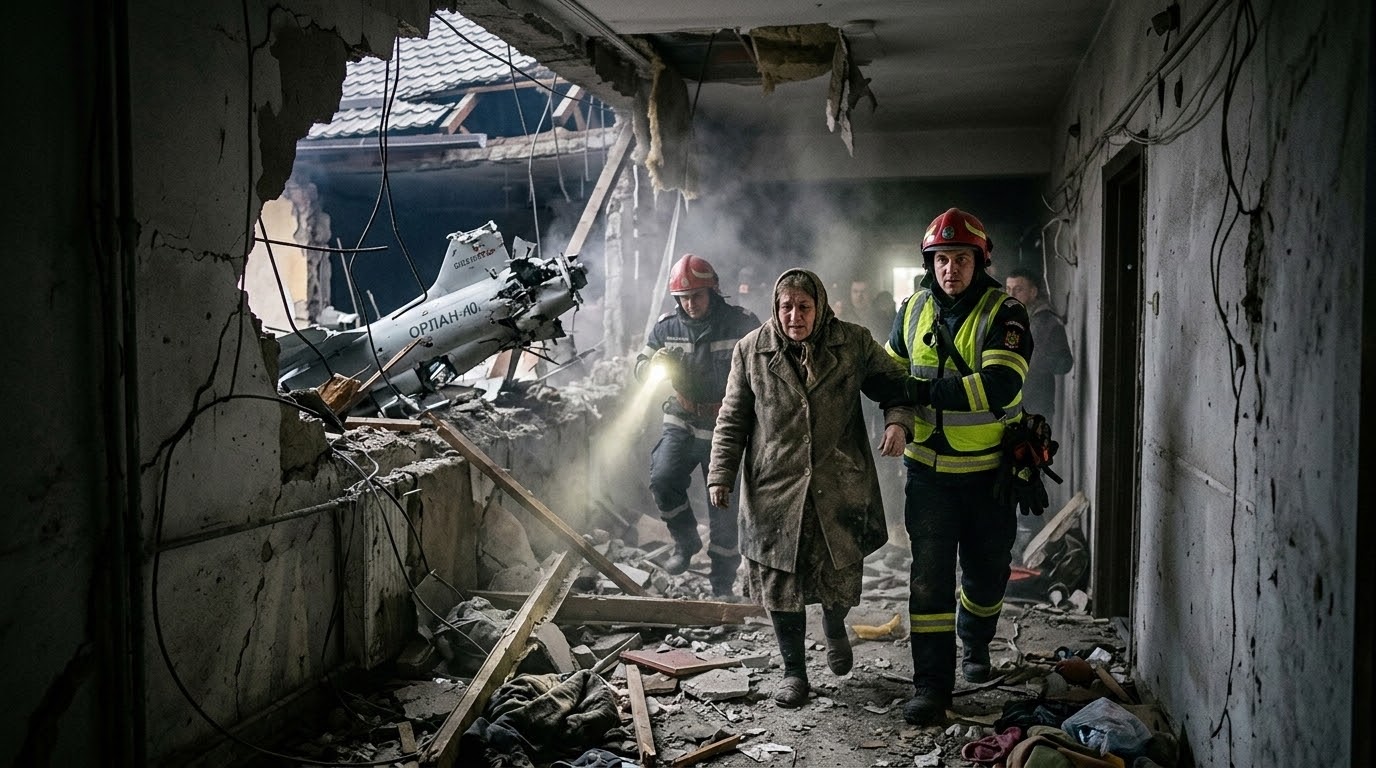
British military clinicians and paratroopers were deployed by air to Tristan da Cunha in early May after a UK national living on the remote South Atlantic island developed suspected hantavirus symptoms linked to the MV Hondius cruise outbreak, in an operation officials said was unprecedented for UK humanitarian medical support.
What Happened
The patient, a British resident of Tristan da Cunha, left the Dutch cruise ship MV Hondius on 14 April, according to the World Health Organization. He later reported gastrointestinal symptoms on 28 April and developed fever two days afterward. Officials said he remains in stable condition and is isolating on the island, which has a small permanent population and highly limited medical capacity.
In response, the Ministry of Defence said six members of 16 Air Assault Brigade and two specialist clinicians were flown from RAF Brize Norton, with medical personnel inserted by tandem parachute. The clinicians, an intensive care nurse and an intensive care doctor, were sent to reinforce an island healthcare service that normally operates with only two medical staff. The MoD said this marked the first time UK forces had parachuted medical personnel specifically for humanitarian assistance.
Military planners also delivered emergency oxygen and 3.3 tonnes of medical supplies after local stocks reached what officials described as a critical threshold. Local authorities on Tristan da Cunha reported the team landed on the island’s golf course and thanked residents for rapidly supporting the arrival. The operation took place in difficult weather conditions, with average winds often above 25 mph and no airstrip available, making maritime access usually the only route in or out.
Impact & Consequences
The emergency deployment underscores how quickly an infectious disease incident can evolve into a logistical crisis in isolated territories. Tristan da Cunha, home to 221 people, lacks many of the redundancies available in mainland health systems, so shortages of oxygen and specialist staff can become acute in days. The suspected case has therefore had implications far beyond one patient, prompting direct military intervention and a broader UK cross-government response.
The wider outbreak tied to MV Hondius has now produced six confirmed cases and two additional suspected infections, including the Tristan da Cunha patient. Three deaths have been reported in total, two of them in people confirmed to have hantavirus. The ship has reached Tenerife, where authorities are helping more than 100 passengers disembark for repatriation. For the UK, this has translated into major public health management measures, including monitored return flights and extended isolation arrangements for British passengers.
Background & Context
Hantavirus refers to a family of rodent-borne viruses. Most strains are not known to spread between people, but health authorities have identified the Andes strain in several cases linked to the MV Hondius cluster, and that variant can transmit from person to person. This distinction has shaped control measures, including isolation, clinical monitoring, and international contact tracing among passengers who left the vessel at different ports.
The current episode developed over several weeks after the first death on board was recorded. Before the first laboratory confirmation, some travelers had already disembarked, including two Britons in St Helena on 24 April. Those individuals are now voluntarily isolating in the UK. Officials have said no other British nationals remaining on the ship had reported symptoms at the latest update, though surveillance continues due to the incubation uncertainty and the ship’s multi-country passenger movements.
International Response
The WHO has issued regular situation updates and confirmed the timeline of the Tristan da Cunha case while tracking confirmed and suspected infections linked to the cruise vessel. UK public health authorities, including the UK Health Security Agency, are overseeing monitoring protocols for British nationals and coordinating testing where clinically indicated. Two British patients with confirmed infections are being treated outside the UK, one in the Netherlands and one in South Africa.
Senior UK ministers publicly framed the military insertion as a duty-of-care operation for overseas territories and British citizens abroad. Foreign Secretary Yvette Cooper said the government’s priority is the safety and wellbeing of British nationals. Armed Forces Minister Al Carns praised personnel involved in what he described as highly challenging conditions. The Ministry of Defence has maintained that the risk to the UK general public remains very low.
What to Expect Next
The next phase will center on repatriation and surveillance. Twenty-two British passengers are expected to return from Tenerife on a charter flight and enter a 45-day isolation period at Arrowe Park Hospital in Merseyside, with UKHSA oversight and testing as required. Health officials will focus on identifying any delayed symptom onset, while Tristan da Cunha’s reinforced medical team continues monitoring the island patient and local oxygen resilience.