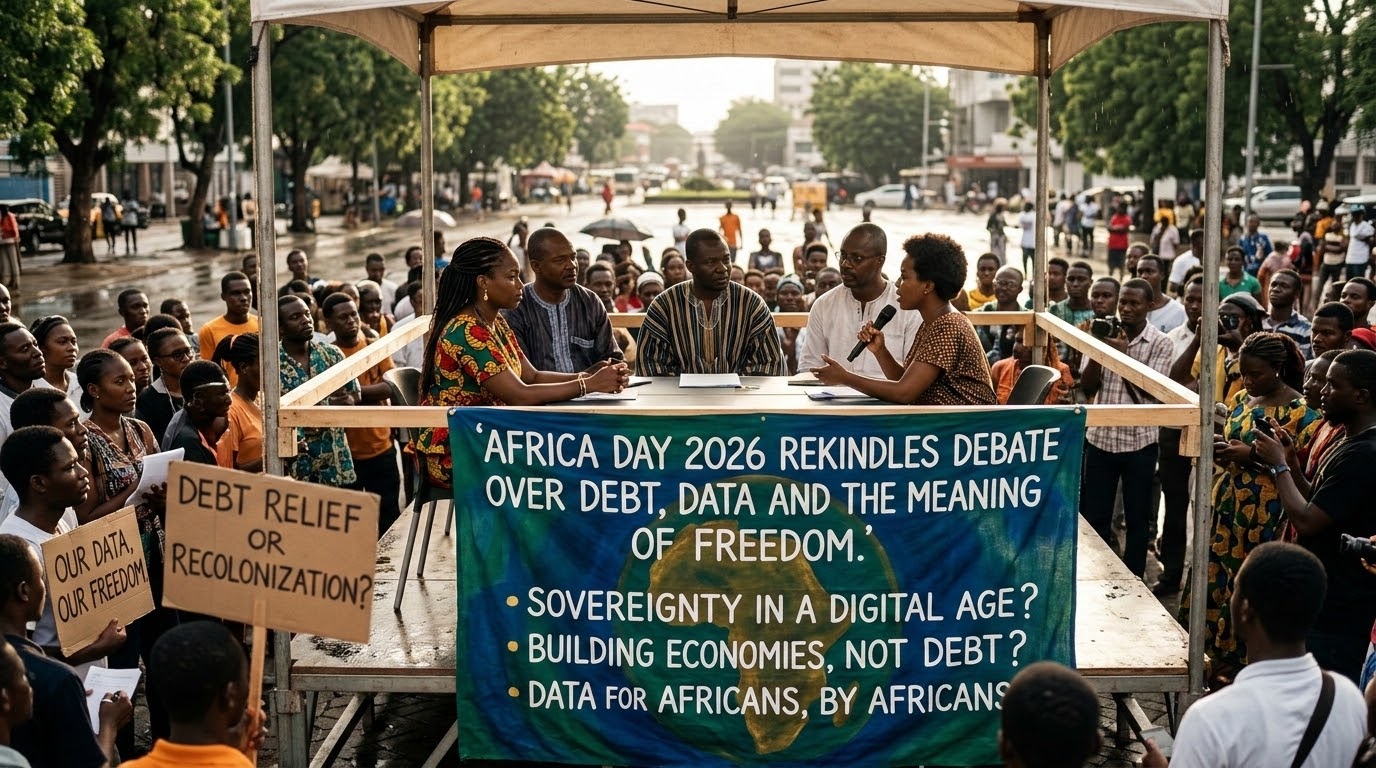
As African countries observe Africa Day 2026, commemorating the 1963 founding of the Organisation of African Unity in Addis Ababa, public debate has shifted from celebrating formal independence to questioning who controls the continent’s wealth, technology and policy direction. The anniversary is increasingly framed as a test of whether political freedom has translated into material progress.
What Happened
Africa Day marks the meeting of African leaders on May 25, 1963, when the Organisation of African Unity (OAU) was established in Ethiopia’s capital and became a defining symbol of anti-colonial unity. In 2026, that legacy remains emotionally powerful, especially among older Africans who experienced the transition from colonial rule to self-government. But this year’s reflections also highlighted intensifying concerns that independence-era promises have not produced sufficient economic security for ordinary citizens.
In Kenya, 74-year-old retired civil servant Mzee Josphat Kimanthi said political self-rule remains a historic gain that should not be minimized. At the same time, he described deep frustration over rising living costs and debt-linked pressures that younger generations now face. His comments captured a broader continental unease: sovereignty may exist on paper, but many households still feel vulnerable to decisions made far beyond their communities.
Analysts say the conversation has moved decisively toward control over production, finance and value chains. Professor Paul Mbatia of the Faculty of Social Sciences at Multimedia University of Kenya argued that meaningful liberation is impossible when a region exports raw output, imports finished goods, and fails to retain value internally. Similar questions are now being asked about digital infrastructure, with experts warning that the next phase of dependency may be technological rather than territorial.
Impact & Consequences
The practical effects are visible in national budgets and daily life. Across several African states, debt burdens have narrowed fiscal space, limiting governments’ ability to spend freely on jobs, public services and social protections. Negotiations with international lenders often shape economic policy choices, creating the perception that domestic priorities can be constrained by external financing conditions. For citizens, this can mean higher taxes, subsidy cuts, and slower improvements in living standards.
The implications extend to the digital economy. Cities such as Nairobi, Lagos and Kigali have become symbols of African innovation, with growth in mobile finance, artificial intelligence and startup activity. Yet critics note that much of the underlying infrastructure, including undersea internet links, data centers and cloud architecture, is financed or owned by foreign technology firms. Technology policy analyst Amina Osei of the African Centre for Digital Governance in Accra warned that extracting African data for offshore processing and resale could reproduce older patterns of external control in a new form.
Background & Context
Africa Day, once widely known as Africa Liberation Day, emerged from the decolonization era when newly independent states sought political solidarity against minority rule and foreign domination. The OAU later evolved into the African Union, reflecting expanded ambitions around integration, security and development. Over six decades, however, liberation has come to mean more than national flags and constitutions; it now includes ownership of natural resources, industrial capacity, financial autonomy and institutional accountability.
Demographics are central to this transition. With more than 60 percent of Africans under age 25, younger citizens increasingly judge freedom through employment prospects, affordability, public services and civil rights protections. In Lagos, 26-year-old software developer Chinedu Nwosu described Africa Day as often ceremonial for his peers unless linked to concrete reforms. He said many young people are focusing not only on foreign influence but also on internal governance failures, including corruption, excessive taxation and policing abuses.
International Response
The evolving debate has unfolded against a competitive geopolitical landscape in which Western governments, China, emerging economies and blocs such as BRICS are all expanding their African partnerships through loans, investment and strategic agreements. While these relationships can bring capital and infrastructure, they also raise questions about conditionality, long-term leverage and how much policy freedom governments retain. African policymakers now face the challenge of balancing access to external finance with stronger domestic control over development priorities.
Academic and policy voices across the continent have increasingly called for a shift from rhetoric to implementation, particularly in industrial policy, digital sovereignty and regional value retention. Experts argue that international partners will remain central to growth, but future cooperation must be structured to build local capacity rather than deepen dependence. In that framing, external engagement is not rejected; it is being renegotiated around ownership, transparency and public benefit.
What to Expect Next
In the coming months, Africa Day discussions are likely to feed into broader policy debates on debt management, domestic revenue, digital regulation and youth employment. Governments will be pressed to show whether they can convert resource wealth and innovation into wider social gains. The central question now is whether leaders can move beyond commemorative language and deliver reforms that make liberation visible in wages, services, and economic agency.