A Russian drone struck a residential high-rise in the Romanian city of Galati early Friday, injuring two civilians and igniting a fire, according to Romanian authorities. The incident matters because it is the first reported case of people in Romania being hurt by spillover from Russia’s war in neighboring Ukraine.
What Happened
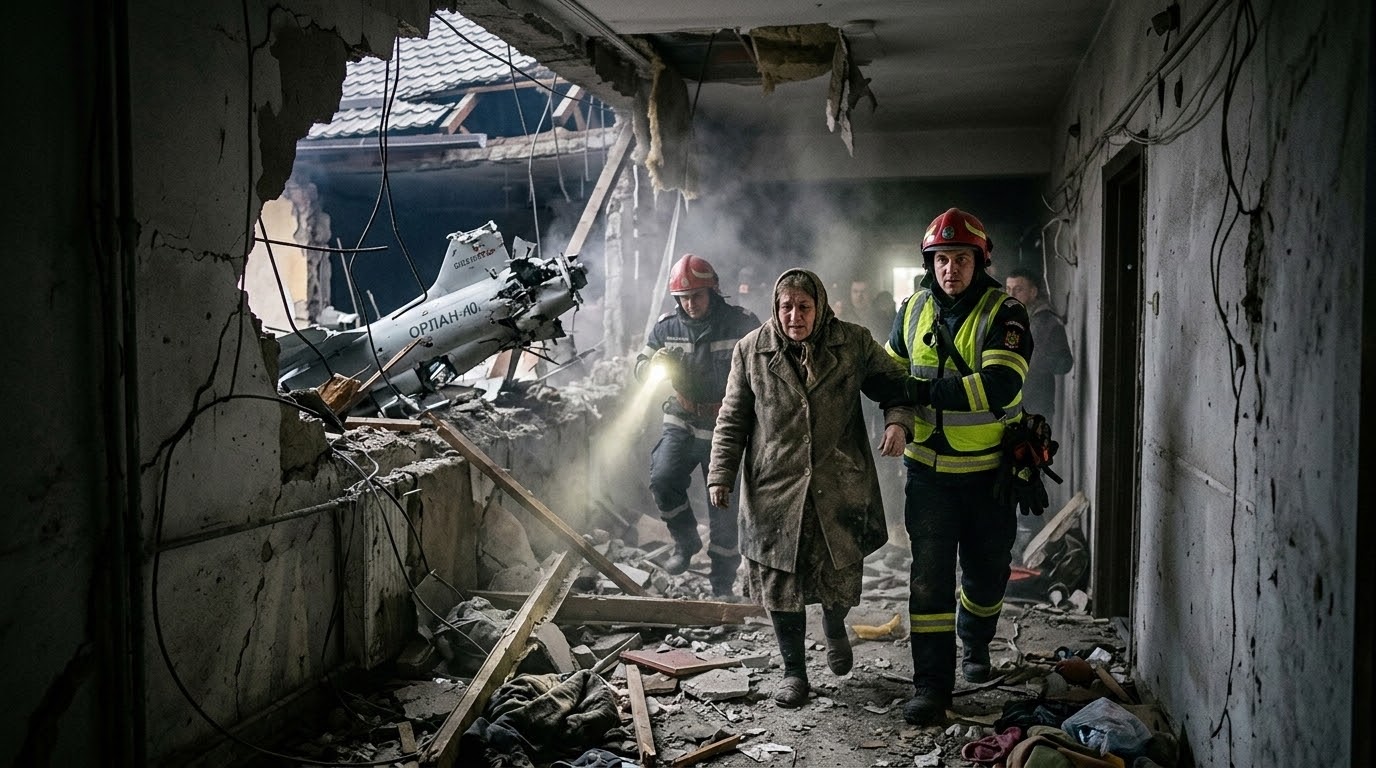
Romania’s Ministry of National Defence said the unmanned aircraft entered Romanian airspace during overnight Russian attacks near the Ukrainian border and was tracked by radar until it reached southern Galati. Officials said the drone then hit the roof of an apartment building, where the impact set off a blaze. Two Romanian F-16 jets were scrambled after aerial threats were detected.
The General Inspectorate for Emergency Situations reported that the drone’s full explosive load detonated on impact. Firefighters contained flames on the 10th floor while emergency teams evacuated roughly 70 residents from the building. Two people were treated for minor injuries described as abrasions. Authorities did not report fatalities in Romania from the strike.
The attack unfolded as Russian forces launched fresh drone operations in areas of Ukraine near the Danube River, which forms part of the Romania-Ukraine frontier. Romanian officials stated that Russia had not publicly commented on the Galati incident at the time of their announcements. Bucharest characterized the event as a grave development and said it had informed NATO leadership immediately.
Impact & Consequences
The strike is likely to intensify pressure inside Romania for stronger air-defense coverage along the eastern border and around Danube infrastructure. In a formal statement, Romania’s foreign ministry called the episode a “serious and irresponsible escalation” by the Russian Federation and said it had asked for accelerated transfer of anti-drone capabilities. That request underscores concerns that low-flying attack drones targeting Ukrainian ports can continue to drift or be diverted into NATO territory.
For civilians in border regions, the incident shifts the perceived risk from debris recovery to direct harm. Romania’s defense ministry has previously reported repeated findings of drone fragments, but Friday’s injuries mark a significant threshold. The event also raises broader alliance questions over interception rules, detection windows, and the resources required to protect populated zones without widening military confrontation.
Background & Context
Romania, a NATO member, has repeatedly faced airspace incidents since Russia launched its full-scale invasion of Ukraine in February 2022. Romanian authorities say drone remnants have been discovered on national territory 47 times since the war began, including 12 incidents this year. In April, another Russian drone reportedly caused material damage in Galati, though no injuries were recorded then.
The geography of the region increases vulnerability. Ukrainian Danube ports, including those in Odesa region, are frequent targets of Russian strikes, and flight paths near the river can bring hostile aircraft close to Romanian settlements. Overnight Friday, Ukrainian officials also issued a nationwide air raid alert and reported attacks on Izmail, a key port city near the border. At the same time, in Russian-controlled eastern Donetsk, Moscow-installed official Denis Pushilin said three utility workers were killed and a fourth seriously wounded in a Ukrainian drone strike on Thursday.
International Response
NATO publicly condemned the incident through a spokesperson, who denounced what was described as Russia’s reckless conduct and said the alliance would continue reinforcing defenses against threats including drones. The statement stopped short of announcing immediate new deployments but signaled political backing for frontline members facing recurrent cross-border hazards.
Romania’s diplomatic outreach to NATO Secretary General officials indicates Bucharest is seeking practical support rather than symbolic solidarity alone. The emphasis on anti-drone systems suggests authorities want faster integration of detection, jamming, and interception tools. While no retaliatory action has been announced, the language from Romanian officials points to a harder line in alliance discussions about protecting civilian areas near Ukraine’s conflict zone.
What to Expect Next
Romanian investigators are expected to continue forensic analysis of the crash site and release additional technical findings on the drone’s route and payload. NATO consultations will likely focus on quicker delivery of counter-drone assets and tighter border air surveillance. If attacks near Ukrainian Danube ports persist, further incursions into Romanian airspace remain a key risk, with civilian protection now an urgent operational priority.