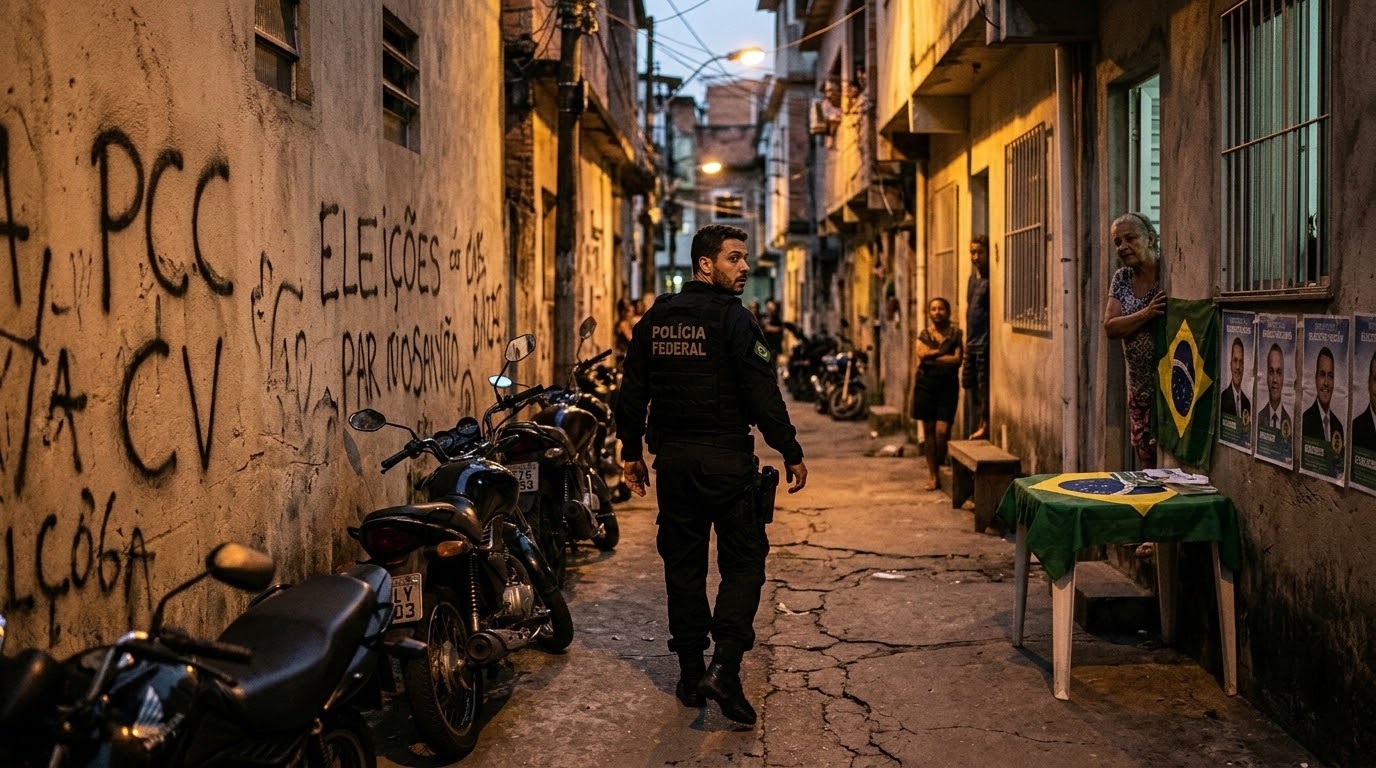
The United States said it will classify Brazil’s two largest criminal factions, the Primeiro Comando da Capital (PCC) and Comando Vermelho, as terrorist organizations from June 5, in a decision announced Thursday by Secretary of State Marco Rubio. The move extends President Donald Trump’s hardline regional security approach and is likely to reverberate across Brazil’s closely contested presidential race.
What Happened
Rubio said Washington will apply the “Foreign Terrorist Organization” designation to both groups, while noting they have already been placed under the “Specially Designated Global Terrorists” framework. The earlier step was taken using powers under the International Emergency Economic Powers Act, allowing the US to block assets and restrict financial dealings linked to the organizations.
Under US law, the Foreign Terrorist Organization label carries broader legal consequences, including tighter financial prohibitions and potential penalties for those deemed to provide support. In a formal statement, Rubio said the measures are intended to protect US national security by targeting narcotics trafficking and the funding networks behind what he described as violent narco-terrorism.
The announcement came days after Trump hosted Brazilian Senator Flavio Bolsonaro at the White House. Following that meeting, Flavio said he had urged Trump to apply the terrorism designation to PCC and Comando Vermelho. Brazilian media have reported that President Luiz Inacio Lula da Silva had repeatedly tried to discourage Washington from using the label, citing concern over legal spillover for actors with indirect or coerced contact with gangs, including businesses and extortion victims.
Impact & Consequences
The immediate effect is financial: US-linked assets tied to the two groups are now at greater risk of freezing, and entities interacting with them could face increased scrutiny or sanctions exposure. Because Brazil’s criminal networks are deeply embedded in illicit and legal economies, the designation may generate compliance shocks for banks, logistics firms, and cross-border trade actors seeking to avoid secondary penalties.
Politically, the timing is highly sensitive. Lula is seeking a fourth non-consecutive term in October and is running near even with Flavio Bolsonaro in polling. Public security is already central to the campaign after repeated deadly operations in Rio de Janeiro and other urban centers. By elevating gang activity into a terrorism framework, Washington has introduced a powerful campaign variable that may benefit candidates favoring militarized approaches while raising fears of external influence over Brazil’s domestic agenda.
Background & Context
Since returning to office for a second term, Trump has pushed to apply terrorism labels to multiple Latin American criminal groups, part of a broader regional doctrine critics say blurs distinctions between insurgency and organized crime. Opponents argue that framing cartels and gangs as terrorist threats can be used to justify expanded US security reach across the hemisphere.
The US-Brazil relationship has been strained by direct political interventions. Last year, Trump sharply increased tariffs on Brazil in a move widely viewed as support for former President Jair Bolsonaro, who was later sentenced to 27 years in prison after being convicted in a case tied to attempts to overturn the 2022 election result. Eduardo Bolsonaro, Jair’s younger son, is also on trial on obstruction-related charges linked to efforts to seek US backing. Against that backdrop, the gang designation lands in an already polarized bilateral environment.
International Response
Brasilia has not rejected cooperation on transnational crime but has warned against any use of the new labels to bypass national authority. Celso Amorim, Lula’s top foreign policy adviser, said organized crime must be confronted and that collaboration on money laundering and arms trafficking is welcome. He added, however, that any “pretext for intervention” would be unacceptable.
Security specialists have also warned that punitive force alone may fail to weaken entrenched criminal systems. Speaking to the Associated Press in earlier reporting, sociologist Luis Flavio Sapori argued that repeated armed confrontations with low-level traffickers do not address the financial architecture sustaining criminal organizations. His view aligns with broader criticism that long-running militarized policing has contributed to cycles of violence and rights abuses in marginalized urban districts.
What to Expect Next
Attention will now shift to implementation on June 5 and how aggressively US agencies enforce the new restrictions. In Brazil, the measure is likely to intensify campaign clashes over sovereignty, policing, and ties with Washington. Lula’s government is expected to keep pressing for technical cooperation while resisting any external operational role. The central question is whether the designation disrupts gang finances meaningfully or primarily reshapes electoral politics.