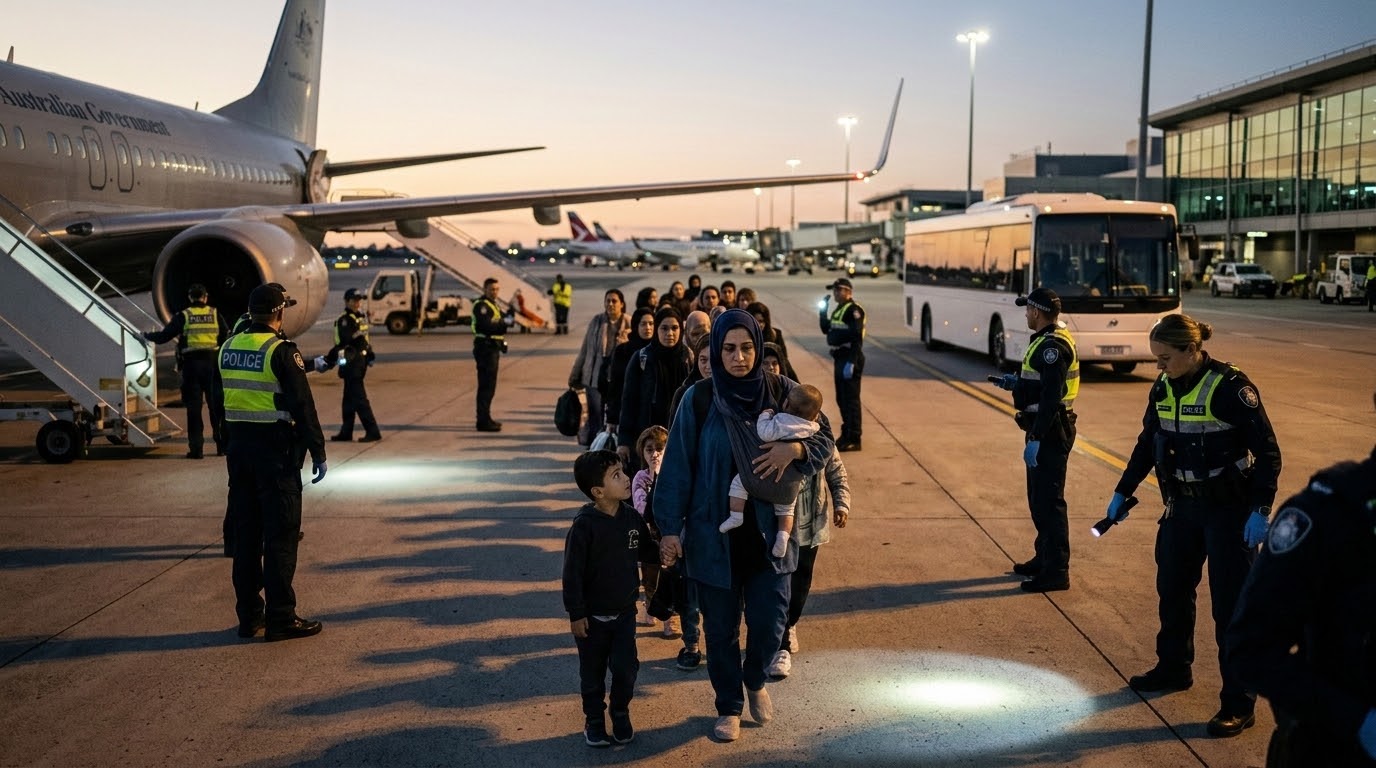
Australia has accepted the return of 19 women and children with alleged ties to ISIL from Syria, with the group arriving on Tuesday in Sydney and Melbourne as authorities pledged ongoing investigations. The development matters because it places national security, legal accountability and child welfare at the center of an increasingly contentious repatriation policy.
What Happened
The latest group consisted of six women and 13 children transferred from a Syrian refugee camp, according to Australian officials. They arrived in two separate contingents, one in New South Wales and another in Victoria. Home Affairs Minister Tony Burke said the government would pursue legal action against anyone found to have committed offenses, while emphasizing that joining ISIL had exposed children to extreme harm.
Canberra also said it did not facilitate this return operation, a point raised amid criticism from parts of the public and political pressure over how former conflict-zone residents should be handled. The Australian Federal Police confirmed no immediate arrests were made upon arrival, but said inquiries remain active and could lead to future charges if sufficient evidence is established.
The reception was tense in Melbourne, where local media reported heavy police deployment at the airport and an altercation as the returnees were escorted through a side exit. This is the second group to come back this month. Earlier in May, four women and 13 children arrived from Syria, and three of those women were arrested after landing in Australia.
Impact & Consequences
The latest returns sharpen pressure on Australia’s counterterrorism and social services systems. Security agencies must assess potential risks linked to past extremist associations, while welfare and health authorities face the challenge of supporting children who have spent years in unstable camp conditions. Officials and legal experts expect a lengthy process of intelligence review, possible prosecutions and child-protection interventions.
Politically, the arrivals have reopened a polarizing national argument over whether repatriation strengthens security through controlled monitoring at home, or introduces unnecessary risk. The government’s messaging has sought to balance both sides: clear warnings that criminal acts will be prosecuted, alongside an acknowledgment that many children are vulnerable and require structured reintegration. The episode is also likely to influence future use of exclusion orders and the threshold for permitting return in similarly sensitive cases.
Background & Context
Australian women began traveling to Syria around 2012, often to marry ISIL members; some accounts indicate certain women were coerced or taken against their will. By 2015, ISIL held territory across Syria and Iraq at a scale roughly comparable to the United Kingdom, before its territorial collapse in subsequent years left thousands of foreign nationals and their children in detention and displacement camps.
Australia, like several Western countries, has long approached repatriation cautiously. In February, the government issued a temporary exclusion order against one Australian woman in Syria, blocking her return until February 2028. Her child, who was permitted to return, chose to remain with her. That case is now being challenged by family members, highlighting the legal and ethical tensions surrounding citizenship rights, national security powers and family unity.
International Response
The Australian decision unfolds within a wider Western policy divide. France and the United Kingdom have both faced criticism for restrictive approaches to former ISIL-linked nationals. In 2022, the UN Committee on the Rights of the Child said France violated children’s rights by failing to repatriate children born to French citizens in Syria, finding that inaction exposed them to severe mistreatment risks.
Britain’s stance has also drawn sustained attention since Shamima Begum was stripped of UK citizenship in 2019 on national security grounds. Security specialist Afzal Ashraf of Loughborough University argued that risks from returnees should be assessed in proportion, noting that psychological trauma may present challenges but can be mitigated through mental-health care, reintegration programs and follow-up measures designed to address extremist beliefs.
What to Expect Next
Authorities are expected to continue case-by-case investigations into the latest arrivals, with potential prosecutions dependent on available evidence from overseas conflict zones. At the same time, governments and community services will likely expand monitoring and rehabilitation efforts for children and mothers. Public debate is set to intensify as courts review exclusion-order disputes and as Australia weighs whether further returns from Syria are inevitable or avoidable.