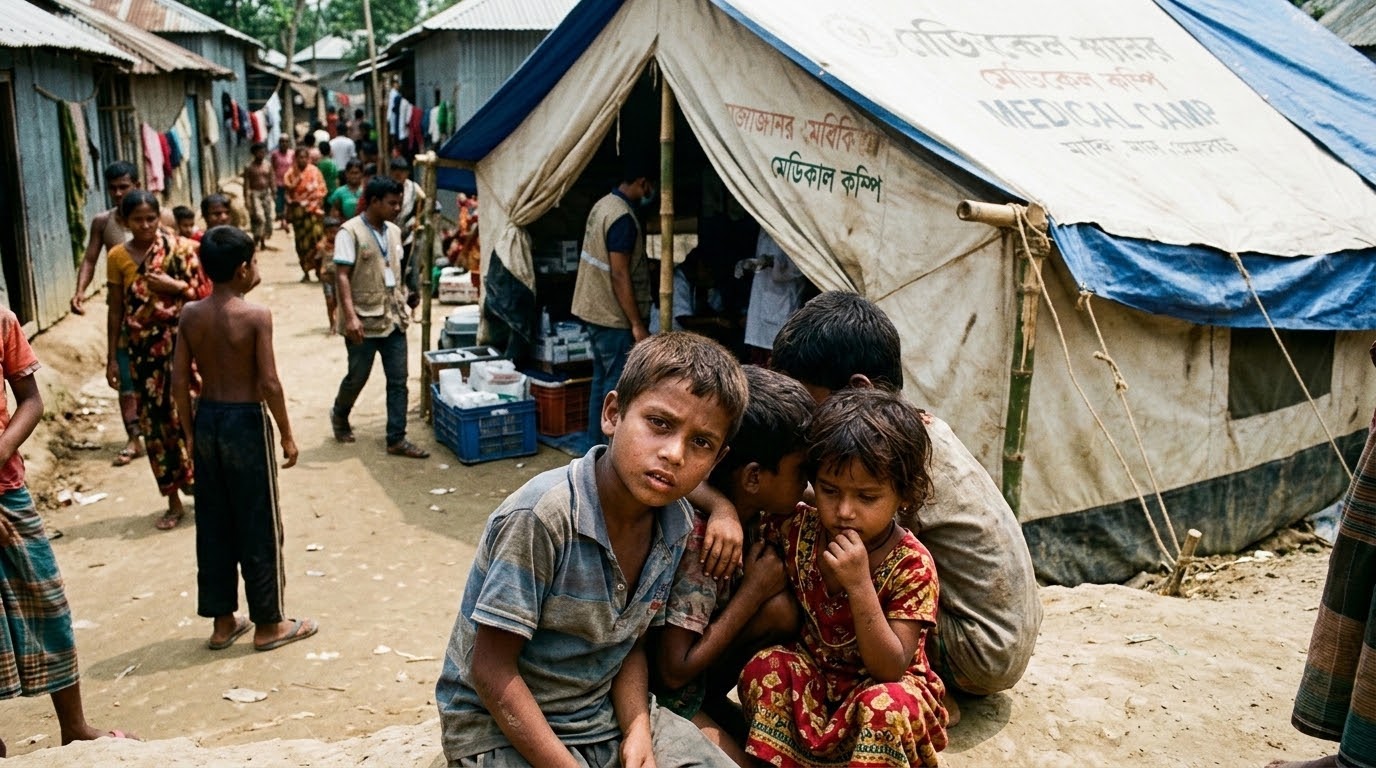
Bangladesh is confronting a fast-moving measles emergency after more than 500 children with suspected or confirmed infections died since March, according to the health ministry, as hospitals in Dhaka and other areas struggle to manage a wave of severe pediatric cases and families recount missed vaccinations and late diagnoses.
What Happened
Among the families affected is Al Amin, a father in Dhaka whose four-year-old daughter, Akira, died after repeated hospital visits. He said his child had received routine vaccines except measles, and that the family made four attempts to secure the shot. Twice, he said, health workers deferred vaccination because she had a cold and told the parents there was still time before age five. On two later visits, he said, they were told doses were unavailable.
Akira was first admitted on 8 March with what appeared to be an ordinary fever. According to her father, she improved briefly before developing a rash, high temperature and mouth lesions. He said she was discharged and readmitted multiple times, and measles was only identified on the fifth admission. She was later placed on life support and died 27 days after her initial hospitalization.
The broader outbreak has intensified rapidly. The health ministry reports more than 60,000 suspected measles cases in a little over two months, though final totals are still pending laboratory confirmation. Bangladesh’s health minister said doctors and nurses assigned to measles wards had their Eid leave canceled as authorities accelerated a national emergency vaccination drive launched in early April.
Impact & Consequences
The surge is exposing acute pressure points in Bangladesh’s public health system, especially pediatric care capacity. Parents and aid workers describe hospitals running beyond safe occupancy, with inadequate triage and limited isolation in some facilities, conditions that can increase transmission of a highly contagious respiratory virus. Al Amin said he believes his daughter may have been exposed inside hospital queues and treatment areas where measles patients were present.
The consequences extend beyond immediate fatalities. Delayed access to diagnosis and treatment increases the risk of complications, particularly for children under five who are unvaccinated or under-immunized. Health experts warn that severe congestion at urban hospitals reflects weaker local-level care, forcing poorer families to travel late in illness. This pattern raises mortality risk while deepening distrust among parents who already faced obstacles obtaining routine vaccines.
Background & Context
UNICEF’s Bangladesh chief, Rana Flowers, described the outbreak as the product of overlapping vulnerabilities: lingering pockets of under-vaccination since 2023, high-density settings such as Dhaka and Cox’s Bazar, and large holiday-related population movement. She also identified procurement delays as a central concern, saying UNICEF repeatedly warned interim authorities that delayed orders could trigger stock disruptions.
The procurement dispute sits within a turbulent political transition. After longtime leader Sheikh Hasina left Bangladesh in 2024 following mass protests, an interim government took office before elections in February 2026. In a social media statement, Md Sayedur Rahman, who served as a special assistant on health matters in that period, rejected claims of procurement process changes and said vaccine coordination with UNICEF remained consistent.
Public health specialists point to additional structural causes dating back to the Covid-19 period. Dr Mushtaq Husain, former principal scientific officer at the Institute of Epidemiology Disease Control and Research, said prior door-to-door outreach weakened during the pandemic, while some caregivers avoided health facilities for fear of infection. Those immunization gaps, he and others argue, were never fully closed.
International Response
UNICEF has expanded field operations, including support for child triage and isolation in hospitals where infection-control systems are limited. The agency says the April emergency immunization effort, implemented with government and aid partners, has begun to slow growth in some early-targeted high-incidence zones. However, it cautions that vaccine protection takes time to build, meaning national-level declines may lag campaign rollouts.
Bangladesh’s health minister, Sardar Sakhawat Hossain, said officials expect infection numbers to start falling as recently vaccinated children develop antibodies over several weeks. He has pushed back on calls to declare a formal emergency, saying district hospitals are prepared and assisting remote areas with intensive care support. Public health experts remain cautious, warning that Eid travel could facilitate fresh transmission between towns and villages.
What to Expect Next
The coming weeks will test whether emergency vaccination and tighter hospital management can reverse the outbreak curve nationwide. Authorities are watching post-Eid case patterns closely, while laboratories continue confirming tens of thousands of suspected infections. Key unresolved questions include whether vaccine supply will remain stable, whether local clinics can absorb more patients, and whether bereaved families will receive clear answers on missed opportunities for prevention.