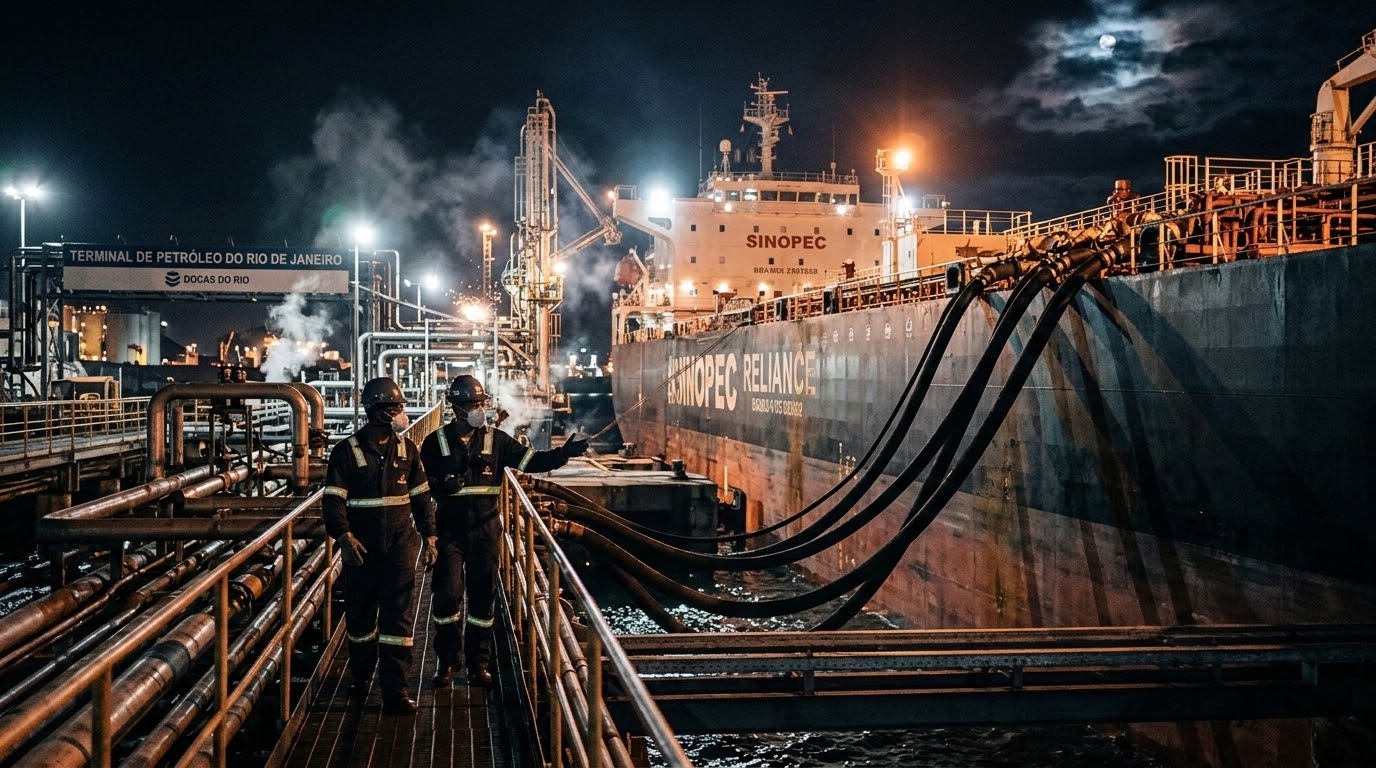
China and India are rapidly expanding oil purchases from Brazil in 2026 as conflict-linked disruption around the Strait of Hormuz reshapes global crude trade, pushing Asian refiners toward suppliers viewed as lower-risk. The shift matters because it is changing tanker routes, pricing power, and energy diplomacy across multiple continents.
What Happened
Trade and shipping data indicate a sharp rerouting of Asian crude demand away from the Gulf and toward Brazil following the US-Israel war on Iran and the resulting strain on traffic through Hormuz. Kpler data provided to Al Jazeera shows Asian imports of Brazilian crude rose from about 1.2 million barrels per day in 2025 to roughly 1.8 million barrels per day between January and May this year.
Sumit Ritolia, a refinery and oil-market modelling specialist at Kpler, said the disruption has elevated Brazil’s role as a marginal supplier to Asia, particularly for buyers in China and India seeking cargoes that avoid Gulf shipping risk. He said demand growth is less about an emergency surge in Brazilian output and more about export redirection toward higher-paying Asian buyers.
Brazil’s production had already been rising through offshore projects before the latest escalation. Kpler figures show output averaging around 3.77 million barrels per day in 2025 and increasing to about 4.06 million barrels per day from January to May, including 4.11 million barrels per day in May. Ritolia noted that since March 2026, output has risen only modestly, by around 50,000 to 100,000 barrels per day, suggesting limited short-term capacity for a dramatic supply ramp-up.
At the same time, Petrobras has shifted more barrels eastward. More than 60 percent of Petrobras exports are now headed to China, while exports to the United States reportedly dropped to zero from about 60,000 barrels per day in March, according to oilprice.com. Chinese imports of Brazilian crude averaged about 1.316 million barrels per day in January-May, up from roughly 704,000 barrels per day in 2025. India’s intake rose to about 238,000 barrels per day from around 100,000, making Brazil India’s fourth-largest supplier in April.
Impact & Consequences
The immediate effect is a stronger revenue outlook for Brazil as higher crude prices and redirected export flows boost trade income. The OECD said in March that elevated oil prices should support Brazil’s external balance. Brazil’s Ministry of Finance has estimated that if Brent reaches $100 a barrel, additional revenue could equal nearly 1 percent of GDP above current 2026 budget assumptions.
For Asian importers, Brazilian crude provides a strategic hedge rather than a full replacement for Gulf grades. China gains supply security from non-Hormuz routes, while India also benefits from refinery economics as domestic fuel demand grows and reserve flexibility remains tighter. However, the shift raises freight costs and vessel utilization: a Brazil-to-China voyage can take about 50 days, far longer than typical Gulf routes, increasing exposure to tanker scarcity and shipping volatility.
Background & Context
The supply realignment comes amid broad disruption in Middle East energy logistics, including Iran’s effective closure of the Strait of Hormuz and a corresponding US naval blockade on Iranian ports. With Russian barrels constrained by sanctions architecture and commercial risk, refiners have been forced to rebalance procurement toward politically and physically accessible alternatives.
Brazil’s crude quality explains part of its appeal. Key export grades such as Tupi and Buzios are medium-sweet, with relatively low sulfur content and favorable yields for products like diesel and jet fuel. That profile fits many Asian refinery configurations better than very heavy, sour alternatives. While the United States has promoted Venezuelan oil exports to global buyers, many Asian plants are less suited to processing those grades efficiently, increasing Brazil’s relative attractiveness despite distance.
International Response
Brazil has paired commercial gains with active diplomacy. Foreign Minister Mauro Vieira said recently that Brazil is prepared to help Japan’s energy security through higher crude sales and that Petrobras could expand its presence there. The statement aligns with a broader push to deepen economic links across Asia, including with Japan, South Korea, and Southeast Asian markets.
Brasilia has also moved to formalize regional ties: earlier this year, President Luiz Inacio Lula da Silva visited South Korea, where both countries upgraded ties to a strategic partnership and signed agreements to broaden trade cooperation. Meanwhile, US policy continues to influence market dynamics. Washington has extended by 30 days a sanctions waiver for Russian oil and products already loaded at sea, a step that may make floating Russian cargoes more competitive for Asian buyers in coming months.
What to Expect Next
Analysts expect Brazil to remain an important swing supplier for Asia while Hormuz disruptions persist, but not a structural substitute for Middle Eastern crude. Future flows will depend on shipping economics, Brazil’s incremental production growth, and renewed competition from Russia as Arctic routes reopen seasonally. If Gulf risks remain elevated and Asian demand stays firm, Brazilian barrels are likely to continue commanding a strategic premium through the second half of 2026.