A widening outbreak of the rare Bundibugyo strain of Ebola in the Democratic Republic of the Congo and Uganda has triggered a wave of travel and border restrictions this month, as governments move to slow cross-border transmission. The measures come as health authorities report rising suspected infections and warn the response is struggling to keep pace.
What Happened
The World Health Organization has reported 10 confirmed deaths and 220 suspected deaths linked to the Bundibugyo variant in the DRC since mid-May. Since Kinshasa officially declared the outbreak on May 15, authorities have also recorded 900 suspected cases. In neighboring Uganda, officials have confirmed five infections and one death. Last week, the WHO raised its national risk rating for the DRC from high to very high, while keeping global risk at low.
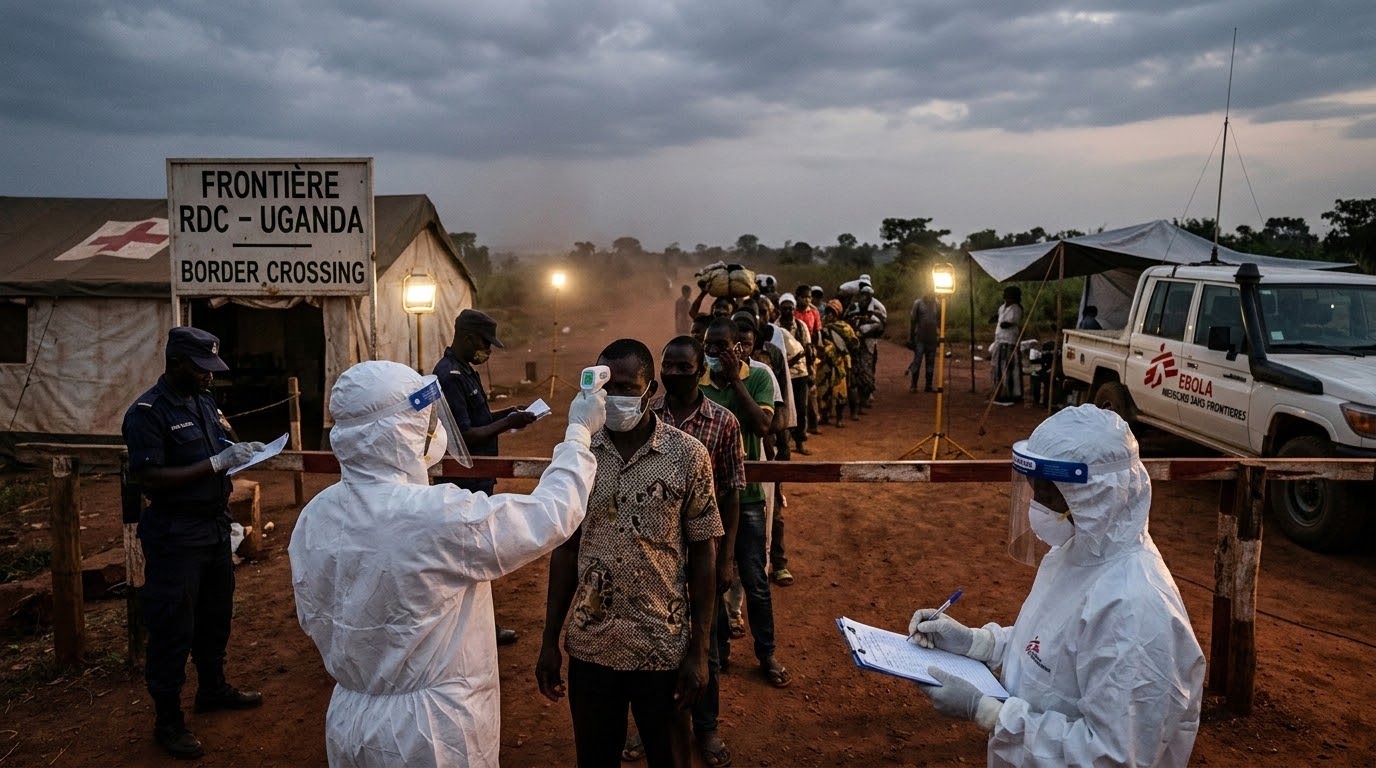
In response, the Congolese Ministry of Transport and Communications suspended flights to and from Bunia, an eastern city inside one of 11 affected health zones. Humanitarian, medical, and emergency flights can still be authorized under special approval by aviation and health authorities. Uganda has imposed parallel controls, suspending direct flights with the DRC and pausing bus and boat crossings for four weeks. Border district weekly markets were also halted, though freight movement and essential food and goods remain permitted.
Farther afield, Canada and the Bahamas announced temporary entry bans affecting residents of the DRC, Uganda, and South Sudan. Canada set a 90-day restriction beginning Wednesday and ordered a 21-day quarantine from May 30 for citizens, permanent residents, and other travelers recently in affected areas, including those without symptoms. The Bahamas introduced a 30-day restriction with immediate effect, pending review by its health ministry.
Impact & Consequences
The tightening controls are already reshaping mobility, trade routes, and public health logistics across parts of East and Central Africa. Passenger travel has narrowed sharply between affected areas, while local economies near border crossings face disruption from suspended markets and reduced transport options. Governments are balancing disease containment with continuity of essential supply lines, allowing cargo flows to continue where possible to limit shortages.
The policy shift also carries diplomatic and operational implications beyond Africa. The United States has barred non-citizens who visited the DRC, Uganda, or South Sudan within the previous 21 days, and the Centers for Disease Control and Prevention later extended restrictions to green card holders with similar recent travel histories. U.S. citizens returning from affected countries must enter through designated airports with enhanced health screening. Despite these steps, no Ebola cases have been reported in Canada, the Bahamas, or the United States.
Background & Context
Bundibugyo Ebola is an uncommon but dangerous form of the Ebola virus family, capable of causing severe hemorrhagic fever with high fatality rates. Transmission occurs through close contact with blood or other bodily fluids of infected individuals, contact with the bodies of those who died from the disease, and contaminated materials. Because spread depends on direct exposure, classic outbreak controls focus on isolating cases, tracing contacts, and reducing physical interaction in high-risk settings.
WHO Director-General Tedros Adhanom Ghebreyesus said this week that response teams in the DRC and Uganda are scaling up tracing, treatment centers, and infection prevention systems. He also warned that delayed detection has forced health authorities into a reactive posture against what he described as a rapidly advancing epidemic. Even so, Tedros emphasized that Ebola containment methods are well established and that previous outbreaks have been brought under control using coordinated surveillance and public health interventions.
International Response
UN agencies are urging countries and airlines to align with aviation health protocols developed during the COVID-19 period, including digital health declarations and low-contact border processing. The International Civil Aviation Organization said international flying remains safe at this stage and advised governments against broad closures of borders or trade channels.
Instead, ICAO recommended stronger departure checks in affected countries, particularly screening outbound travelers for unexplained fever and other symptoms compatible with Bundibugyo infection. U.S. measures have gone further than that guidance. The Wall Street Journal has reported that the Trump administration is expected to send U.S. public health officers to Kenya to support a potential quarantine site for Americans exposed to the virus, including those at high risk or already testing positive.
What to Expect Next
Health officials are likely to focus on whether case growth slows in the 11 affected DRC health zones and in Uganda over the coming weeks, especially after travel restrictions and expanded tracing operations. Governments that imposed temporary entry bans are expected to review them as new surveillance data emerges. The key uncertainty is whether containment can outpace transmission before the outbreak spreads further through regional transport and market networks.