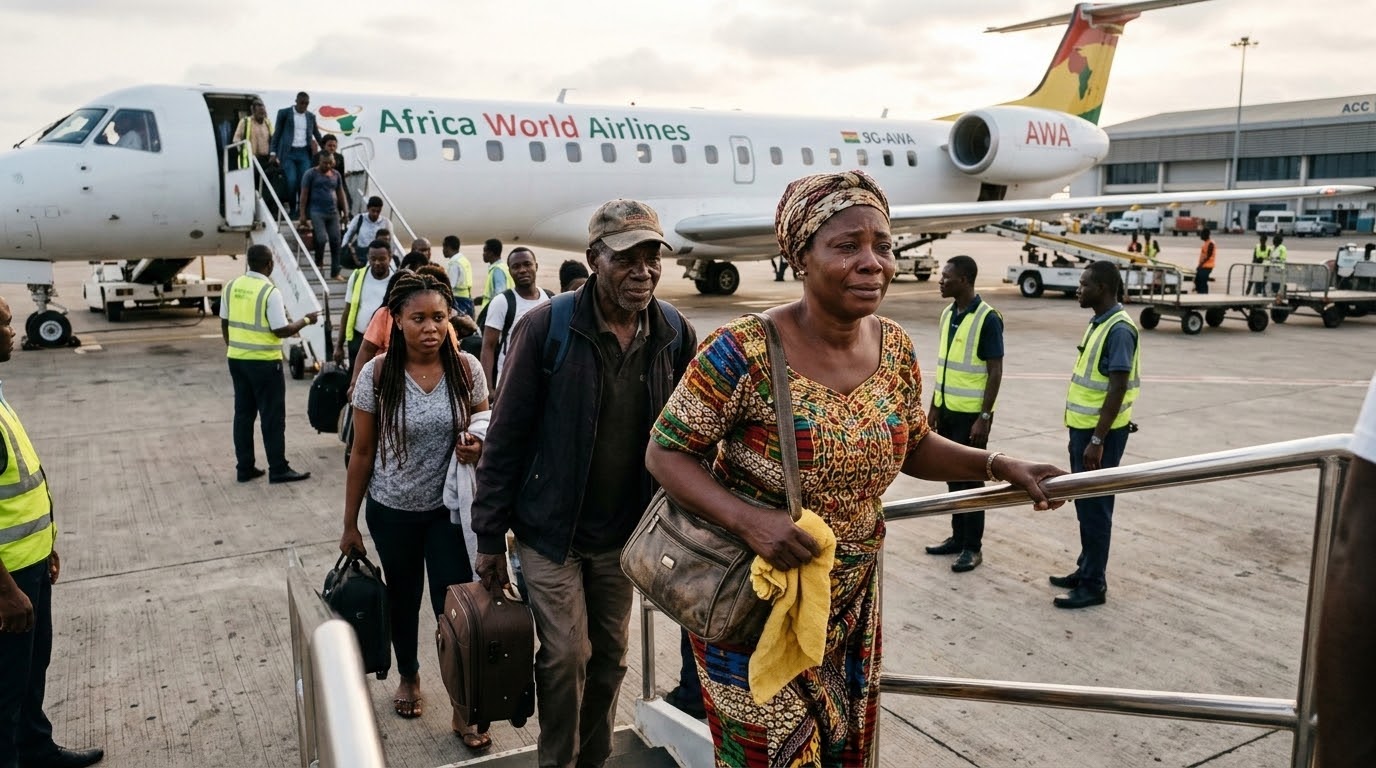
Ghana has evacuated its first group of nationals from South Africa, with 297 people arriving in Accra on Wednesday after the government chartered a flight from Johannesburg amid rising anti-immigration protests. The move marks an urgent intervention by Accra as fears grow that political tensions could spill into violence against foreign residents.
What Happened
Officials in Ghana confirmed that nearly 300 citizens were flown home this week as part of a larger repatriation plan for nationals in South Africa who said they no longer felt safe. Foreign Minister Samuel Okudzeto Ablakwa was among the senior officials at the airport in Accra to receive the arrivals. Ghana’s High Commissioner to South Africa, Benjamin Quashie, said 297 people were on the first flight, while around 800 Ghanaians have so far registered to return.
The repatriation followed protests in South Africa over undocumented migration, with demonstrators arguing that illegal immigration is straining public services and employment opportunities. A group called March and March, which identifies itself as a citizen-driven campaign for immigration reform, has issued a 30 June deadline for undocumented migrants to leave the country. Although protest organizers have publicly described their actions as peaceful, some foreign residents fear the rhetoric may trigger attacks.
One Ghanaian migrant, identified as Rudolph, told the BBC he had lived in South Africa for a decade and operated a salon before deciding to leave because the environment had become unsafe. He said the protests began in Durban and spread to other provinces, and warned that the deadline could become a flashpoint. Quashie also said one mother and her two children were unable to board the evacuation flight because she did not have the children’s birth certificates.
Impact & Consequences
The evacuation underscores a deepening sense of insecurity among African migrants in South Africa and places pressure on governments to protect citizens abroad while managing immigration law compliance. Ghana says it is not only extracting people from immediate risk, but also preparing to absorb returnees economically through reintegration support. Quashie said the plan includes helping returnees restart businesses they previously ran in South Africa, aiming to reduce hardship after relocation.
The wider implications stretch beyond Ghana. With an estimated 25,000 Ghanaians living in South Africa, the operation may influence how other African states respond if anti-migrant tensions continue. It could also affect regional labor mobility and bilateral relations, particularly if more countries begin organized withdrawals. For migrants still in South Africa, the departures are likely to heighten concern and could drive additional demand for consular protection, documentation support, and emergency relocation options.
Background & Context
South Africa has experienced repeated waves of xenophobic violence over the past two decades, often during periods of economic stress, social frustration, and political contestation. In 2019, at least 12 people were killed in attacks linked to anti-foreigner unrest. In 2008, violence targeting foreign nationals left 62 dead. Those episodes remain central to current fears among migrant communities as public protest escalates again.
Analysts have suggested recent anti-migrant sentiment may be sharpening ahead of local elections scheduled for November, where immigration and public service delivery are likely to be politically charged issues. Earlier this month, South African authorities condemned criminal acts targeting foreigners while acknowledging that undocumented migration requires policy action. In Durban, more than 300 immigrants reportedly sought protection, first at a police station and later outside the Home Affairs department, with some saying they feared being attacked before the end-of-June deadline.
International Response
Ghana’s response has centered on consular protection and rapid relocation, with officials framing the operation as a state duty to citizens who reported threats and economic paralysis. Quashie said the government had acted after hearing repeated distress from nationals who felt unwelcome and believed their lives were at risk. He also stressed that Ghana does not endorse irregular migration and that repatriation can support legal migration governance in both countries.
On the South African side, authorities have attempted a dual message: rejecting violence against foreigners while maintaining that undocumented migration is a serious domestic concern. Migrants and refugee communities, particularly in Durban, have called for stronger assurances from law enforcement and Home Affairs. Their appeals for protection indicate a widening trust gap between vulnerable foreign residents and institutions responsible for safety and asylum administration.
What to Expect Next
More evacuation flights are expected in the coming days as Ghana processes the hundreds already registered for return. Attention will focus on whether conditions in South Africa stabilize as the 30 June deadline approaches, and whether protests remain nonviolent. Diplomatic engagement between Accra and Pretoria is likely to intensify around citizen safety, legal status screening, and reintegration support for those returning to Ghana.