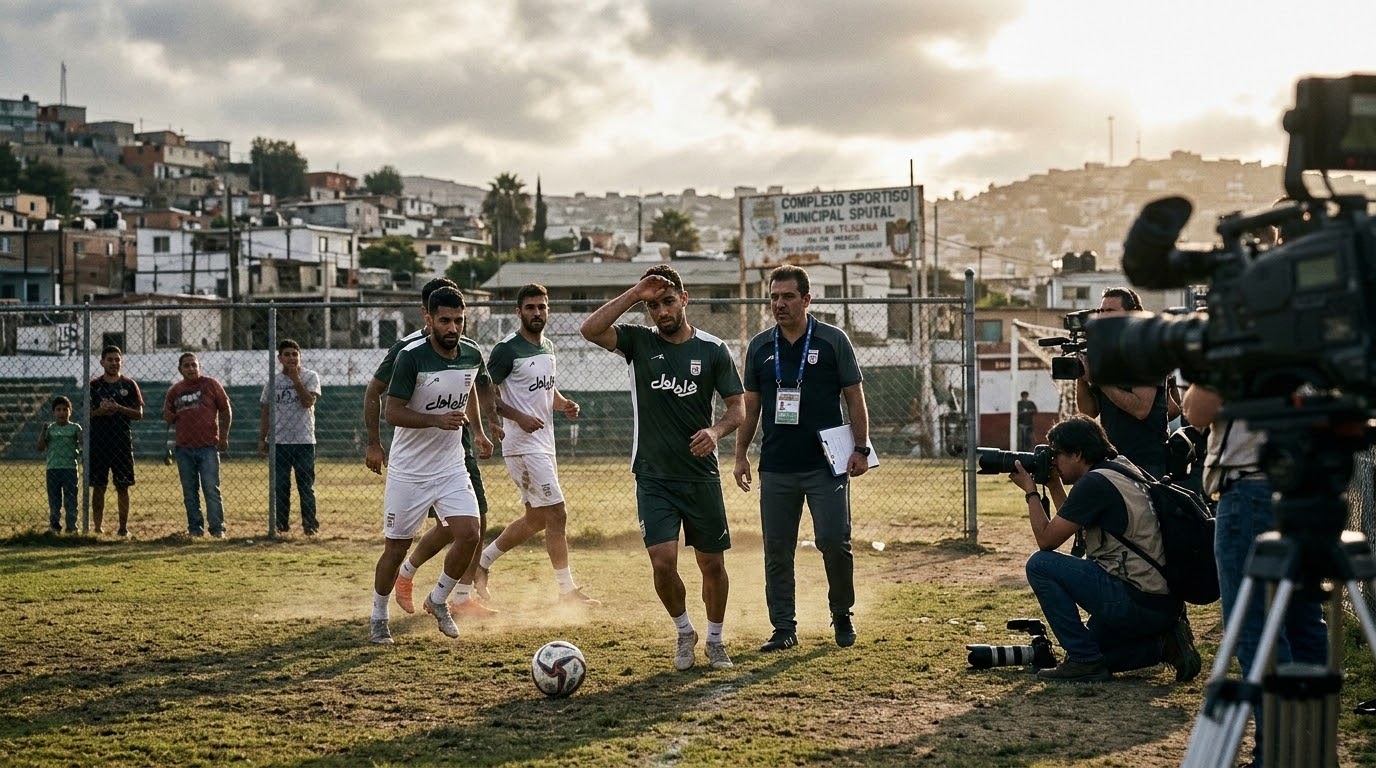
Iran’s ambassador to Mexico said Thursday that the country’s national football team still has not secured US visas ahead of World Cup matches in Los Angeles and Seattle, forcing a last-minute training shift to Tijuana and raising concerns over whether players can enter the United States in time to compete under fair conditions.
What Happened
Abolfazl Pasandideh, Iran’s envoy in Mexico, spoke in the border city of Tijuana after visiting the team’s relocated camp. Iran had initially planned to prepare in Tucson, Arizona, but moved operations to northwestern Mexico as visa approvals remained uncertain. At a news conference, Pasandideh said Washington had not fulfilled its obligations as host and that Iranian officials still did not know whether players would receive entry permits.
Iran is scheduled to play three group-stage matches in the United States: New Zealand in Los Angeles on June 15, Belgium in Los Angeles on June 21, and Egypt in Seattle on June 26. The head of the Iranian Football Federation has expressed hope that players would obtain multiple-entry visas, a key issue if team logistics require cross-border movement during the tournament period.
Pasandideh said Iran was not entering the competition on "equal terms" because the squad had been unable to prepare as intended. He linked the disruption to broader regional hostilities, describing ongoing conflict involving the United States and Israel against Iran since February 28. On Wednesday, according to a source at Club Tijuana speaking to AFP, Iranian diplomats visited the stadium where the team is training and also met local security authorities.
Impact & Consequences
The visa uncertainty creates practical and competitive pressure for Iran at a critical stage of tournament preparation. National teams generally depend on fixed pre-match schedules for physical conditioning, tactical drills, and recovery cycles. Relocating camp and managing unclear travel permissions can reduce training continuity and complicate staffing, transport, and security planning.
Beyond football operations, the dispute carries diplomatic weight. Tehran’s public criticism suggests a widening gap between tournament hosting obligations and geopolitical realities. If unresolved, the issue could trigger formal complaints by football authorities or diplomatic channels, especially if players or staff miss travel windows. The situation may also affect perceptions of organizational fairness among participating teams and supporters, particularly when matches are set inside a host country with restrictive bilateral relations.
Background & Context
Iran’s group-stage fixtures are all on the US West Coast, requiring guaranteed access to American territory regardless of political tensions. International sporting events typically involve coordination between host governments, local organizers, football federations, and diplomatic missions to ensure accredited athletes and delegations can enter and move according to tournament schedules. Any delay in this chain can reshape preparation plans within days.
The current episode unfolds amid heightened confrontation between Iran, Israel, and the United States, which Pasandideh said has directly affected Iran’s ability to train since late February. Even when sports governing bodies frame competitions as neutral arenas, teams from politically sensitive states often face additional scrutiny over visas, travel routes, and security arrangements. In this case, the shift from Arizona to Tijuana illustrates how quickly geopolitical friction can spill into elite football logistics.
International Response
Publicly, the strongest reaction has come from Iranian officials. Pasandideh’s remarks in Tijuana framed the issue as a host-country responsibility and a matter of equal sporting conditions. The Iranian Football Federation leadership has remained focused on securing practical solutions, including multiple-entry visas that would stabilize movement ahead of the three scheduled matches.
On the ground in Mexico, Iranian diplomats have intensified engagement with local institutions. The visit to Club Tijuana facilities and meetings with regional security officials indicate efforts to maintain orderly preparations while awaiting final US decisions. As of Thursday, no official confirmation was reported that all visa issues had been resolved, leaving uncertainty over final travel timelines and matchday readiness.
What to Expect Next
The immediate test will be whether US authorities issue visas in time for Iran’s opening fixture against New Zealand on June 15 in Los Angeles. If approvals arrive quickly, Iran can pivot from contingency planning to match preparation. If delays continue, scrutiny will grow over host responsibilities, competitive fairness, and whether diplomatic negotiations can prevent disruption to one of the tournament’s most politically sensitive teams.