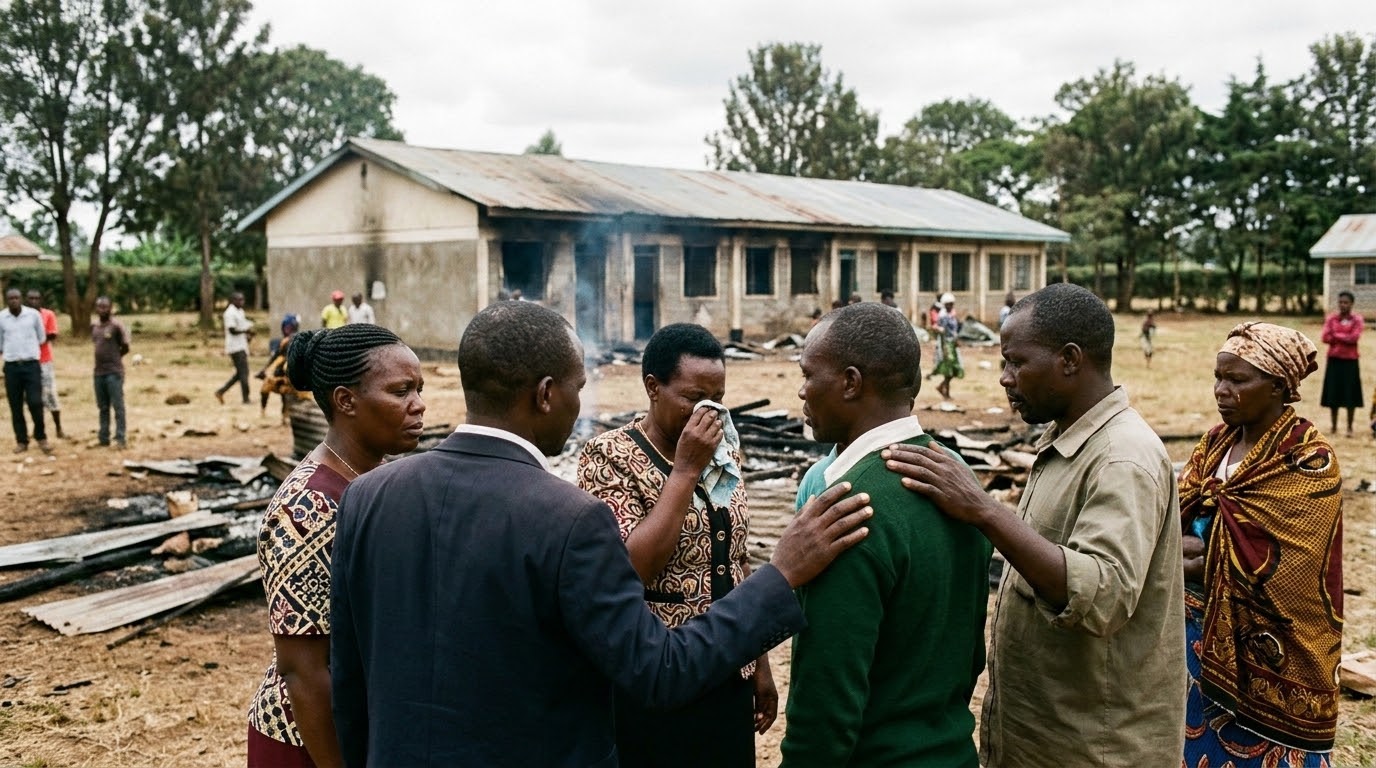
At least 16 students were killed when a fire swept through a dormitory at Utumishi Girls Academy in Gilgil, north-west of Nairobi, in the early hours of Thursday, Kenyan officials said. The tragedy has renewed national concern over repeated school fire disasters and long-standing safety failures in boarding institutions.
What Happened
Kenyan authorities said the blaze broke out at about 01:00 local time in a first-floor section of a dormitory block housing around 220 students. Education Minister Julius Ogamba, who visited the school, said response teams extinguished the flames by around 03:00, but one dormitory floor was completely destroyed. Police and emergency crews then began accounting for students amid reports that some had run into nearby areas in fear.
Officials confirmed 16 deaths at the scene. Dozens more students were injured, with many treated in hospital. Ogamba said 71 students were later discharged, while seven remained admitted for further care. More than 800 pupils were on campus when the fire started, increasing confusion as parents sought confirmation of who had survived and where injured children had been taken.
Interior Minister Kipchumba Murkomen, also at the school, offered condolences to families and urged the public to avoid speculation while investigators worked. Police commander Masoud Mwinyi described conditions as distressing and said officers were still tracing students who fled during the chaos. Families waiting outside the school reported long hours without clear information, with some relatives saying they searched hospitals before locating their children.
Impact & Consequences
The immediate impact has been severe: loss of life, trauma among survivors, and mounting pressure on local authorities to provide transparent casualty updates and psychosocial support. Parents described fear, confusion and anger as they waited for names and medical details. Some survivors were reported injured after jumping from upper levels while trying to escape smoke and flames.
The disaster is also likely to intensify political and regulatory scrutiny of school safety oversight. Kenya’s education system relies heavily on boarding facilities, meaning fire-prevention standards affect large numbers of children nationwide. The Gilgil fire now places renewed attention on dormitory design, emergency exits, supervision at night and enforcement of compliance measures, particularly in schools where congestion and outdated infrastructure may turn a single incident into a mass-casualty event.
Background & Context
Deadly boarding school fires are a recurring crisis in Kenya. Some past incidents have been linked to arson, often associated with student grievances over discipline or living conditions, while others were accidental. In one of the country’s deadliest school fire cases, 67 students died in Machakos County in 2001 after a dormitory was set ablaze.
Recent years have shown similar risks. In 2024, at least 21 people died in another dormitory fire in central Kenya. A subsequent education ministry safety review found many schools with barred windows, single exits and inward-opening doors, all conditions that can trap occupants during emergencies. Congestion was also widely reported, and authorities said 348 schools were closed immediately after that assessment. Earlier data presented to parliament recorded 126 arson cases in schools between January and November 2020, while separate research cited 60 arson incidents in 2018.
International Response
No major foreign government intervention has been announced, but the scale of the tragedy has drawn broad regional attention and renewed concern among child-safety advocates about boarding school risk management in East Africa. International observers and education-focused organizations have long treated Kenya’s repeated dormitory fires as a warning case for school infrastructure and emergency preparedness standards across the region.
Beyond official statements of sympathy, the likely external response will center on technical support and policy engagement, including fire-safety training, evacuation planning and stronger inspection frameworks. The incident may also influence discussions among development partners working with Kenya’s education sector, especially on balancing access to boarding education with enforceable safeguards for students in high-density dormitory environments.
What to Expect Next
Investigators are expected to release preliminary findings on the fire’s origin and whether safety rules were breached. Authorities said students would be released to parents and guardians as inquiries continue. In the coming days, attention will focus on identification processes, support for bereaved families, treatment of the injured, and whether the government orders new national inspections or immediate corrective action at boarding schools.