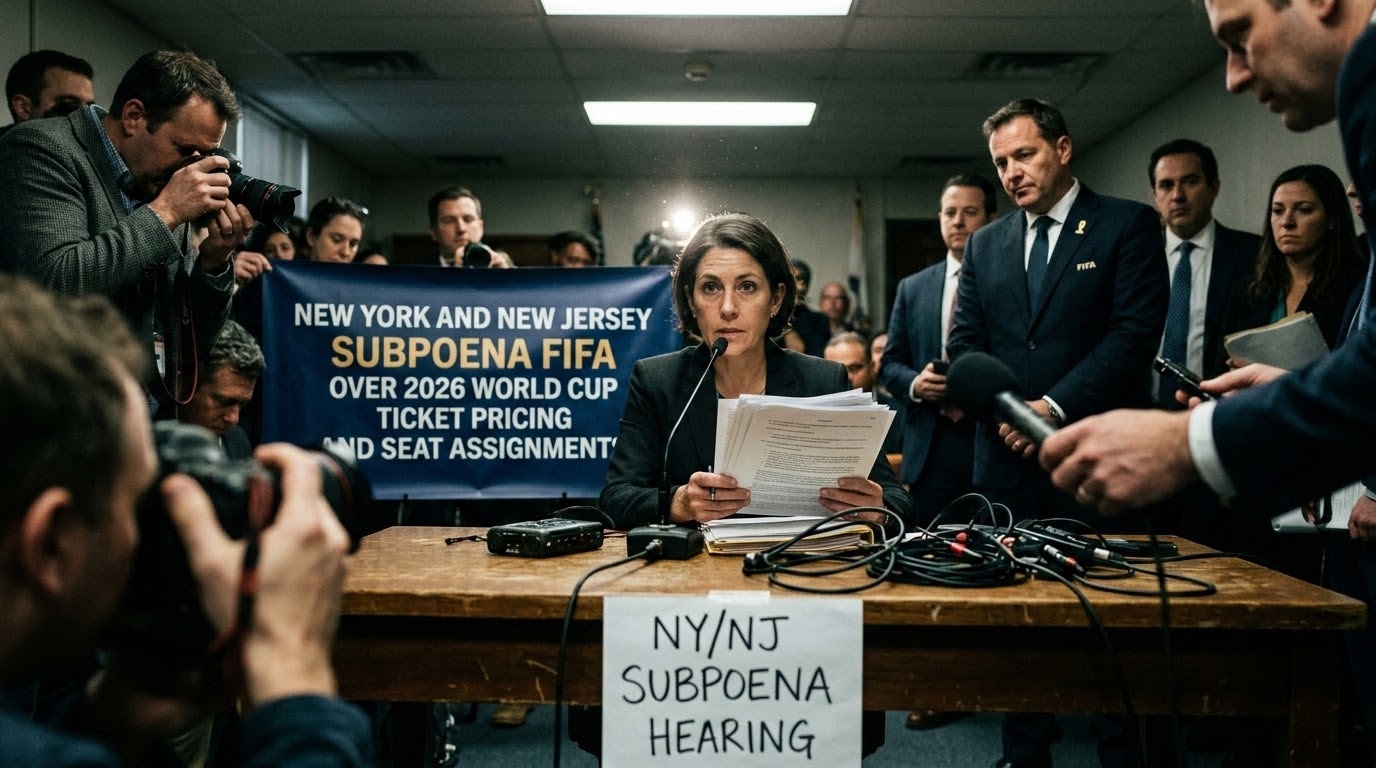
FIFA has been subpoenaed by the attorneys general of New York and New Jersey as part of a joint investigation announced Wednesday into 2026 World Cup ticket sales, including sharp price increases and complaints that buyers received seats less favorable than those they selected for matches at MetLife Stadium.
What Happened
New York Attorney General Letitia James and New Jersey Attorney General Jennifer Davenport said in a joint statement that they are demanding records from world soccer’s governing body about how ticket prices and seating categories were set for the tournament’s games in East Rutherford, New Jersey. Their offices said prices for 2026 World Cup tickets have risen beyond levels seen in prior editions of the competition.
The investigation centers on eight matches scheduled for MetLife Stadium, including the July 19 final, group-stage fixtures, and early knockout contests. According to the attorneys general, the subpoena seeks detailed information on overall pricing formulas, location-based pricing, category definitions, and seat assignment practices. State officials said consumer complaints described situations in which fans paid for one seating tier but were later allocated spots farther from the field.
The scrutiny also follows FIFA’s rollout of dynamic pricing for the event, a mechanism that allows prices to move with demand. FIFA President Gianni Infantino has previously defended high costs by citing finite inventory and global demand for tickets. But state officials argued that buyers must receive clear, reliable information about what they are purchasing and not face shifting terms after payment.
Impact & Consequences
The investigation could shape how one of the world’s largest sporting events sells tickets in the United States. If authorities determine that pricing or seat allocation practices misled consumers, FIFA may face legal pressure to alter sales procedures, provide clearer disclosures, and improve dispute resolution for affected fans. Even before any formal findings, the subpoena raises the risk of reputational damage at a critical moment as host-city preparations intensify.
For consumers, the probe addresses immediate concerns over affordability and transparency. The two state attorneys general framed the issue as a public-interest matter for residents hoping to attend local matches after years of anticipation. Their statements stressed that fans should not be pushed into exceptionally high prices through confusing systems, nor should they lose confidence that purchased seats will match final assignments. The outcome may influence broader ticketing standards for major live events that increasingly rely on demand-based pricing models.
Background & Context
The 2026 FIFA World Cup will be hosted across North America and is expected to draw extraordinary interest, with U.S. venues attracting global demand. MetLife Stadium, located in East Rutherford and serving the New York metropolitan region, is one of the tournament’s marquee sites and will stage the championship match. That status has intensified competition for tickets and heightened public sensitivity to price volatility.
State officials said confusion was compounded when a premium “Front Category” option was introduced after initial sales had already begun. According to their account, some buyers and consumer advocates sought government guidance after reporting mismatches between categories selected during purchase and seats later assigned. The emergence of those complaints, together with the use of dynamic pricing, appears to have triggered the current multi-state enforcement action. James said New Yorkers had waited years for nearby World Cup games and should have a fair chance to buy tickets at transparent terms.
International Response
FIFA has publicly maintained that high prices reflect basic supply-and-demand conditions for a tournament with worldwide appeal and limited capacity. Infantino has repeatedly pointed to constrained inventory as a key factor behind costs, signaling that the governing body sees its approach as consistent with market realities for premium global events.
At the same time, the intervention by two U.S. state law-enforcement offices is likely to be watched beyond New Jersey and New York because the World Cup spans multiple jurisdictions. Consumer-rights observers and regulators in other host areas may evaluate whether similar complaints emerge in their markets. The case could become a reference point in international sports business discussions about balancing revenue optimization with transparency and buyer protections, especially when dynamic pricing is used for high-stakes events.
What to Expect Next
The next phase will focus on FIFA’s response to the subpoena and whether state investigators identify patterns that warrant enforcement steps. Officials are expected to review pricing data, category definitions, and records tied to seat reallocations at MetLife matches. As ticket sales continue, fans, lawmakers, and host-city stakeholders will be watching for possible policy changes, additional public guidance, or corrective measures aimed at restoring confidence before the tournament begins.