As Eid al-Adha approaches in Nigeria, many Muslim households in Abuja are abandoning long-held traditions because of mounting living costs, with teachers, workers, and traders saying higher transport fares, food prices, and livestock costs have made usual celebrations financially out of reach.
What Happened
At the Nurul Bayan Islamic School in Abuja, teacher Yunus Akanji said this year’s Sallah period will be markedly different from previous years. Akanji, who typically travels with his wife and children to Saki in Oyo State to celebrate with relatives, said the trip is no longer feasible. In years when he stayed in Abuja, he would buy a ram and host a small gathering for family and students. This year, he said, that plan has also been dropped, and his household will mark the holiday with limited means.
Akanji linked his decision to broader financial stress in his community. Parents and supporters who usually contribute tuition and operational support to the madrassa are themselves under pressure, he said, with many unable to pay school fees on time. The strain has spread beyond religious schools into everyday life across the city, where transport decisions, shopping choices, and holiday spending are now tightly rationed.
Nafisa Ibrahim, from Ogun State and currently serving in Abuja under the National Youth Service Corps programme, said she canceled her Eid trip home after transport fares rose sharply. She said the route now costs about 35,000 naira, up from 15,000 naira when she traveled to Abuja in February. She also said her family may not be able to perform the customary animal sacrifice this year. Similar concerns were echoed by Opeyemi Ibrahim, a fashion designer in the Byazhin district, who reported weaker customer demand ahead of the festival and higher business expenses tied to fuel and irregular power supply. He said generator refueling costs around 10,000 naira, but remains necessary for cooling and ironing.
Impact & Consequences
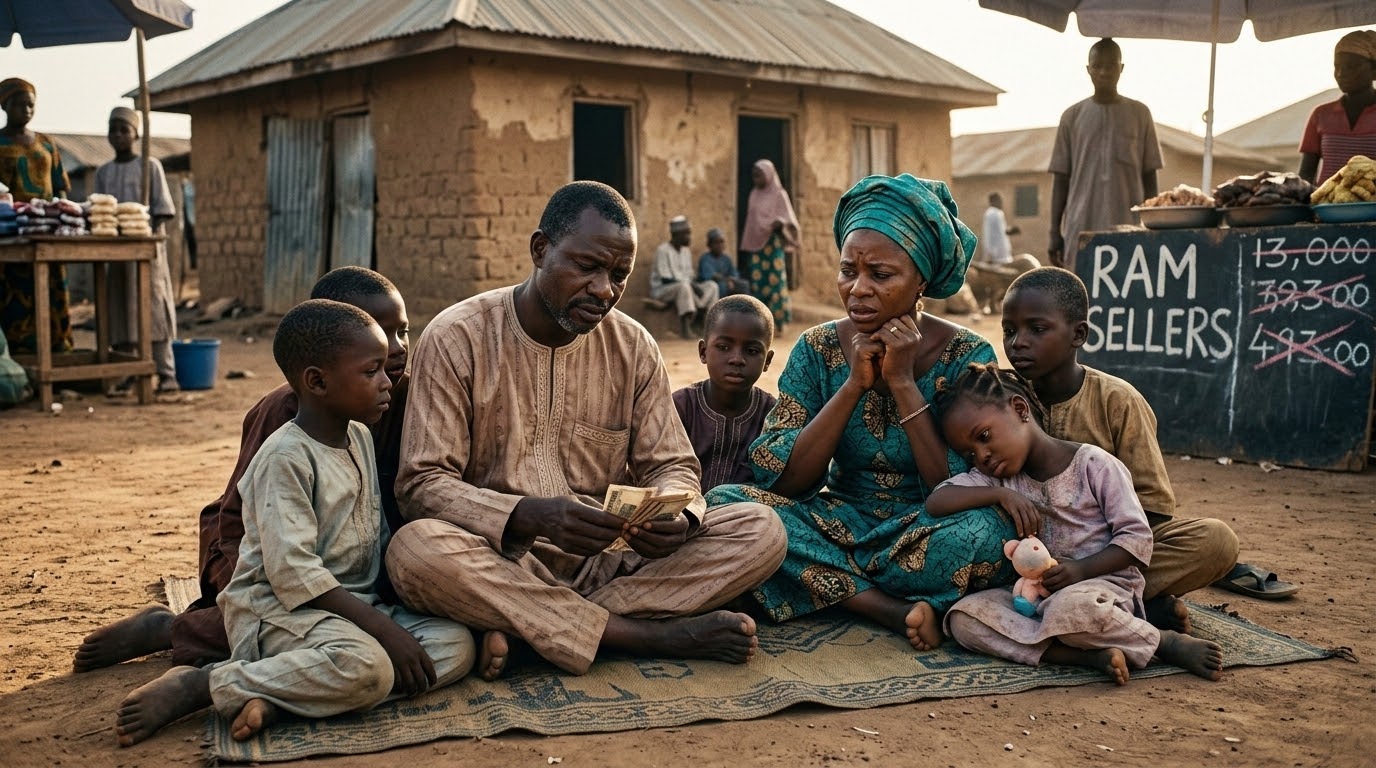
The immediate effect is a visible downsizing of Eid spending, from canceled travel to reduced purchases of clothing, food, and livestock. At Kubwa’s livestock market, traders described slower turnover as prospective buyers inspect animals, ask prices, and leave without buying. One seller, Malam Ibrahim, said a ram priced at 600,000 naira today would have sold for below 350,000 naira last year for a comparable size. He attributed the jump to the rising cost of moving animals from northern states such as Sokoto and Kaduna.
That pattern is rippling through linked sectors. Tailors and market vendors are seeing lower festive demand, while livestock sellers face the risk of carrying unsold stock after Eid, when animals typically lose value. For households, the shift is cultural as well as economic: rituals associated with communal giving and celebration are being narrowed to what families can still afford. Traders at Kubwa village market reported that even purchases of staple festive ingredients like rice, tomatoes, onions, and cooking oil have slowed, suggesting that the squeeze has moved from discretionary spending to basic consumption.
Background & Context
Nigeria has faced prolonged inflationary pressure in recent years, with households repeatedly confronting a mismatch between earnings and living costs. While some traders say the naira appears steadier against the US dollar than during earlier periods of intense volatility, they also report that domestic logistics remain expensive. The cost of fuel, transportation, and distribution continues to feed into final prices paid by consumers in urban markets such as Abuja.
Eid al-Adha, known widely in Nigeria as Sallah, is one of the most important dates on the Muslim calendar and is traditionally marked by communal prayers, family travel, and the sacrificial slaughter of livestock. In many communities, the festival also drives seasonal business activity for transport operators, tailors, food sellers, and animal traders. The current slowdown therefore reflects not only household austerity, but also a broader weakening of holiday-linked commerce during what is usually a peak period of spending and social exchange.
International Response
There were no immediate formal responses in the reported cases from foreign governments or major international institutions specifically tied to Eid-related consumer stress in Abuja. However, the pressures described by families and traders align with wider concerns long raised by development observers about how inflation and energy-linked costs disproportionately affect low- and middle-income households in large African economies.
Analysts who follow regional food and transport markets have consistently highlighted that domestic distribution costs can remain high even when currency conditions improve, especially where fuel prices and power supply constraints persist. In practical terms, this means temporary exchange-rate stabilization may not quickly translate into lower retail prices for households. The testimonies from Abuja’s schools, workshops, and markets suggest that this lag is now shaping religious observance and seasonal consumption patterns at community level.
What to Expect Next
In the coming days, traders and families will watch whether last-minute buying picks up before Eid prayers, but many expect a subdued holiday compared with previous years. If transport and fuel costs remain elevated, reduced spending could persist beyond Sallah and weigh further on small businesses that rely on festive demand. For now, residents across Abuja appear focused on one near-term question: how to preserve essential traditions within sharply reduced budgets.