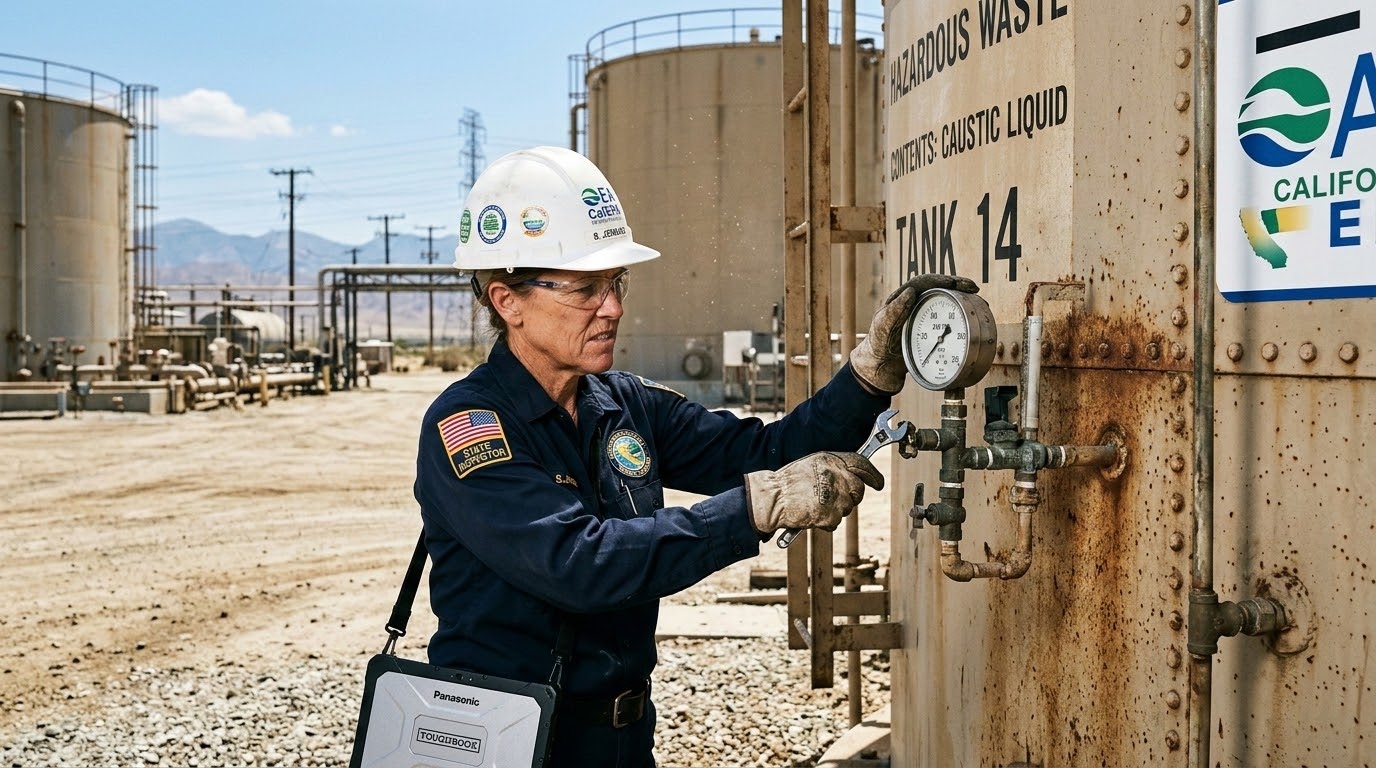
California emergency officials said late Sunday that a failing chemical tank in Orange County is not currently leaking, offering cautious relief after days of fears over a possible explosion or toxic spill. The incident at a Garden Grove aerospace facility has already forced mass evacuations, school closures and a state emergency declaration.
What Happened
The Orange County Fire Authority said continuous atmospheric checks had not detected chemical release from a tank containing thousands of gallons of methyl methacrylate, a highly flammable industrial compound used in plastics production. The vessel, located at a GKN Aerospace-operated site in Garden Grove, had shown signs of dangerous pressure and heat build-up since Thursday, prompting escalating emergency measures through the weekend.
Overnight operations from Sunday into Monday focused on verifying whether internal pressure was dropping safely. Interim Orange County Fire Chief TJ McGovern said crews were trying to ensure the threat of a Boiling Liquid Expanding Vapor Explosion, or BLEVE, could be ruled out. He described that scenario as the most severe potential outcome while stressing authorities had not reached that point. Emergency teams continued spraying water onto the tank to reduce temperature fluctuations and stabilize conditions.
Officials also moved to counter speculation about worsening structural damage, saying there was no evidence of multiple cracks in the tank. The cause of the failure remains under investigation. Governor Gavin Newsom declared a state of emergency, while evacuation orders were issued across Garden Grove, Stanton, Anaheim, Cypress, Westminster and Buena Park. Major road exits were closed to restrict access, and several schools suspended classes as authorities urged residents to avoid the hazard zone.
Impact & Consequences
The incident has disrupted daily life for tens of thousands of residents, many of whom were told to leave homes with little certainty about when they could return. Local resident Mark Olsen told NBC Los Angeles he woke to sirens, evacuated quickly, and was left facing uncertainty over his property and neighborhood safety. For communities near the one-mile exclusion area, anxiety remains high despite the latest update that no active leak has been detected.
Public health officials have warned that exposure to methyl methacrylate vapor can irritate the eyes and respiratory system and may cause dizziness. Orange County health officer Dr Regina Chinsio-Kwong advised residents to report any “fruity and heavy smell,” noting that odor alone does not automatically indicate dangerous concentration. Emergency planners have meanwhile prepared containment berms and barriers to prevent chemicals from reaching drains or coastal waters if the tank fails. The precautionary closures have also affected transport and local commerce, though Disneyland, outside the evacuation perimeter, has continued normal operations.
Background & Context
Methyl methacrylate is widely used in manufacturing acrylic plastics and composite materials, but its volatility makes storage management critical. Under elevated heat and pressure, tanks holding such compounds can become unstable, with potential for rapid vapor expansion and ignition. That risk informed authorities’ repeated references to a possible BLEVE event, a type of industrial explosion associated with pressurized flammable liquids.
The Garden Grove site is operated by GKN Aerospace, a UK-based supplier to the aviation sector. The company has said it is monitoring the affected material continuously and working around the clock with responders to reduce risk. In its public statement, GKN apologized to residents for disruption and uncertainty. Local fire officials said they had developed aggressive contingency plans, including temporary dikes and dams, to contain runoff in the event of a spill and protect nearby stormwater systems and the Pacific coast from contamination.
International Response
While the emergency is centered in Southern California, the operator’s international footprint has drawn wider attention from industrial safety observers and global aerospace stakeholders. GKN Aerospace’s role as a cross-border supplier has put additional focus on corporate risk controls at specialized manufacturing and storage sites, particularly where hazardous inputs are used near large residential populations.
No foreign government interventions have been announced, but the incident has underscored shared concerns across advanced manufacturing economies over chemical storage safety, emergency communication and urban-industrial zoning. Public health messaging from Orange County officials has been closely followed by professionals in environmental monitoring and disaster planning, given the combination of evacuation scale, volatile material, and the potential for both airborne and waterborne impact had containment failed.
What to Expect Next
Authorities are expected to maintain evacuation restrictions until they confirm the tank’s pressure and temperature are fully controlled and the explosion risk has materially declined. Investigators will continue examining how the vessel became compromised, while air monitoring remains active around the site. Residents and businesses will be watching for phased re-entry guidance, school reopening timelines, and updated hazard assessments from county, state and company officials in the coming days.