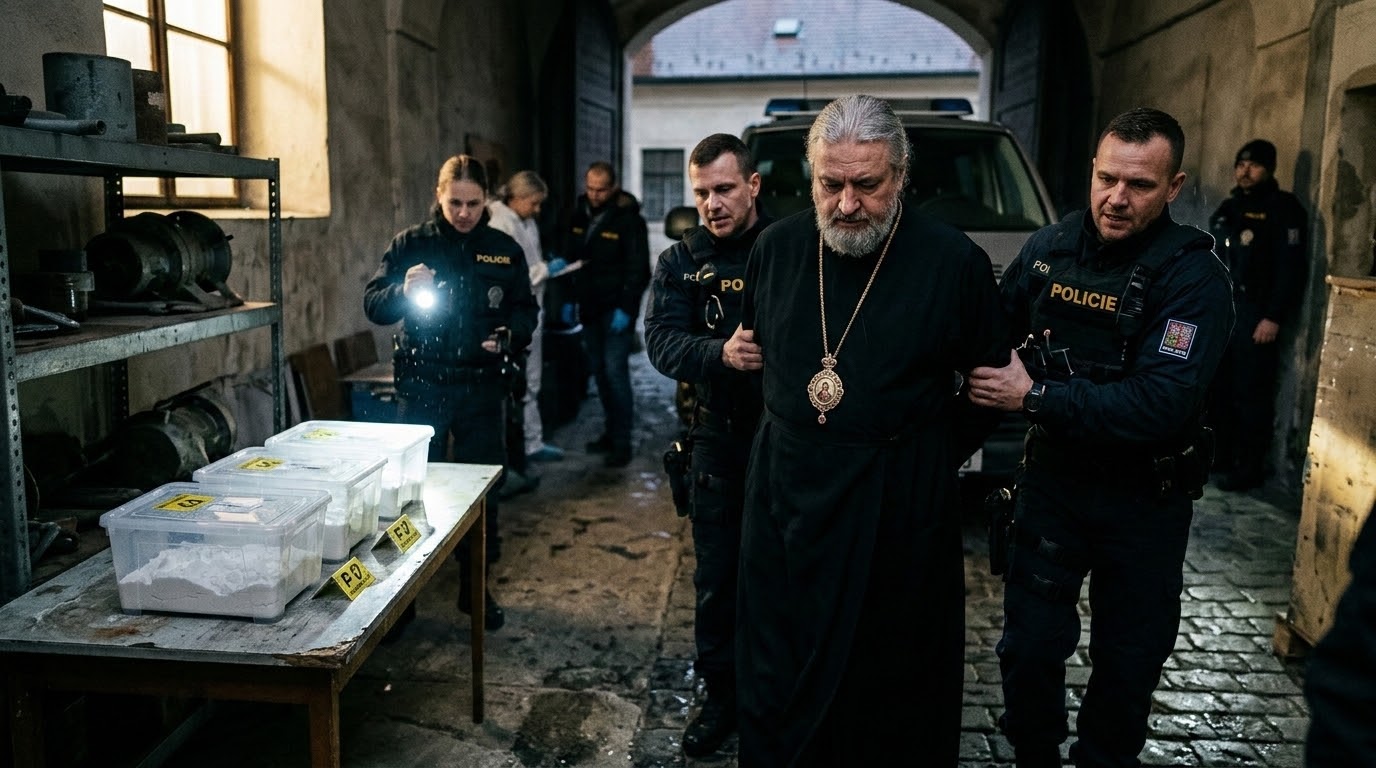
Czech authorities detained Russian Orthodox Bishop Hilarion on Sunday night after officers found four containers holding a suspicious white substance in his vehicle on a highway between Karlovy Vary and Prague, a case that has drawn immediate diplomatic backlash from Moscow and heightened attention to already strained regional politics.
What Happened
The detention took place on Sunday evening, according to Czech police, who confirmed that a man had been stopped and taken into custody while traveling from Karlovy Vary toward the capital. Investigators said questioning was ongoing and emphasized that no formal charges had yet been filed. Police did not publicly identify the suspect, but Hilarion’s legal team later announced on his Telegram channel that the detained person was the bishop.
Hilarion, 60, whose secular name is Grigory Alfeyev, leads a Russian Orthodox congregation in Karlovy Vary, a western Czech spa city known for its substantial Russian-speaking community. In a statement released by his defense team, the cleric denied any role in illegal drug activity, saying he has never had any involvement with narcotics trafficking. His lawyer also challenged the circumstances of the stop, alleging officers gave no clear reason for pulling over the car and claiming two patrol vehicles appeared to be waiting on the route.
The Czech Drug Enforcement Centre said the operation followed an anonymous report alleging transport of narcotic and psychotropic materials. Hilarion’s defense argued that he was not allowed to witness the vehicle search and called for independent forensic testing of the seized powder, as well as fingerprint and DNA examinations. The defense position suggests it will contest both the handling of evidence and the procedural conduct of investigators as the case moves forward.
Impact & Consequences
The detention has rapidly evolved from a criminal inquiry into a diplomatic dispute. Russian Foreign Ministry spokeswoman Maria Zakharova described the episode as an arranged provocation intended to damage Hilarion’s reputation and demanded his release. She said the Czech diplomatic mission chief in Moscow would be summoned to receive a formal protest, signaling that the incident may become a broader state-to-state confrontation rather than remain a narrowly judicial matter.
Inside Czechia, the case is likely to sharpen domestic debate over law enforcement transparency, foreign influence, and the treatment of Russian religious institutions. For Czech authorities, the immediate challenge is to preserve the credibility of the investigation by demonstrating procedural rigor and evidentiary integrity. For Moscow, the detention offers another platform to accuse a European Union member state of politically motivated actions against Russian nationals. The result could be further erosion in bilateral trust at a time when communication channels are already thin.
Background & Context
Hilarion was once widely seen as one of the most prominent figures in the Russian Orthodox hierarchy and was often viewed as close to Patriarch Kirill, the Church leader who has strongly backed President Vladimir Putin, including during Russia’s war in Ukraine. But reports indicated Hilarion lost standing within top church structures and was posted abroad in 2022, shortly after the full-scale invasion began.
His move to Czechia came after a former aide accused him of sexual misconduct, allegations he rejected while saying the aide had attempted to extort €384,000. Unlike many senior Russian clergy who publicly endorsed Moscow’s war narrative, Hilarion has not made public statements supporting or opposing the conflict. The detention also coincides with shifts in Czech domestic politics: the coalition government that entered office in December has reduced support levels for Ukraine and announced tighter legal rules this week for Ukrainian refugees’ residence and financial aid, citing abuse concerns and public resentment over perceived unequal benefits.
International Response
Russia has reacted most aggressively so far, framing the detention as politically engineered and demanding immediate corrective action. Zakharova’s comments indicate the Kremlin intends to elevate the incident through formal diplomatic channels, with the expected summoning of Czech representatives in Moscow. Russian media have also linked the case to earlier anonymous threats reportedly directed at Hilarion in recent months, including messages demanding he leave his position in Karlovy Vary and warning of physical harm.
Czech authorities, by contrast, have remained procedurally cautious and publicly limited, stressing that the investigation is active and incomplete. No broader response has yet been announced by European institutions, but the case is likely to be watched closely because it intersects with sensitive issues: cross-border criminal enforcement, church politics, and the wider EU-Russia confrontation shaped by the war in Ukraine.
What to Expect Next
The near-term focus will be on forensic analysis of the seized substance, decisions on whether prosecutors bring formal charges, and judicial review of the detention process. Defense lawyers are expected to press for independent laboratory work and chain-of-custody scrutiny. Diplomatically, Prague and Moscow may exchange formal protests in the coming days. The key unanswered questions are whether evidence supports a criminal case and whether the dispute remains legal or hardens into a prolonged political standoff.