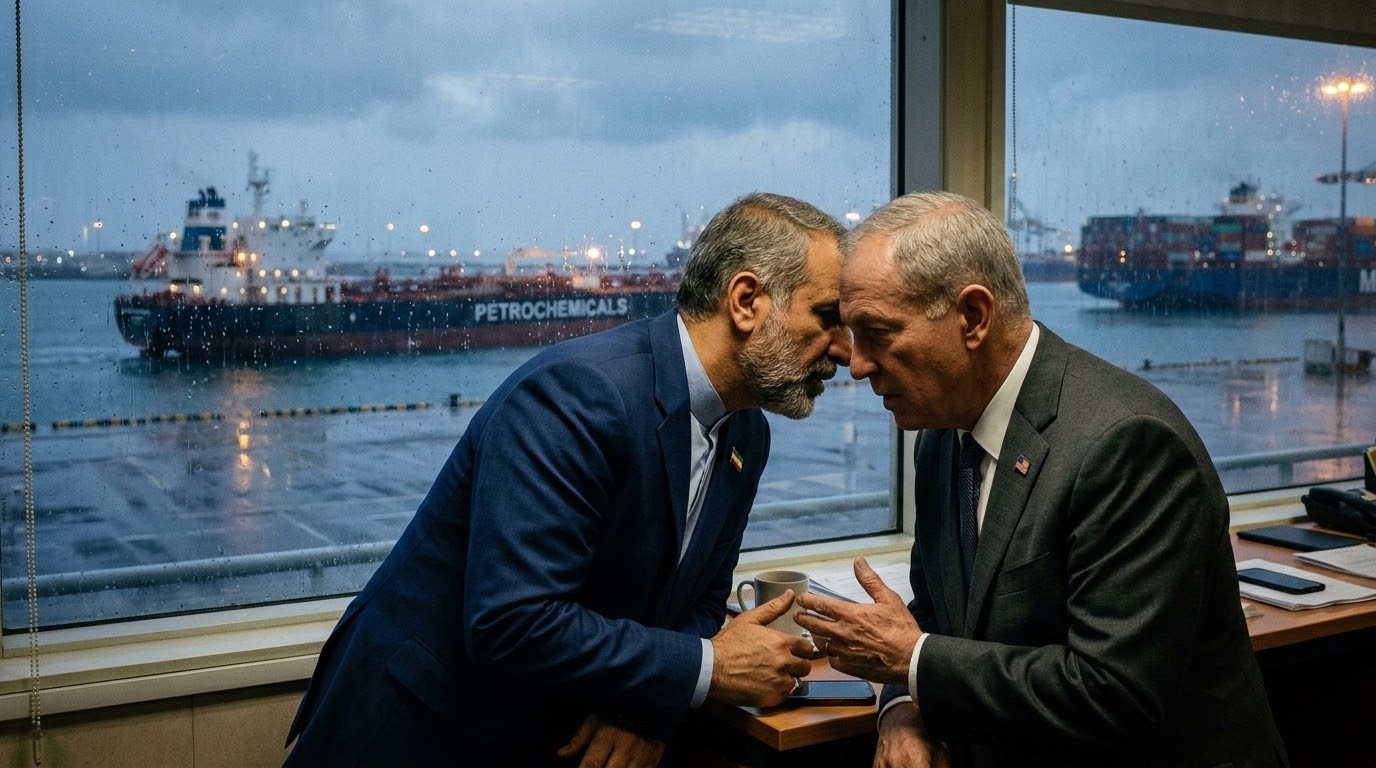
The United States and Iran are reportedly edging toward a deal to reopen the Strait of Hormuz, with discussions in late May 2026 focused on a 60-day truce, shipping access and partial sanctions relief. The outcome matters globally because this narrow waterway carries a major share of world oil and gas flows, making it central to inflation, food costs and economic stability.
What Happened
Recent reporting indicates Washington and Tehran are negotiating a broader package that goes beyond halting immediate hostilities. The proposed framework includes a temporary ceasefire lasting roughly two months, restoration of commercial passage through the Strait of Hormuz, limited easing of sanctions and a return to talks over Iran’s nuclear activities. While no final agreement has been announced, diplomatic contacts appear more active than in previous weeks.
The urgency has increased as maritime disruption in and around the Gulf has pushed up tanker rates, shipping insurance and benchmark energy prices. Around one-fifth of globally traded oil normally transits through Hormuz, along with significant volumes of liquefied natural gas, making any sustained disruption quickly visible in international markets. Military pressure, contested naval control and uncertainty over transit guarantees have reinforced volatility in freight and commodities.
Negotiators still face difficult issues. Reports point to unresolved disagreements over uranium enrichment limits, sequencing of sanctions measures, regional security commitments and authority over shipping management inside the strait. Past rounds of US-Iran diplomacy have repeatedly faltered after escalatory incidents, and both sides remain constrained by domestic political pressures and deep strategic mistrust.
Impact & Consequences
If talks fail, analysts expect the economic shock to spread quickly beyond the Gulf. Higher fuel costs would likely feed into transport, electricity and manufacturing prices across advanced economies already dealing with weak growth and household cost pressures. Food systems would also feel the strain because fertilizer production depends heavily on gas, while shipping and cold-chain logistics depend on petroleum products.
The risks are sharper in lower-income, import-dependent states. Many countries in Africa and South Asia rely on foreign fuel, fertilizer and staple food supplies, making them highly exposed to external price spikes. Governments in these regions often respond with subsidies or emergency spending, which can widen fiscal deficits and aggravate debt vulnerabilities. Prolonged uncertainty around Hormuz could therefore deepen inflation, worsen food insecurity and increase the chance of social unrest in states with limited policy space.
Background & Context
The Strait of Hormuz has long been one of the world’s most sensitive geopolitical chokepoints. Located between Iran and Oman, it links the Persian Gulf to global sea lanes and is indispensable for energy exporters in the region. Because such a large share of crude and LNG travels through this corridor, even partial interference has historically triggered immediate market reactions and broader concern over supply reliability.
The current diplomacy unfolds against a fragile global backdrop marked by high debt burdens, climate-related supply stresses and persistent geopolitical fragmentation. Recent years have shown how rapidly commodity shocks can become political crises, as sharp increases in food and fuel prices have repeatedly fueled public anger across multiple regions. In this context, the Hormuz dispute is no longer seen as only a bilateral security issue; it has become a test of whether global markets can avoid another cascading inflation episode.
International Response
Governments and market participants are closely monitoring the talks, with particular attention from major energy importers in Europe and Asia. Import-dependent states have already begun seeking alternative supply routes and contingency contracts to reduce immediate exposure to further disruption. Shipping companies and insurers, meanwhile, have adjusted pricing to reflect elevated operational risk in Gulf transit lanes.
Policy experts and international economic observers have framed the negotiations as a global stabilization effort as much as a diplomatic one. Their central warning is that failure to secure predictable passage through Hormuz would intensify pressure on humanitarian systems, debt-distressed governments and consumers worldwide. The broad view among analysts is that restoring safe transit, even under an interim arrangement, would offer at least short-term relief to commodity and freight markets.
What to Expect Next
The next phase is likely to focus on whether both sides can convert the reported outline into verifiable terms on shipping security, sanctions sequencing and nuclear discussions. Any announcement of a formal truce and maritime reopening would be watched for implementation details and enforcement mechanisms. If negotiations stall or violence resumes, oil, gas and food markets could react quickly, renewing fears of a wider global cost-of-living shock.