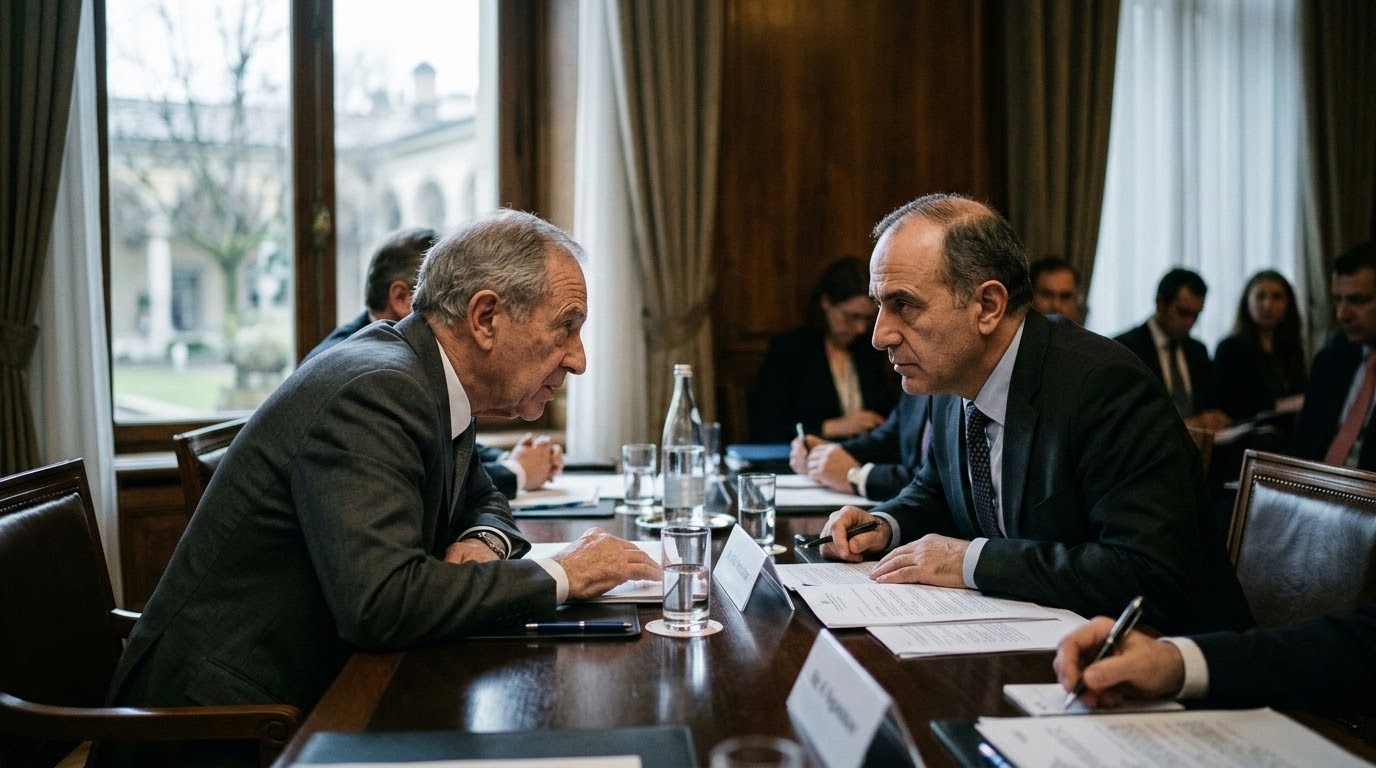
US and Iranian negotiators have reached a preliminary framework to prolong their current ceasefire by 60 days and begin structured talks on Tehran’s nuclear programme, according to US officials on Thursday, a development that could ease immediate regional tensions if approved by President Donald Trump and Iran’s leadership.
What Happened
American officials said the outline agreement is not yet final and still requires political sign-off in both capitals. The proposal, first reported by Axios and later corroborated by US sources speaking to the BBC, would keep combat operations paused while negotiators tackle technically difficult questions, especially over Iran’s uranium enrichment and stockpile of highly enriched material. Vice-President JD Vance said the sides were still “going back and forth” on wording and acknowledged unresolved disputes over enrichment terms.
Signals from Tehran remained mixed. Iran’s semi-official Tasnim news agency cited a source close to the talks saying no final text had been confirmed. At the same time, Iranian state media earlier carried what it described as elements of an unofficial 14-point memorandum of understanding, including claims that Washington would end its naval blockade of Iranian ports, withdraw forces from areas near Iran, and allow non-military shipping through the Strait of Hormuz under Iranian and Omani management. The White House rejected that reported draft, calling it entirely fabricated.
The tentative diplomacy unfolded amid renewed violence. Both governments have accused each other of violating the truce that began on 8 April. Iran’s Islamic Revolutionary Guard Corps said it struck a US base in the region on Thursday following new US strikes in southern Iran overnight. Treasury Secretary Scott Bessent, asked at the White House briefing about the reported arrangement, declined to confirm a deal and said final decisions rest solely with Trump.
Impact & Consequences
If formalized, the extension could provide the most meaningful breathing room in more than six weeks of stop-start diplomacy. It would lower the immediate risk of a return to full-scale hostilities while creating a narrow diplomatic window to address nuclear issues that have repeatedly derailed past efforts. Trump has publicly floated options including taking possession of enriched material or diluting it either inside Iran or at a third site, but no agreed mechanism has been announced.
The maritime dimension is equally significant. Reports indicate the package under discussion could restore unrestricted transit through the Strait of Hormuz, with Iran given 30 days to clear mines from the waterway, while the US would lift its blockade and provide sanctions waivers enabling Iranian oil exports to resume. Because roughly one-fifth of global oil and liquefied natural gas flows through Hormuz in normal conditions, even incremental progress could calm energy markets and shipping insurance rates, while any collapse would likely revive volatility.
Background & Context
The current ceasefire took effect on 8 April after direct confrontation raised fears of a broader regional war. Since then, Trump has repeatedly said negotiations were close to producing results, yet prior meetings, including talks in Islamabad days after the truce began, ended without substantive breakthroughs. Administration officials have also kept pressure on Tehran by warning that a military “option B” remains available if diplomacy stalls.
Trump said as recently as last week that he had come within an hour of authorizing renewed strikes before stepping back after requests from US allies. In a cabinet session on Wednesday, he again described talks as advancing but said Iran’s latest position was still insufficient. That sequence has reinforced a pattern in which public optimism and battlefield friction coexist, with each side testing leverage even while negotiators continue technical discussions behind closed doors.
International Response
Public reaction from major governments has so far been cautious, with most waiting for formal confirmation from Washington and Tehran. US officials themselves have emphasized uncertainty: Vance told the BBC that Iran appears to want an agreement and is negotiating in good faith, but said it remained too early to predict whether or when a final deal would be reached. Bessent similarly warned against getting ahead of presidential approval.
Regional stakeholders are watching the Strait of Hormuz provisions particularly closely because shipping disruption has immediate economic consequences beyond the Gulf. Energy importers in Asia and Europe, commercial carriers, and maritime insurers are expected to calibrate risk assessments based on whether mine-clearing, transit guarantees, and sanctions relief are codified. For now, the absence of a jointly endorsed text has kept governments and markets in a holding pattern.
What to Expect Next
The immediate focus is whether Trump and Iran’s top leadership endorse the framework in the coming days. US reporting suggests Trump has been briefed but is still reviewing terms. If approved, negotiators would enter a more complex phase centered on enrichment limits, uranium disposition, sanctions waivers, and shipping security timelines. If either side rejects the proposal or new military incidents escalate, the ceasefire could quickly unravel and return both countries to open confrontation.