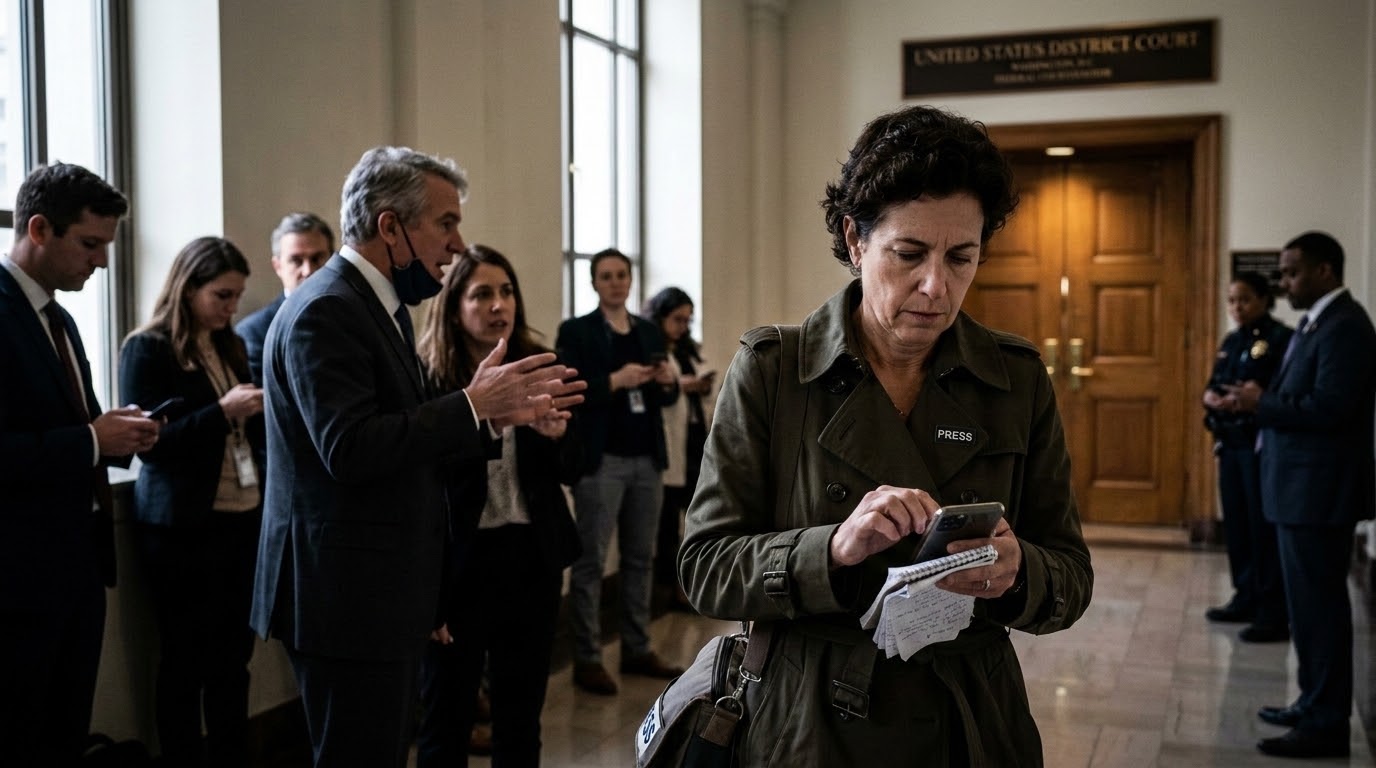
A federal judge in Washington, DC, on Thursday declined to immediately block President Donald Trump’s executive order tightening rules for mail-in voting, ruling that opponents moved too early because the policy has not yet been fully implemented. The decision matters because the order could reshape voting access ahead of closely contested November midterm elections.
What Happened
US District Judge Carl Nichols, who serves on the District of Columbia federal court, rejected a request from Democratic Party organizations and civil rights groups seeking a preliminary injunction against Trump’s latest election directive. The plaintiffs argued that the president likely overstepped constitutional limits by attempting to impose national voting restrictions through executive action rather than legislation.
In his written decision, Nichols agreed with the administration’s procedural argument that the legal challenge was premature. He said federal agencies are still crafting the specific rules and processes needed to carry out the order, making immediate harm difficult to establish at this stage. The judge wrote that future actions by agencies such as the US Postal Service or federal departments could eventually create concrete legal injuries, but he said the court could not intervene preemptively on hypothetical outcomes.
Trump’s order directs the Department of Homeland Security to assemble and share lists of verified US citizens eligible to vote in each state. It also instructs the Postal Service to send absentee and mail ballots only to voters appearing on state-specific mail-voting and absentee lists. Opponents say that framework risks disenfranchising lawful voters and changing election procedures too close to voting day.
Impact & Consequences
The immediate consequence is that federal agencies can continue preparations to enforce the order, potentially affecting election administration timelines in multiple states. While the ruling did not endorse the policy’s constitutionality, it allows executive branch planning to proceed unless and until a court finds specific implementing measures unlawful. That creates uncertainty for election officials already managing tight deadlines for ballot printing, distribution, and voter outreach.
For voters, especially those who rely on absentee voting, the dispute raises concern over whether eligibility screening based on federal databases could produce erroneous exclusions. Voting rights advocates warn that data mismatches in citizenship records could disrupt access for some registered voters. Politically, the ruling arrives as Republicans fight to preserve control of Congress in November, amplifying the stakes of any change to participation rules in high-turnout elections.
Background & Context
Mail voting expanded significantly across the United States during the COVID-19 period and has remained widely used across both Republican-leaning and Democratic-leaning states. In the 2024 election cycle, about one in three ballots was cast by mail. Eight states now conduct elections almost entirely through postal voting and report strong election-integrity performance by established metrics.
Trump has long claimed mail voting is vulnerable to widespread fraud, a position experts and court findings have repeatedly said lacks broad evidence. In this case, Democratic and civil rights plaintiffs argue the Constitution gives states authority over the “times, places and manner” of elections, while Congress sets federal parameters. They contend a president cannot unilaterally rewrite those rules. Their complaint also warns that late-cycle rule changes could confuse voters and burden administrators just months before national voting.
International Response
Although the dispute is domestic, it has drawn close attention from democracy-monitoring groups and foreign policy observers who track US electoral stability. International election scholars have cited the case as another test of institutional checks and balances in the United States, especially regarding separation of powers between the presidency, Congress, states, and the courts.
Civil society organizations focused on voting rights, including groups with global partnerships, say confidence in US electoral administration affects democratic credibility abroad. The legal fight also intersects with a separate multistate case filed in Boston by Democratic-led states, where US District Judge Indira Talwani is scheduled to hear arguments on June 2. That parallel proceeding is being watched by legal analysts as a potential faster route to judicial review of implementation details.
What to Expect Next
The Washington ruling leaves the door open for renewed emergency motions once agencies finalize and enforce specific rules under Trump’s order. Plaintiffs are expected to continue litigating in both DC and Massachusetts, while the administration advances implementation. A separate Trump voting order from last year, requiring proof of citizenship and limiting late-arriving mail ballots, is already blocked by three federal judges and remains under appeal, signaling prolonged legal battles before November.