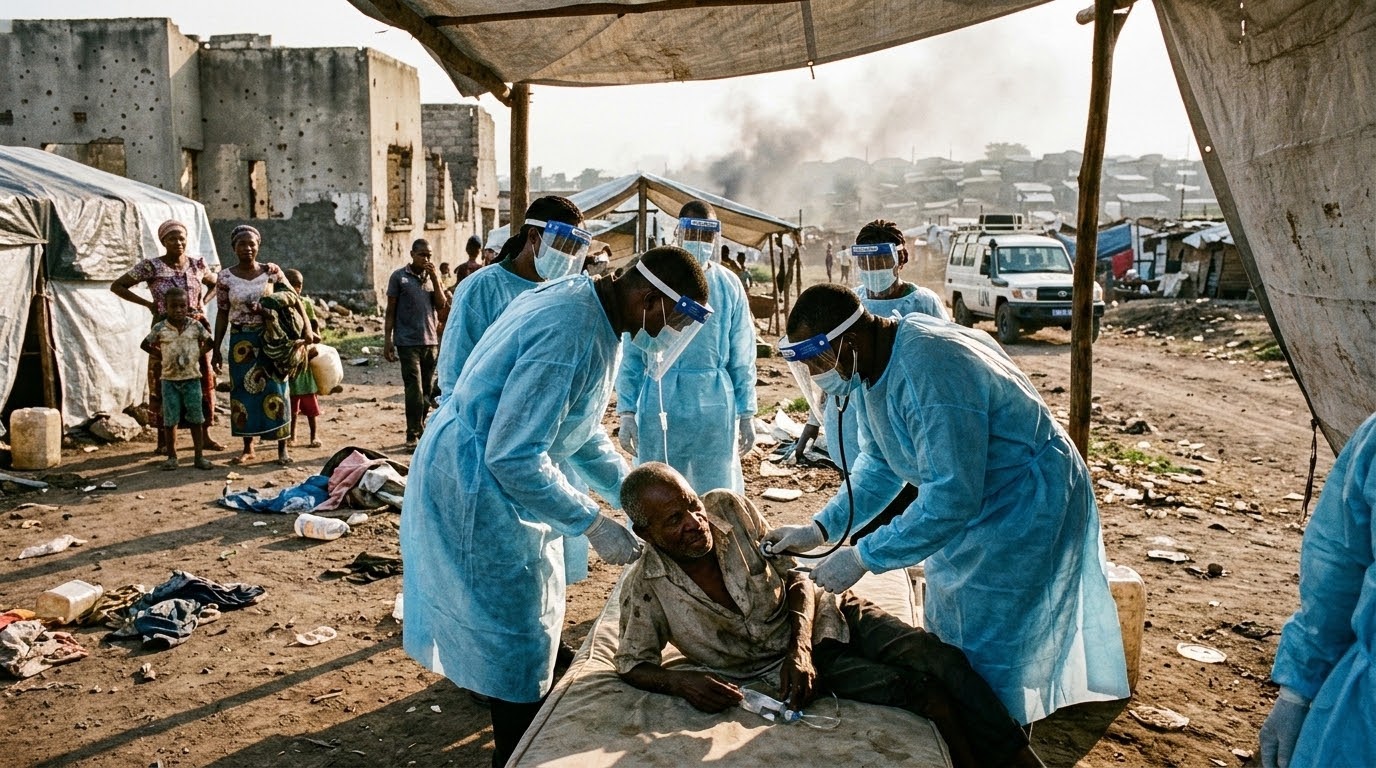
World Health Organization Director-General Tedros Adhanom Ghebreyesus has warned that eastern Democratic Republic of Congo is facing a dangerous overlap of war and epidemic, as Ebola cases in Ituri province are increasing faster than the response. His warning matters because insecurity is now directly undermining case isolation, contact tracing, and treatment.
What Happened
In a public message posted on X, Tedros said health teams cannot build trust with communities or separate infected patients while active fighting continues. He described eastern DR Congo as the center of a severe collision between armed conflict and disease transmission, and said ending spread in the affected areas depends on secure humanitarian access. He is scheduled to arrive in DR Congo on Wednesday to help intensify containment operations.
According to Congolese health authorities, the outbreak has been linked to 220 suspected deaths since it was declared, though laboratory confirmation has so far identified 17 Ebola-related deaths. Officials also say around 1,000 people currently show symptoms consistent with the disease. Medical teams are trying to track roughly 3,600 known contacts, while diagnostic capacity remains limited. About 2,000 tests have already been distributed, and another 4,000 are expected to be sent to outbreak zones.
The epidemic is concentrated in Ituri, a province under military administration since 2021, when civilian leadership was replaced by a military general to counter numerous armed groups. Aid agencies report that poor roads, insecurity, and mass displacement are slowing patient referral and surveillance. Frontline staff are also operating under threat, with attacks on health facilities making it much harder to identify chains of transmission quickly enough to contain them.
Impact & Consequences
The immediate consequence is a widening gap between the speed of transmission and the speed of intervention. Médecins Sans Frontières says emergency operations are underway, but infrastructure needed for effective containment will take weeks to establish. Its DR Congo leadership has said responders still lack a full picture of the outbreak, largely because testing remains insufficient, leaving teams to chase the virus rather than stay ahead of it.
For communities in conflict areas, the risks are compounding. Ongoing clashes are pushing exposed people into overcrowded displacement sites, where close contact can intensify spread and make isolation nearly impossible. At the same time, weakened health services and aid funding cuts have reduced local system capacity. The result is mounting pressure on hospitals, delayed diagnosis, and greater danger for healthcare workers who are already operating in fragile, frequently inaccessible conditions.
Background & Context
This outbreak involves Bundibugyo ebolavirus, a less common Ebola species for which no licensed vaccine or standard approved medicine is currently available, raising the technical difficulty of response compared with strains where vaccination strategies are established. Health officials are considering introducing experimental therapies, including a US-developed antibody treatment, as part of efforts to reduce mortality while formal confirmation and surveillance catch up.
DR Congo has long experience with Ebola outbreaks, but this episode is unfolding in a security environment that has repeatedly disrupted humanitarian work. Ituri’s armed violence, population displacement, and damaged transport networks have complicated emergency deployment from the outset. Public health experts note that effective Ebola control depends on early detection, rapid laboratory confirmation, strict infection prevention, and sustained community trust—conditions that are difficult to maintain in zones of active conflict.
International Response
Concern over cross-border transmission has triggered tighter entry rules in several countries. Canada announced a temporary 90-day ban on entry for residents from DR Congo, Uganda, and South Sudan. The Bahamas introduced strict measures requiring quarantine or isolation for foreign nationals arriving from those countries. The United States last week barred entry for non-citizens who had recently traveled to the same three states.
In Europe, the European Centre for Disease Prevention and Control said Wednesday it is expanding its field footprint by sending additional specialists through the EU Health Task Force. Tedros has also called on all armed parties in eastern DR Congo to agree to an immediate ceasefire so medical teams can move safely, reach affected communities, and restore core outbreak-control operations.
What to Expect Next
Attention will now focus on whether security conditions improve enough to allow expanded testing, faster contact tracing, and safe treatment access in Ituri. Tedros’s visit is expected to accelerate coordination among Congolese authorities, WHO, and humanitarian agencies, but progress will depend on access corridors and local acceptance. If diagnosis and isolation scale up in coming weeks, officials may begin to close the current gap between reported spread and response capacity.